4.5 out of 5
Purr!
Purrr....
- Battle system
- Characters
- Digivolution
- Story
Hisss!
- Main character’s lack of voice
- Human world feels too enclosed

Platform
PlayStation 5, Xbox Series X, PCPublisher
Bandai NamcoDeveloper
Media.Vision Inc.Series
DigimonGenre
Action, Adventure, RPG, Strategy/TacticsPlayers
1File Size (Minimum)
19 GBRelease Date (NA)
Oct 3, 2025Filed Under
Digimon Story: Time Stranger is the latest Digimon game featuring sleek turn-based mechanics, a rich story, and the excitement of digivolution. It is considered one of the top role-playing games of the year.
Getting Started
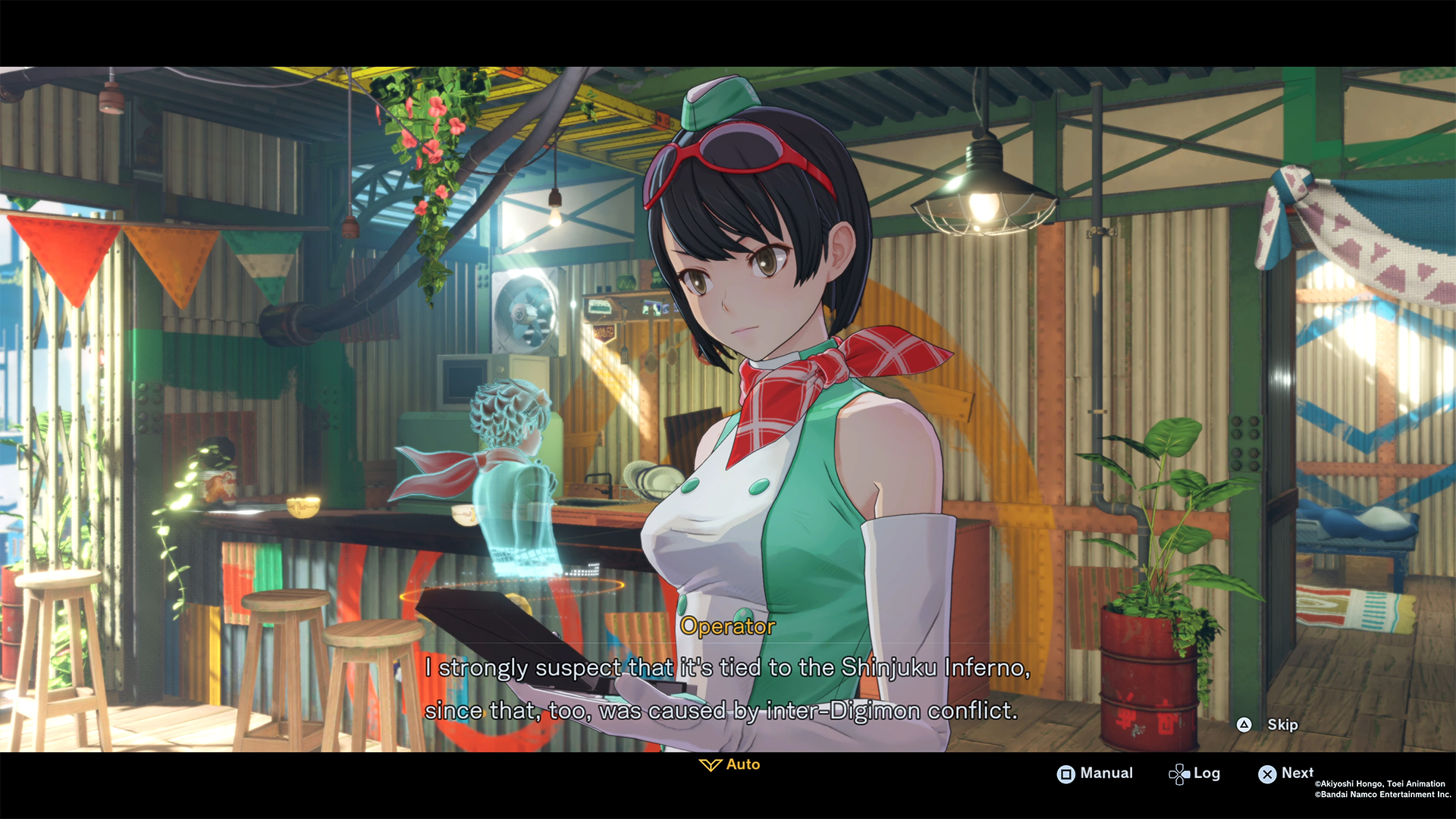
At the start of the game, players are given a choice between two characters: Dan Yuki or Kanan Yuki. Regardless of which one you chose, the other character not chosen will be your communicator throughout the game. Additionally, the game offers players the option to swap between each character or rename the character’s first name, which can be done through the game settings. Difficulties can also be adjusted while playing, with options including Story, Balanced, and Hard mode. Balanced is the default mode, providing a good set of challenges for those familiar with role-playing games.
The game offers both English and Japanese voices, with the English version set as the default. The game’s dialogue from the narration to the Digimon voices, is all presented in the chosen language. However, the main character does not have voice dialogue and instead animates their mouth movements based on the selected multiple choice, given the effort put into the game’s voices, it would have been nice to actually hear the character speak based on the chosen answer, or at least have the option to turn it on or off if players prefer a muted character.
Time Distortion

Despite sharing the same name as Digimon Story, this game is not a sequel to the Digimon Story: Cyber Sleuth games. Instead, it is a standalone, new story for all players to experience. Players will explore different worlds, from the downtown of Shinjuku and Akihabara in Tokyo, Japan, to the Digital World of Iliad, and everything in between.
For those who have played the game’s demo, the beginning of the game is already familiar. You take on the role of an agent of a secret organization that investigates urban legends. Your mission is to track down “phase electron lifeforms”, also known as “Digital Monsters” or simply “Digimon”. Before your first battle with a Digimon, you are given your own Digimon to assist you. Players must choose between Patamon, DemiDevimon, and Gomamon. As you progress, you will meet a compassionate high school girl named Inori Misono. Details about this girl remain a mystery, and after a confrontation where Digimons fight each other, you are transported to a new world where you must save the Guardian Egg and then travel back in time to the human world. Along the way, you will encounter Inori, another high schooler, and a Digimon named Aegiomon. However, Digimon are infiltrating the human world, causing chaos due to the civil war among them.
After spending some time in the human world, you are transported to Iliad, the Digital World. At first glance, it appears vast and vibrant. Stranded in this new world, you, Inori, and Aegiomon embark on missions to fend off the Titans, aggressive Digimon led by Plutomon. As the story unfolds, there are twists and turns in the development of both the Digimon and human worlds, leading to a rift between the two worlds that must be repaired to prevent a catastrophe.
The story is intricate, and playing through it feels like interacting with a television series. Each completed story mission leaves you eager to discover more about how events will unfold. How will humans return to their own worlds? What will become of the conflict among Digimon? Who are the mysterious figures observing the world from another dimension? Be prepared to invest many hours in uncovering these answers, as the experience is both engaging and rewarding.
Turn-based Done Right
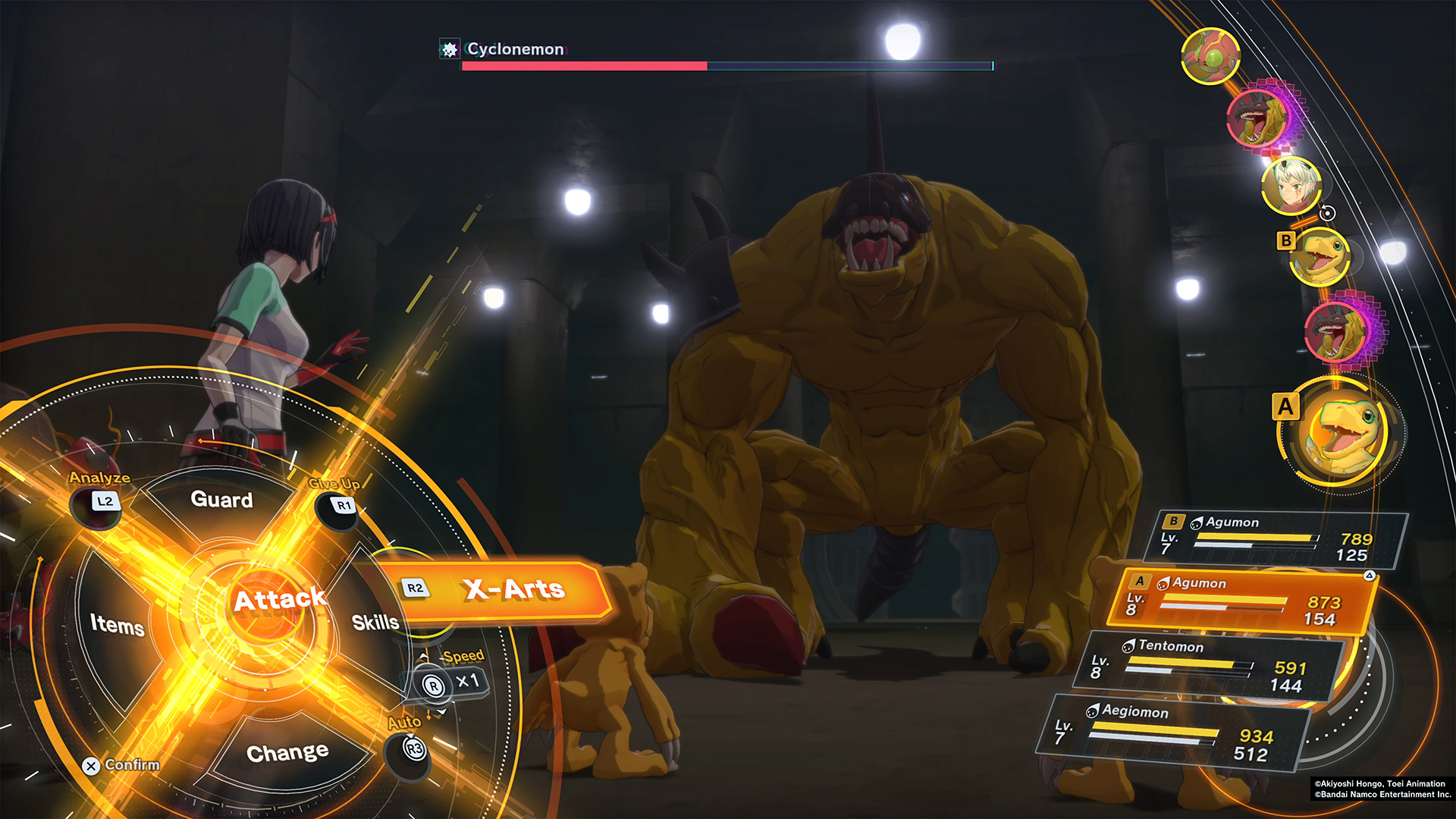
Battles in Time Stranger are 3v3 turn-based battles. Enemies will have up to three opponents on the battlefield, and the same goes for players. However, players can also have an additional three Digimon in the back row to swap out, as well as three “guest” fighters. Most of the time, Aegiomon will fight alongside you, leaving two spots available for guest Digimon. Swapping them out during one of your Digimon’s turns does not consume a turn, and there is no limit to how many times you can swap. Items can be used once per Digimon turn and also do not consume a turn, making battles less stressful and more user-friendly.
As mentioned in our first-impressions of Time Stranger, the game utilizes a rock-paper-scissors method of attributes when determining strengths and weaknesses between Digimon. In addition, the game includes elemental strengths and weaknesses. Exploiting an enemy’s elemental weakness with a Digimon of superior attribute can increase damage to 300%, potentially turning the tide in battles. It is crucial to have a good understanding of what your Digimon can handle. Digimon can equip additional skills for any elemental style attack to benefit their battles.
Battles are turn-based, with the order determined by your Digimon’s speed. The order can be viewed on the battle’s user interface on the right side of the screen. Boss battles tend to involve an increased number of turns, intensifying the challenge. When facing a larger boss, the interface displays a longer health gauge. Bosses can also initiate charged attacks that deal heavy damage. Players have the option to cancel these attacks before they are fully charged, which typically takes a couple of turns. A new gauge bar appears underneath the health gauge, indicating the charged area players need to aim for to interrupt the enemy’s attack. Missing this opportunity may require healing, reviving fallen members, or swapping out Digimon. If all Digimon, excluding guest members, are defeated, the game is over. Guest characters, except Aegiomon, have unlimited health and special points. Aegiomon cannot be swapped, but players can still choose his actions, while other guest Digimon are controlled by the game’s AI.

Boss battles present a significant challenge and require strategic thinking. Bosses may set up shields to withstand specific types of attacks or have minions use taunts to distract players. Overcoming these obstacles can be rewarding.
During battles, your protagonist can initiate Cross Arts, an extra turn based on collecting critical points (CP). These points accumulate each turn your Digimon takes. Cross Arts can be customized for various effects, such as dealing heavy damage, healing, or reviving your team. Setting up Cross Arts between battles in the game’s menu adds depth to your strategy, especially in difficult situations.
Experience points are distributed to all Digimon in your starting lineup and box, although at a fraction compared to your active fighters. This eliminates the need to constantly swap Digimon to level them up, making grinding less of a chore.
In between battles, Digimon can heal themselves by standing still for a few seconds. Debuffs like poison are removed after battle, streamlining the adventuring process and saving money on items.
A Different World

Players can discover Outer Dungeons scattered around the world. They are shiny, floating red-toned squares that are usually hidden. Each one is a trial where you compete to win not only experience and yen (in-game currency) but also a Digimon. These trials consist of racing, surviving for time limit in between battles, beating three powerful Digimon, and more. There are also special rules, such as only using three Digimon, no items, and no guest Digimon.
The trials are challenging but add additional gameplay. For those seeking perfection, these events offer a special challenge where you can earn additional prizes. Many find them impossible, such as not initiating a battle from a swarm of Digimon. While not necessary to take on, they are there for a challenge.
There is also the In-Between Theater, where time and space are managed by the mysterious character “Mirei”. You will find yourself here during story modes, but it is also a place to enter Outer Dungeons to earn extra money and experience points. However, accessing those worlds requires purchasing them outside the game. You can also buy items, skills, costumes, and more, which don’t require real money. The inventory shop will add more to the list as you progress through the game.
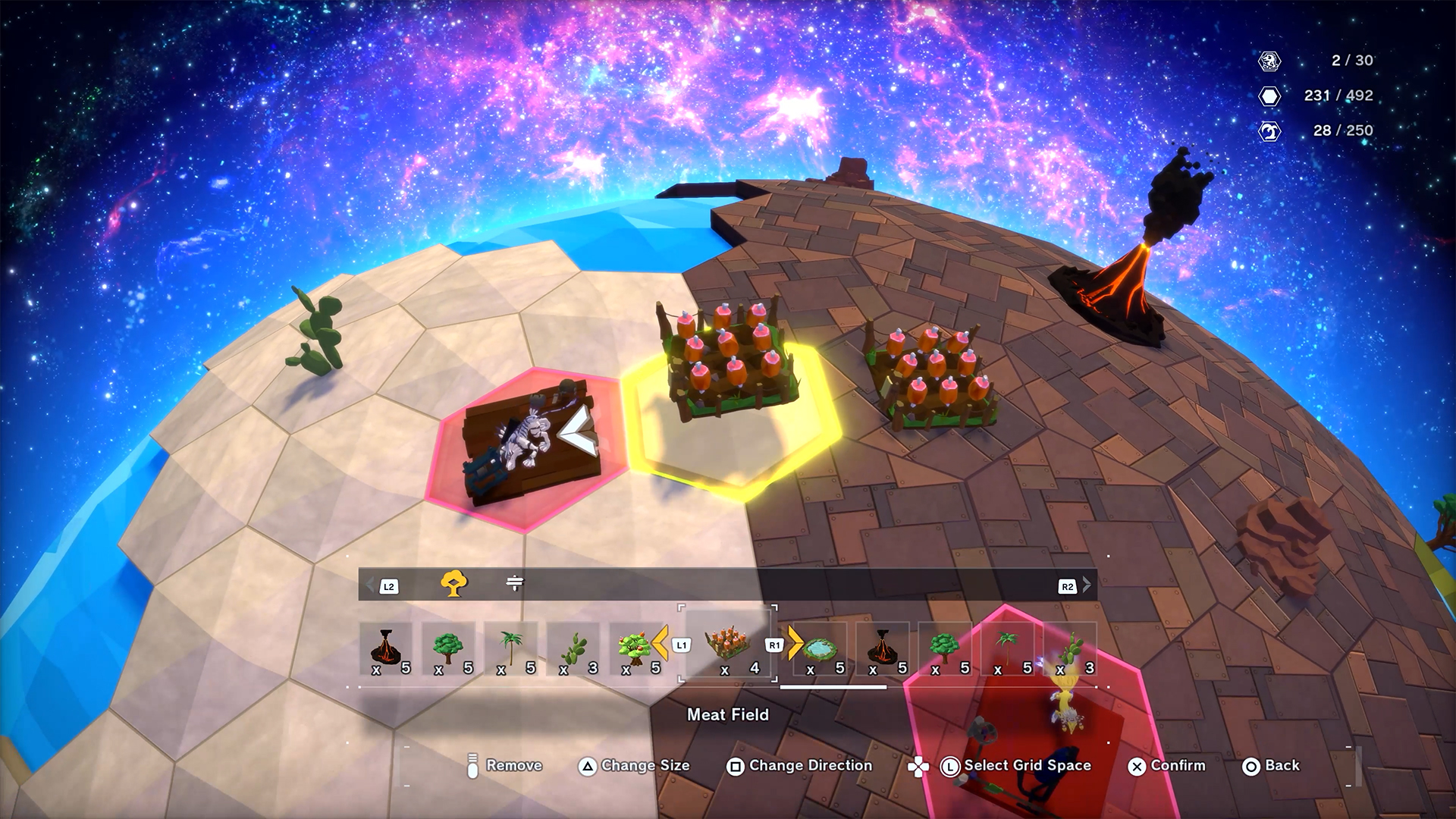
One of the features in this area is the Digifarm. You can place Digimon here, and they will receive the same experience points as if they were in your Digimon box. What makes this place special is the ability to train your Digimon to raise certain stats, such as speed, attack, health, and more. You will need specialized items to help raise these specific stats, which can be found through exploration or created by a Digimon. This is helpful when trying to evolve your Digimon to meet certain criteria for a new form. Once they begin their training, you will have to come back later, as it runs on a real-time clock. You will be notified when training is done or can have them continue to train using the same training item. You won’t know the results of the training until you accept that the Digimon has completed the training.
Digivolution

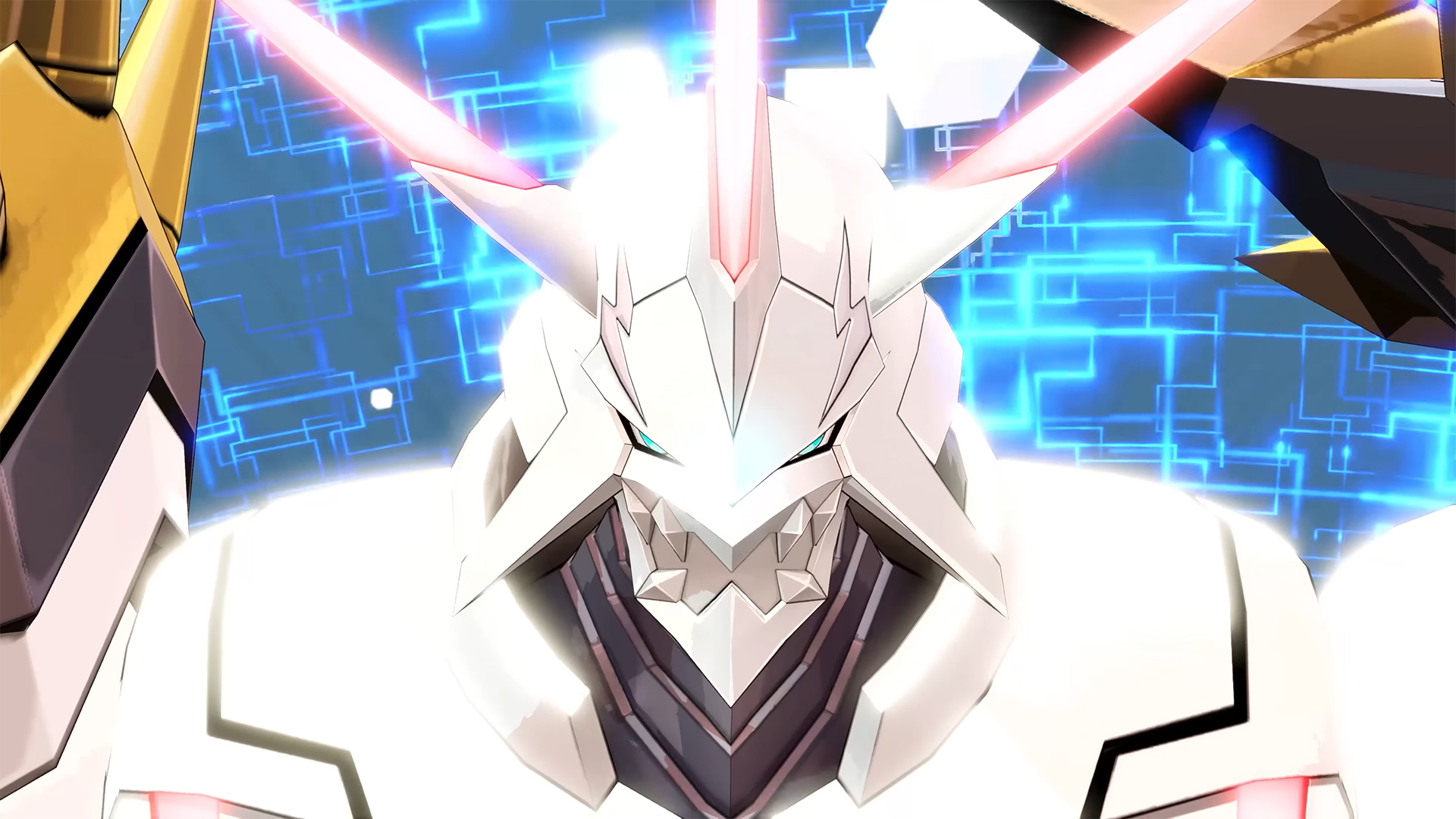
One of the biggest features in the game is evolving your Digimon, known as Digivolution. Before evolving, you can add Digimon to your roster based on battle data gained through battling them. Scanning them during battle will provide you with their scan rate, weaknesses, and more. It’s not necessary to scan every time, as their data is logged during battle. Once their scan rate reaches 100% or up to 200%, you can convert them and they will be added to your team.
Once your Digimon meets certain criteria, such as stats excluding equipment and Agent Rank, which is based on how many Anomaly Points you have used, they can Digivolve. There is a list of various forms you can choose from, if available. From there, they can branch out further into other types. The more evolutions they go through, the higher their stats and levels can reach. If you are unsatisfied with the new form, you can De-Digivolve back to its previous form, although you will have to meet some requirements again, but you are not stuck with a form.
The options to choose from and the possibilities of Digivolving make it fun and rewarding. Not being stuck with a form and being able to go through the process easily through the game’s menu makes it convenient and fulfilling. When comparing the evolution process between Digimon and Pokémon, Digimon feels more fluid and complete.
What’s My Type?

Players can assign personality paths to their Digimon based on the answers they provide when asked a question. These paths determine the development of their personalities: Valor, Amicability, Philanthropy, and Wisdom. For instance, if you choose Valor, your Digimon’s attack will increase and they will become more of a physical attacker. Other personalities can also affect their stats. Those new to this depth will have a learning curve to understand the game’s system for adjusting stats.
As you progress through the story or take on side missions, you will earn Anomaly Points. These points can be used to increase additional stats on personalities and learn new Cross Art attacks for your protagonist.
This additional layer not only allows you to modify your Digimon through evolution but also enhances their stats and your attacks in various ways, requiring strategic thinking to create your all-star Digimon team.
Let’s Duel
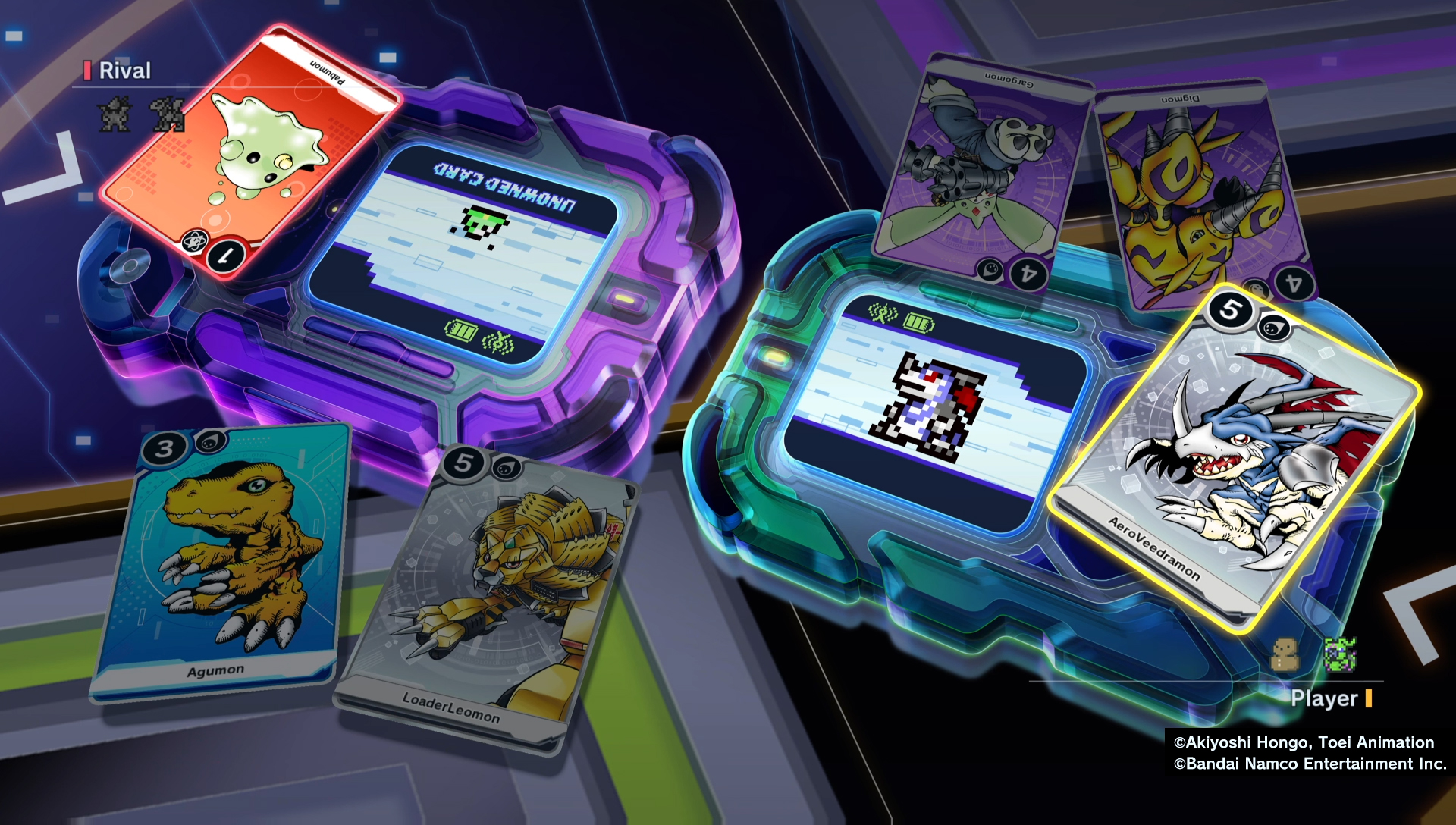
Time Strangers introduces a new way to battle through card battles. Players compete against non-player characters (NPCs) located across each world. The battle stage is set up with a set of cards on each side, and an electronic device, reminiscent of the classic Digivice for fans of Digimon, acts as a scanner to showcase the battle between Digimon.
Cards are drawn randomly for both players, and each turn a card is placed. Similar to the 3v3 battles, victory is determined based on the card’s Attribute. Each card also has a level from one to seven, indicating its strength. While higher-level cards have a greater chance of winning, it is not guaranteed. For instance, a level one card could defeat a level seven card. Additional cards can be summoned to the deck if two cards of the same Attribute or Generation, such as two Champion Digimon, are present. These summons occur towards the end of the card duel.
After the battle, players can choose cards from their opponent based on the number of rounds won. Winning all five rounds rewards three cards, while zero wins result in zero cards. There are 451 cards to collect, obtainable through battles and from sellers.
Compared to the 3v3 battles, card battles are more simplistic and serve as a side activity when players need a break from missions and saving the world.
A Vast Digital World
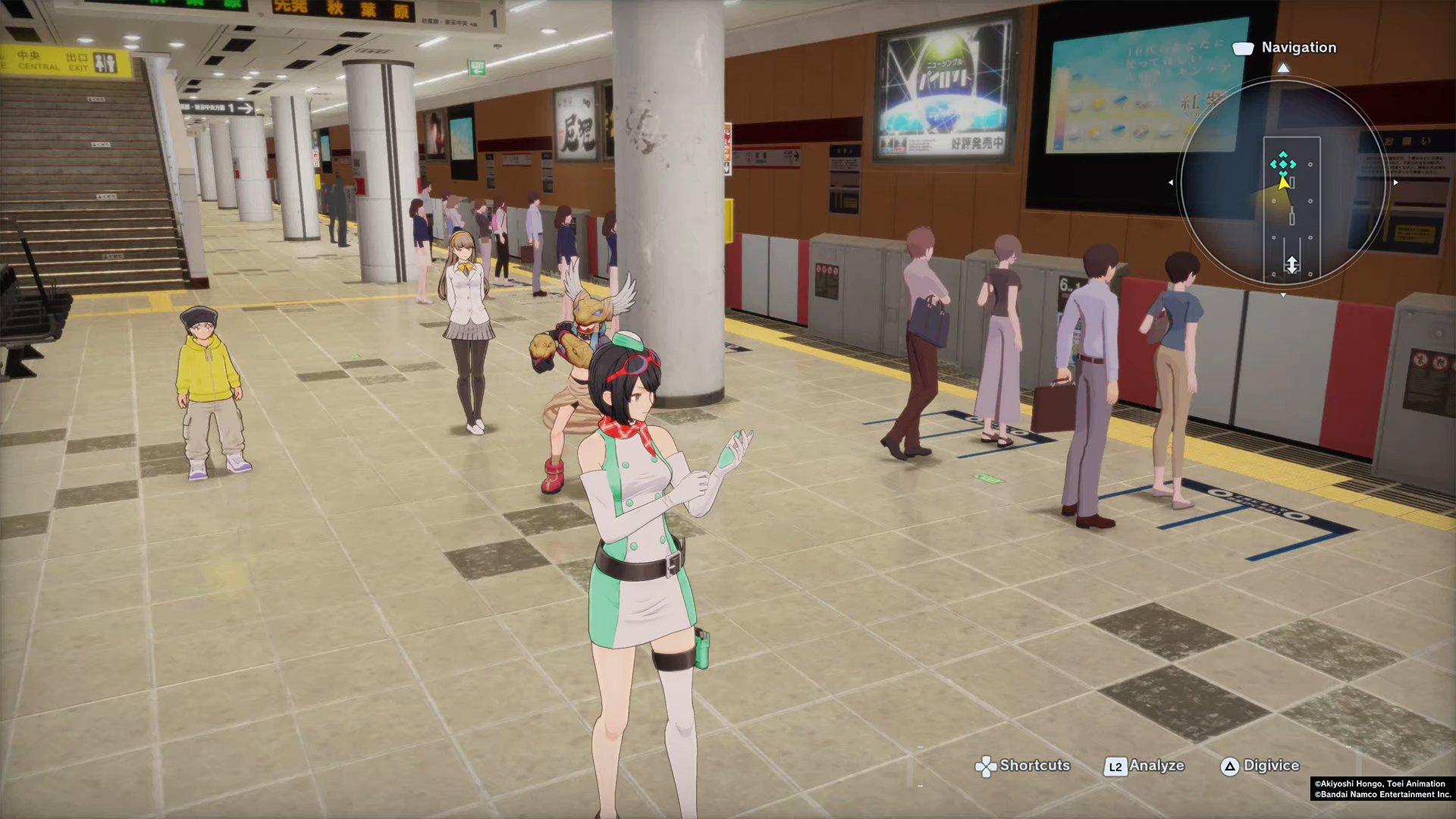
The world of Iliad has five locations that players can explore, each with unique differences in their environments. Central Town is the most lively, with animated Digimon, buildings to explore, and extended areas like the Central Tower. Some Digimon have subtle animations, like sleeping, which adds to the liveliness of the scenes. The architecture in each part of Iliad is vast and detailed.
Downtown areas in the human world are more enclosed, but players can move from shopping centers to underground stations. However, it is somewhat disappointing that players can not explore the human world in the same way as the digital world. The game primarily focuses on the world of Iliad rather than spending too much time in the human world.
Some areas in the game change over time to reflect the story’s conditions. For example, a town overshadowed by clouds and fog may use chromatic grays instead of vibrant colors. The Abyss, once colorful and blue, now has a darker theme with red tones for the water.
The protagonist and other humans in the game have well-designed personalities. For example, Dr. Simmons is portrayed as a workaholic with an obsession for learning about Digimon. The female protagonist’s colorful outfit resembles that of airline flight attendants from the 1970s.
Digimon themselves stand out with their unique designs, colors, and model details. For example, GrapLeomon has spinning parts on its arms and legs. The sizes of Digimon vary, with many appearing larger than the protagonist. Some enemies, such as Greymon, look more menacing due to their size on the screen.

The user interface (UI) is clean and digital, with a depth perception angle. In battles, the UI is more intense but in a positive way. The turn timeline is on the right corner, while battle options are in a circular shape on the left corner. The orange glow and simple shapes define each piece, making the UI simple and clean.
The game’s soundtrack adds ambiance without taking away from the gameplay. Players can change the music settings for different settings like normal battles, boss battles, and more. Classic anime openings from the original Digimon series or older games like Cyber Sleuth are available for purchase.
The Final Rift
Digimon Story: Time Stranger is a satisfying game with compelling storytelling, fantastic battle mechanics, and a world worth exploring. It’s enough to sink your teeth into and invest your time. If you enjoy smooth and challenging turn-based role-playing games with unique monster collecting elements, Time Stranger is a game worth jumping into.
A review code for PlayStation 5 was provided for this review. Digimon Story: Time Stranger will be available on the PlayStation 5, Xbox Series X/S, and PC (Steam) starting on October 3, 2025.
Related Stories
Related Posts







Leave a Reply
Subscribe
Login
0 Comments
Oldest