3.75 out of 5
Neat
Purrr....
- Fast-paced gameplay
- Replayability
- Colorful cel-shaded visuals
- Energetic soundtrack
Hisss!
- Sparse, lackluster environments
- Normal enemies need more shots
- Needs more separation from Star Fox series
Filed Under
Wild Blue Skies is a fun, visually appealing, retro-inspired on-rails shooter with fast-paced action that carries inspiration from the Star Fox franchise, but it has a few areas to clean up before taking off.
A Familiar Feeling
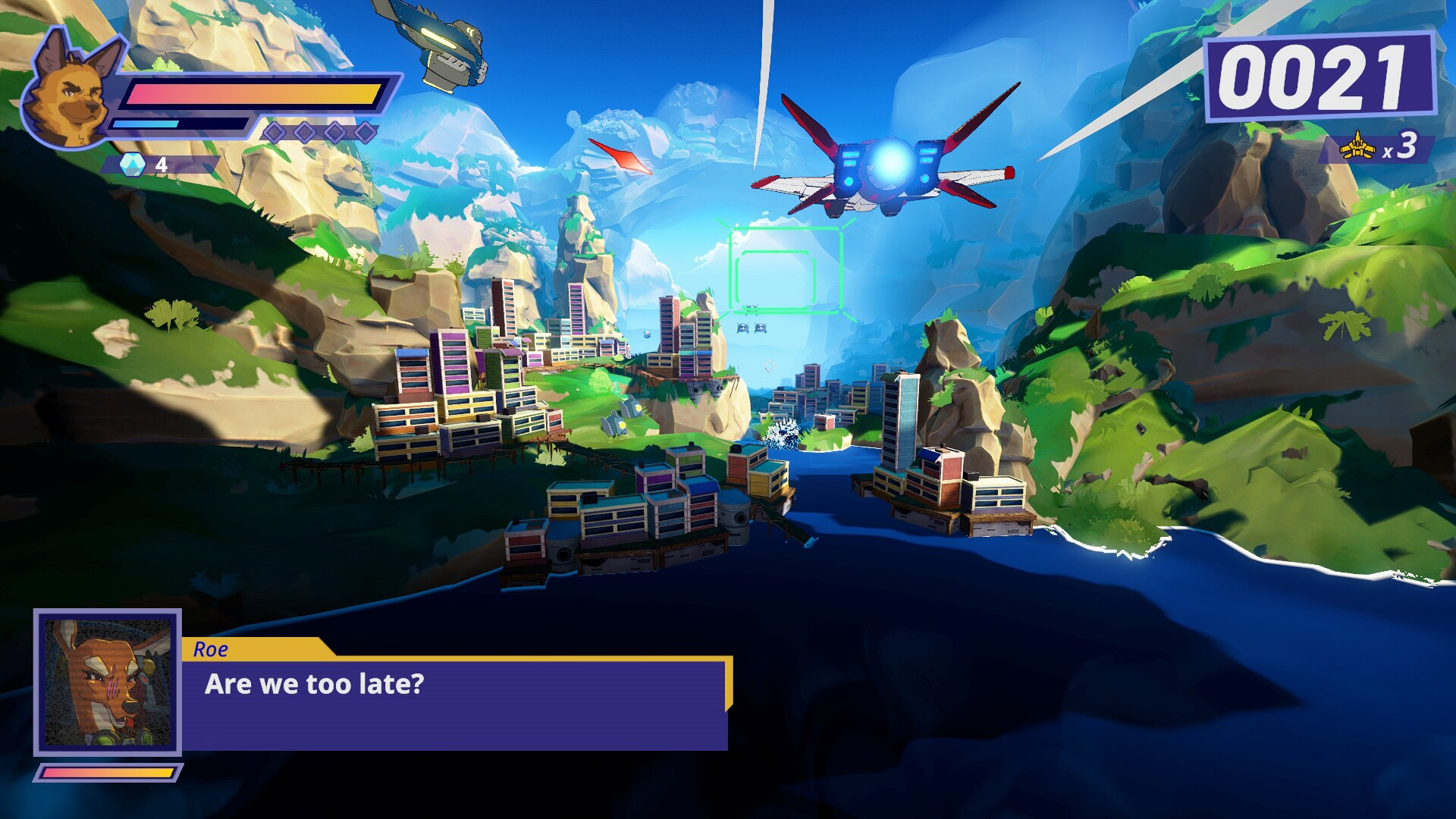
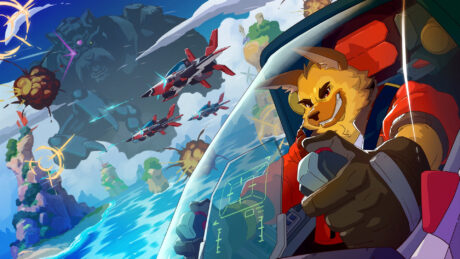
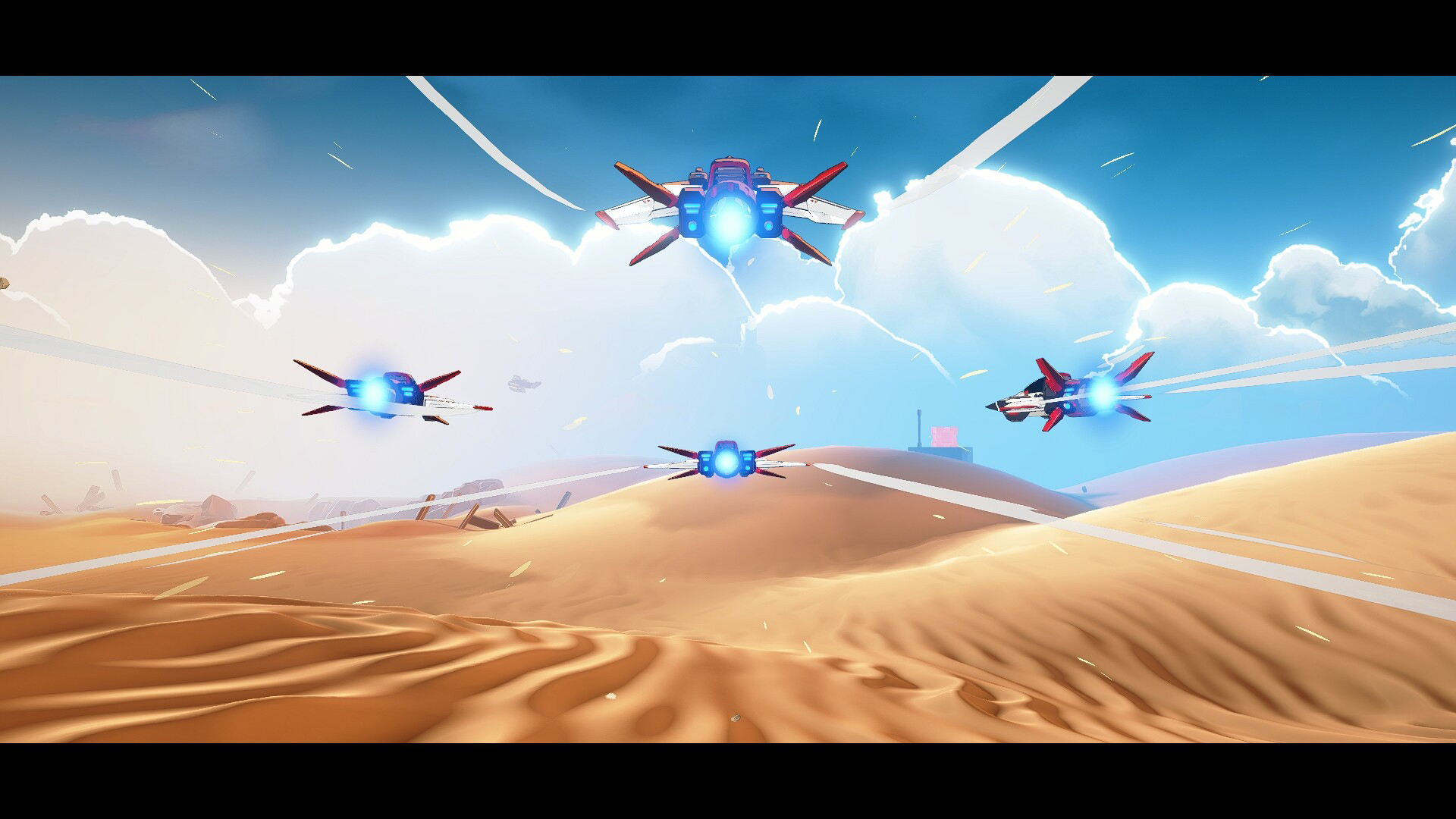
Welcome to the Blue Bombers, where you play as the leader Bowie Stray, who resembles a German Shepherd. In your team, you have three companions: Roe Whitetail, a doe (female deer); Throne Pickle, a lizard; and Chuck Barbacoa, a cow/bull. Your mission is to take down the antagonist Grimclaw, an exiled mastermind and former chief engineer. You’ll travel across oceans, deserts, caves, the arctic, and more environments while battling enemy fleets and large-scale bosses to put an end to Grimclaw.
Sounds familiar? If you’ve heard of or played a game called Star Fox, then you are familiar with the general setup with Wild Blue Skies. The overall story shares a familiar tone between both games. For example, the antagonist is banished to a wasteland and returns seeking revenge. Additionally, the stage boss levels in both games closely resemble each other, featuring large-scale mechanical weapons and a fight against an antagonist with a large head and two floating hands. It feels too familiar.
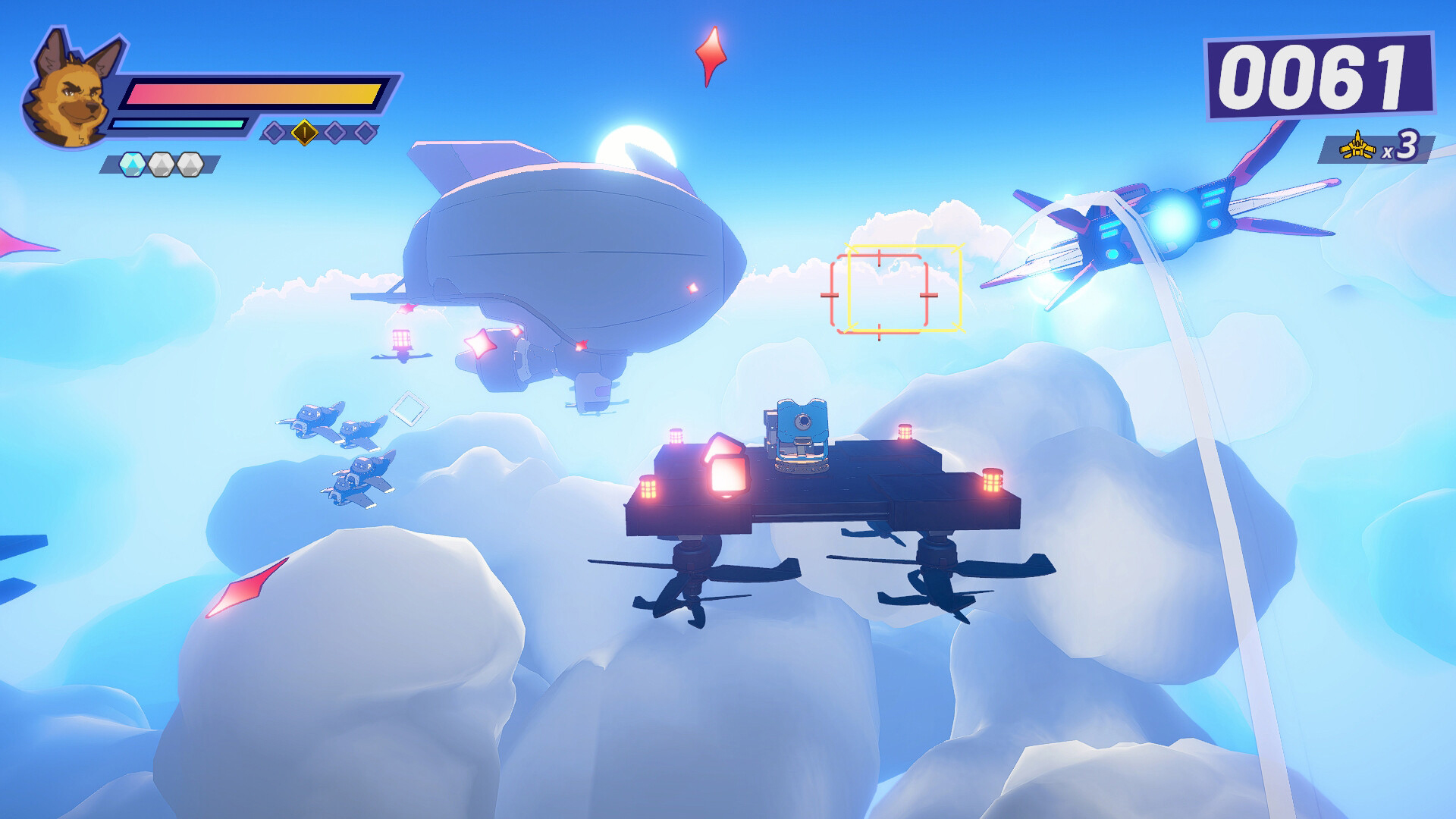
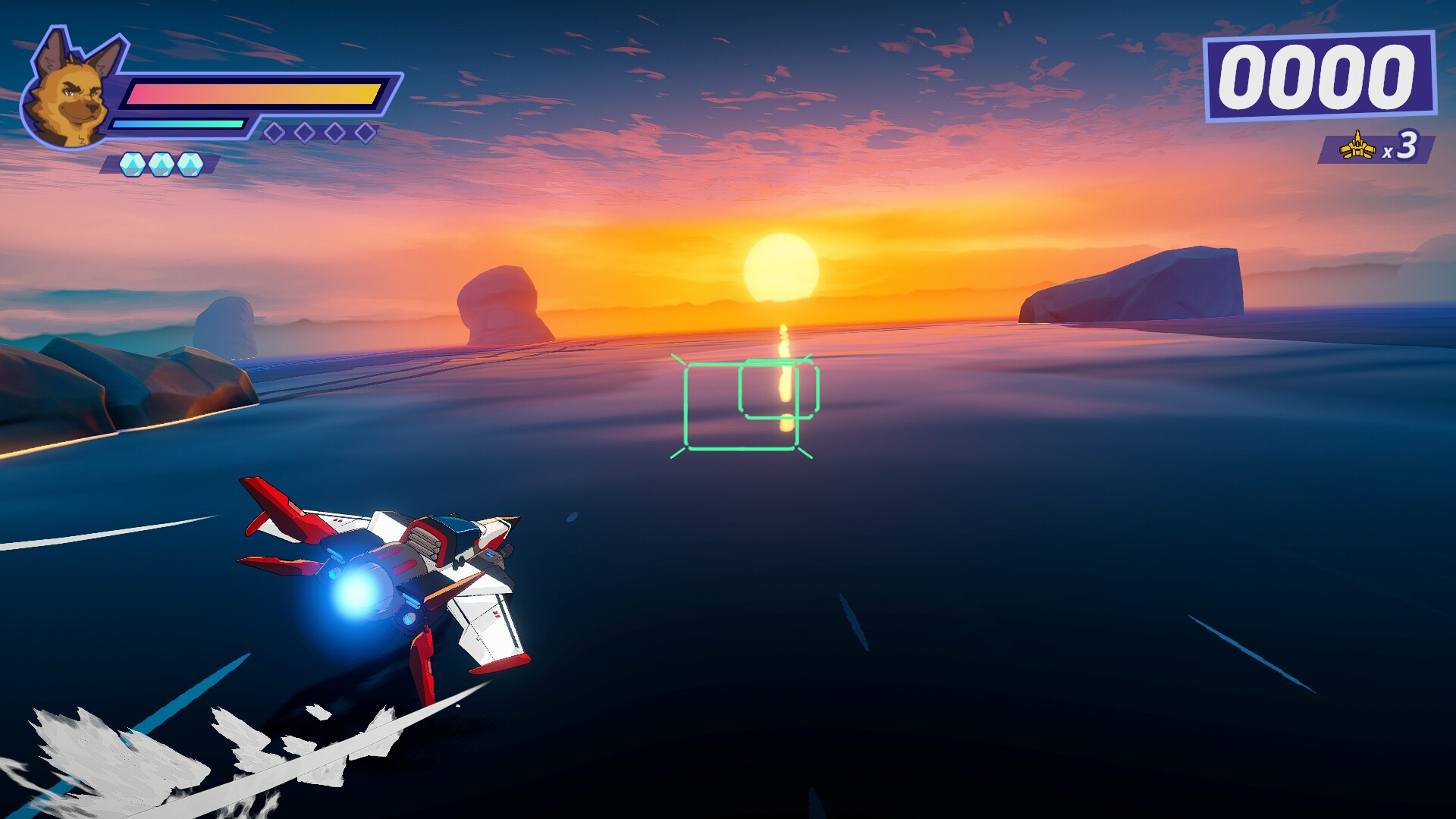
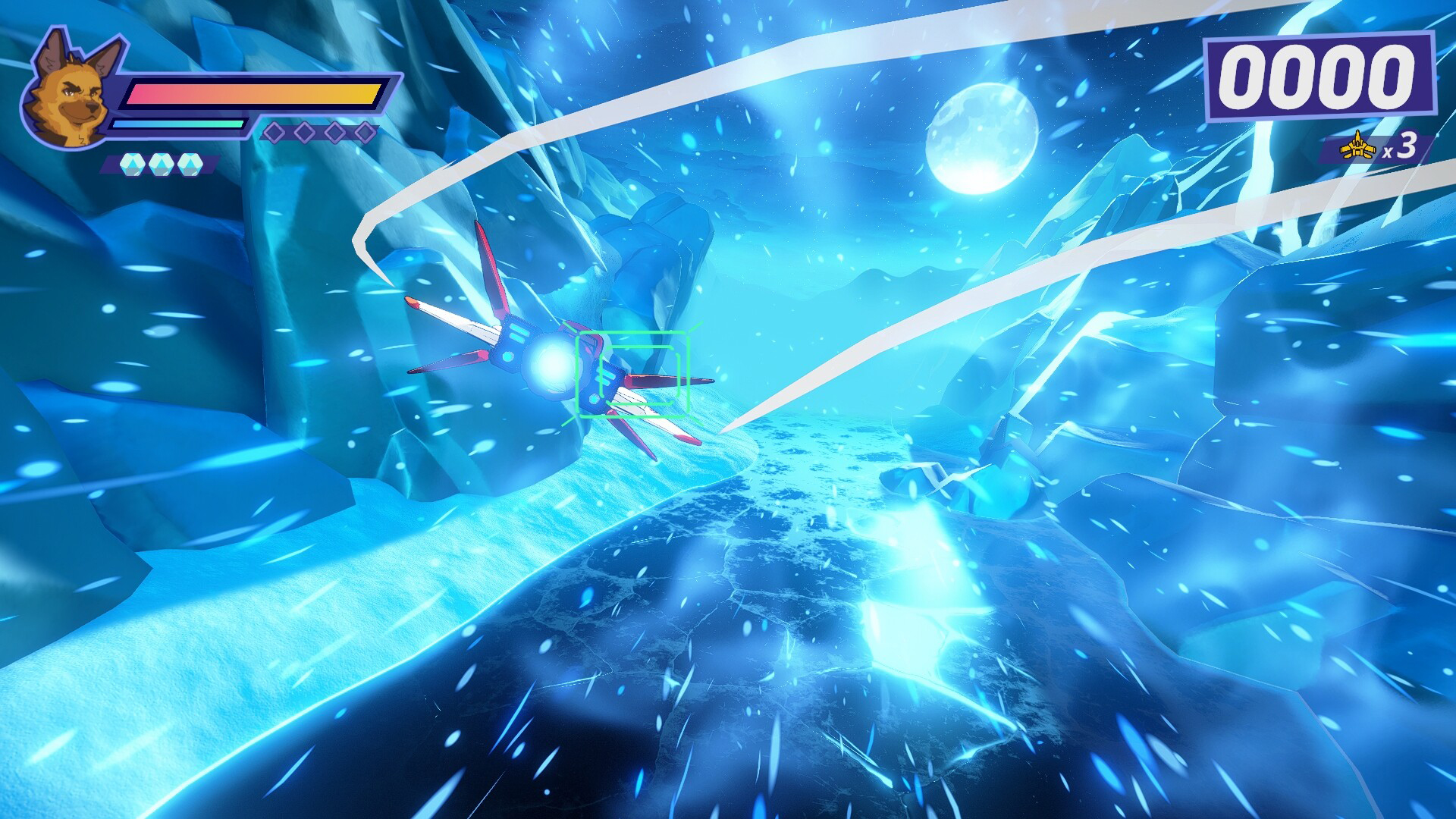
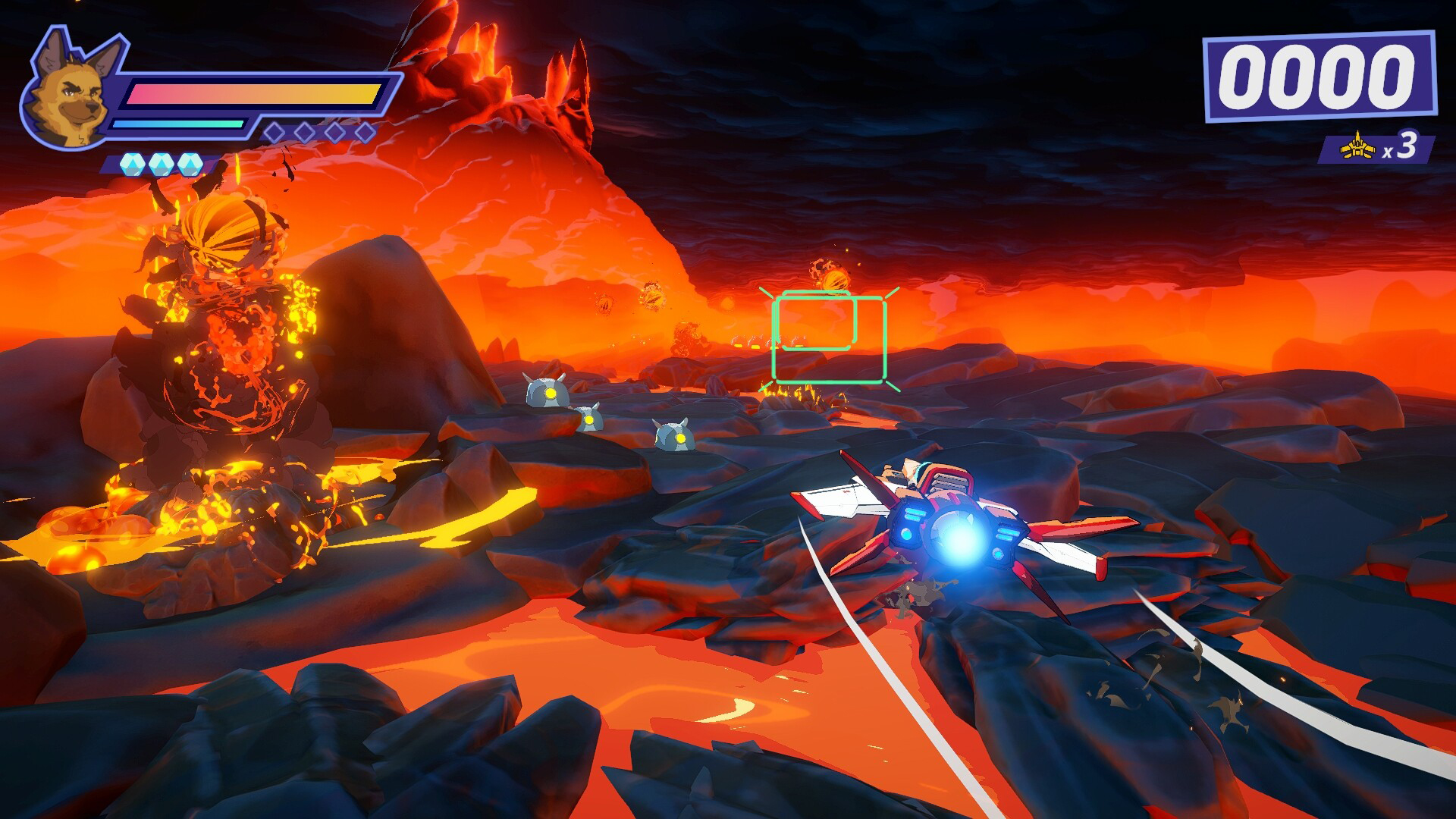
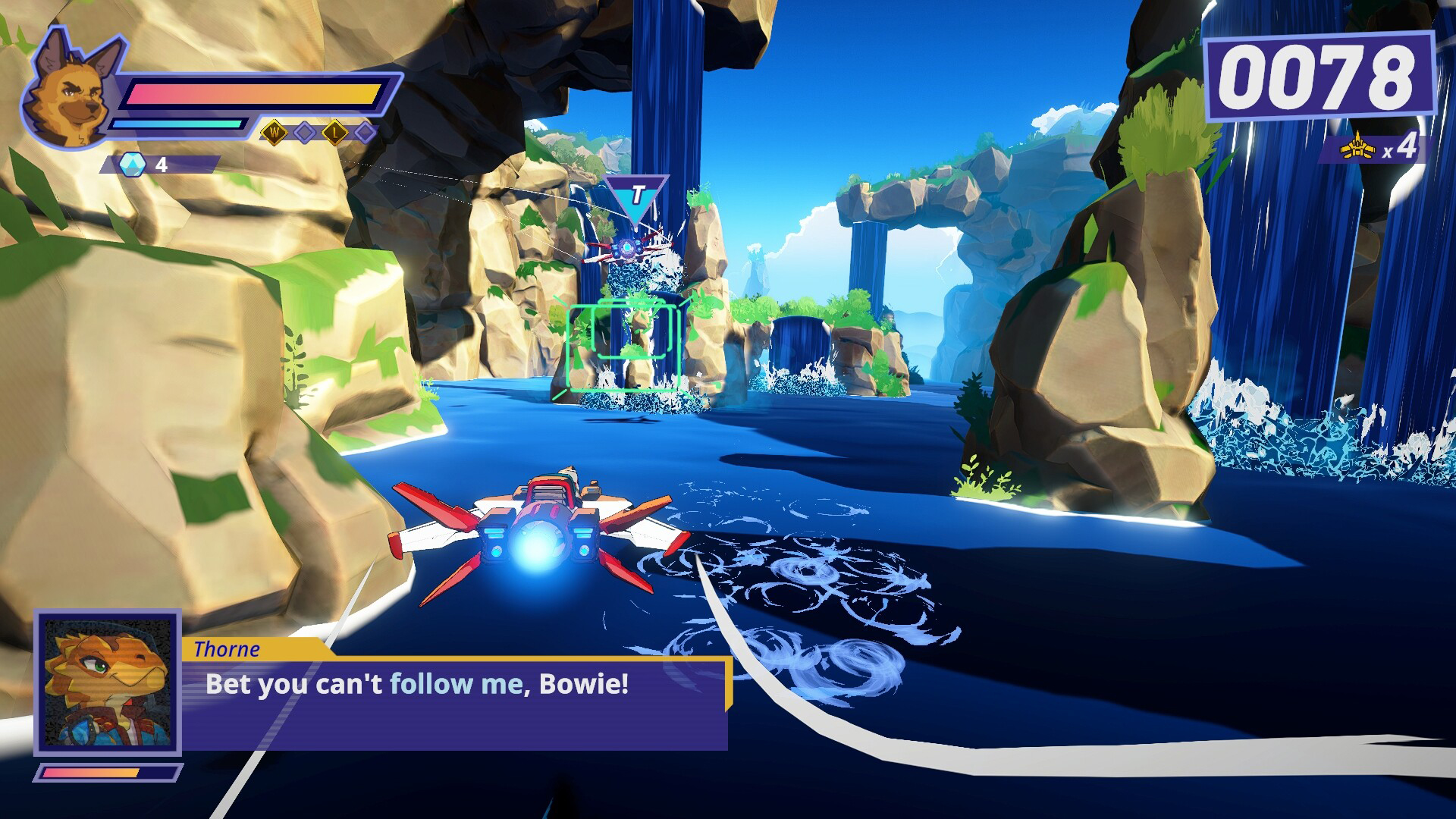
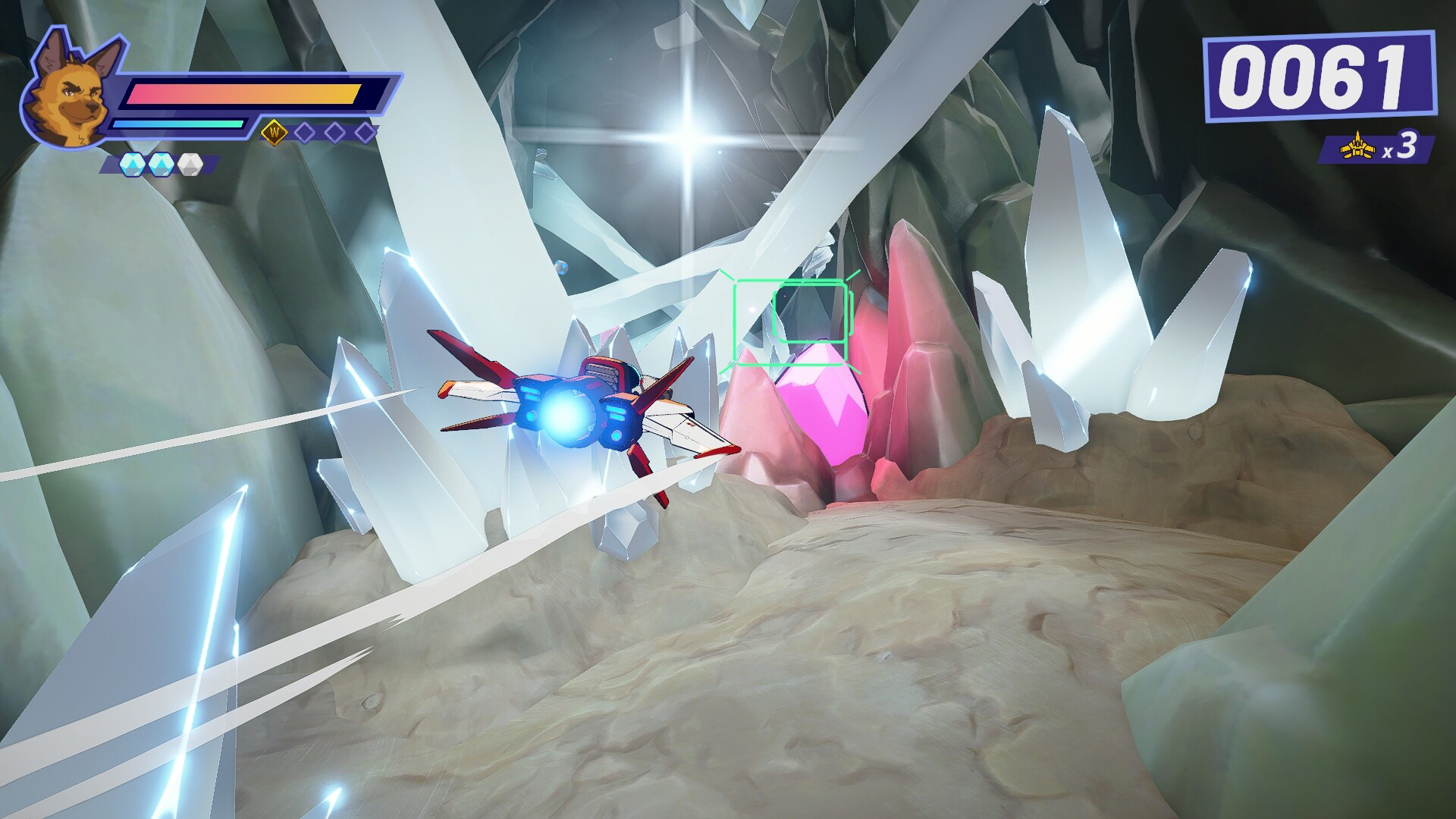
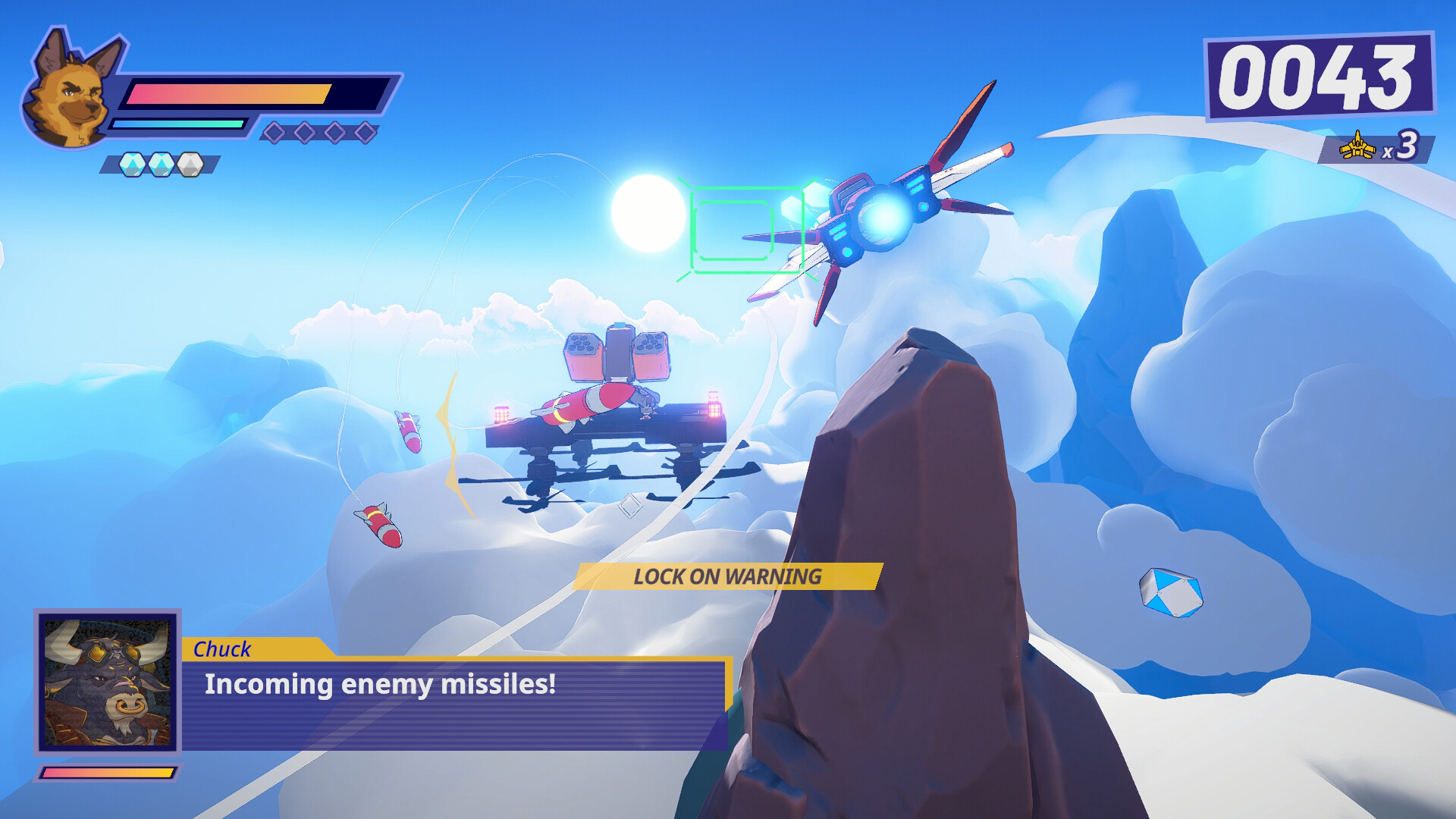
However, Wild Blue Skies does carry some differences that make it uniquely different. While Star Fox takes place in space and involves navigating to different planets, Wild Blue Skies is set on a single planet and never ventures into navigating other planets. The ship’s designs, characters, and environments have their own style. The game uses an outlined, 3D cel-shaded art style, along with bright and colorful palettes. This gives it an even more cartoonish style than the early years of the Star Fox games. While it offers a distinct visual presentation, the overall experience still portrays it as if it were a spin-off of a Star Fox game. There’s nothing wrong with being inspired by a classic rail shooter, but Wild Blue Skies could use some more unique elements, like a different story or more varied gameplay styles.
Do a Barrel Roll Spin
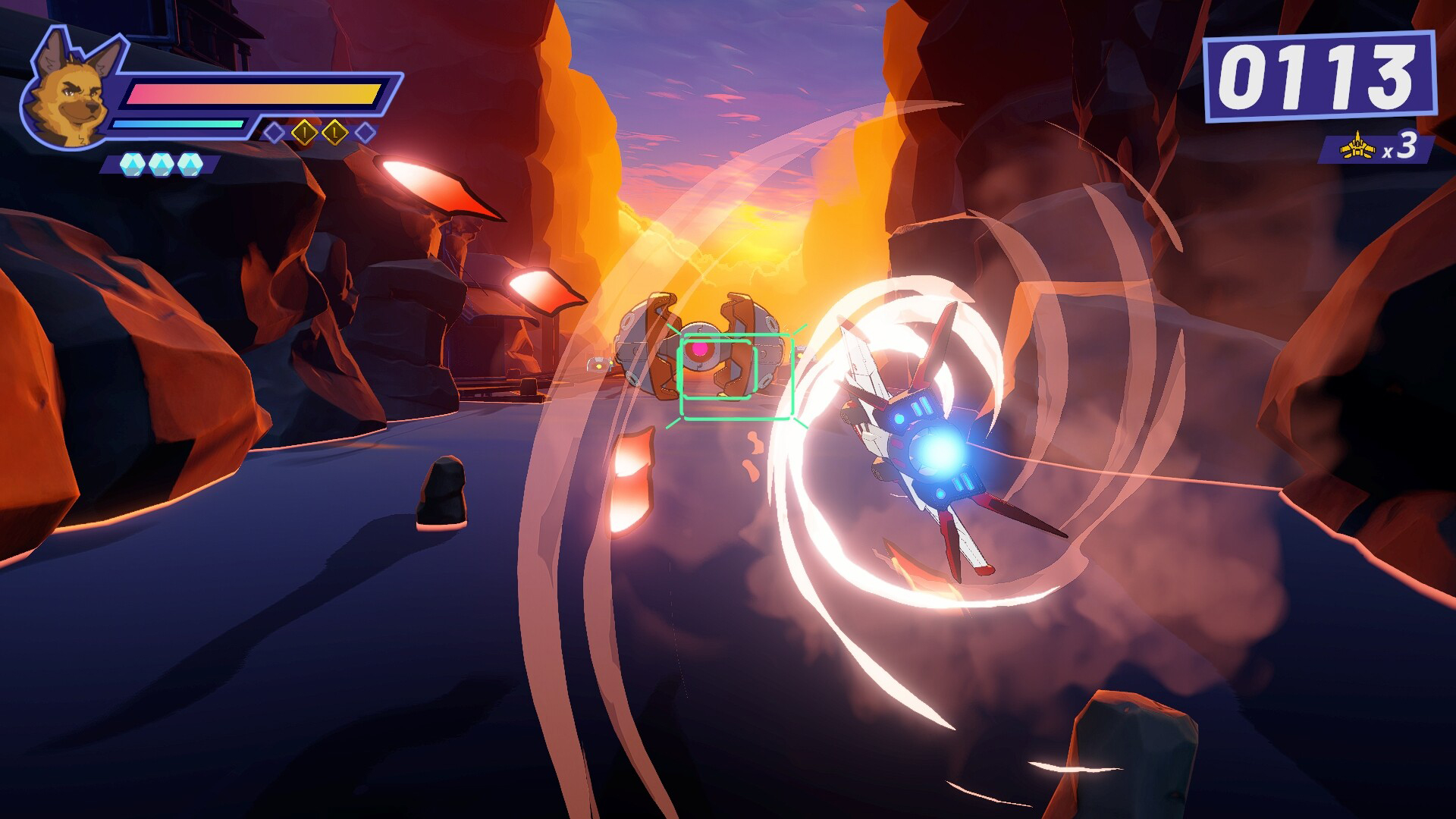
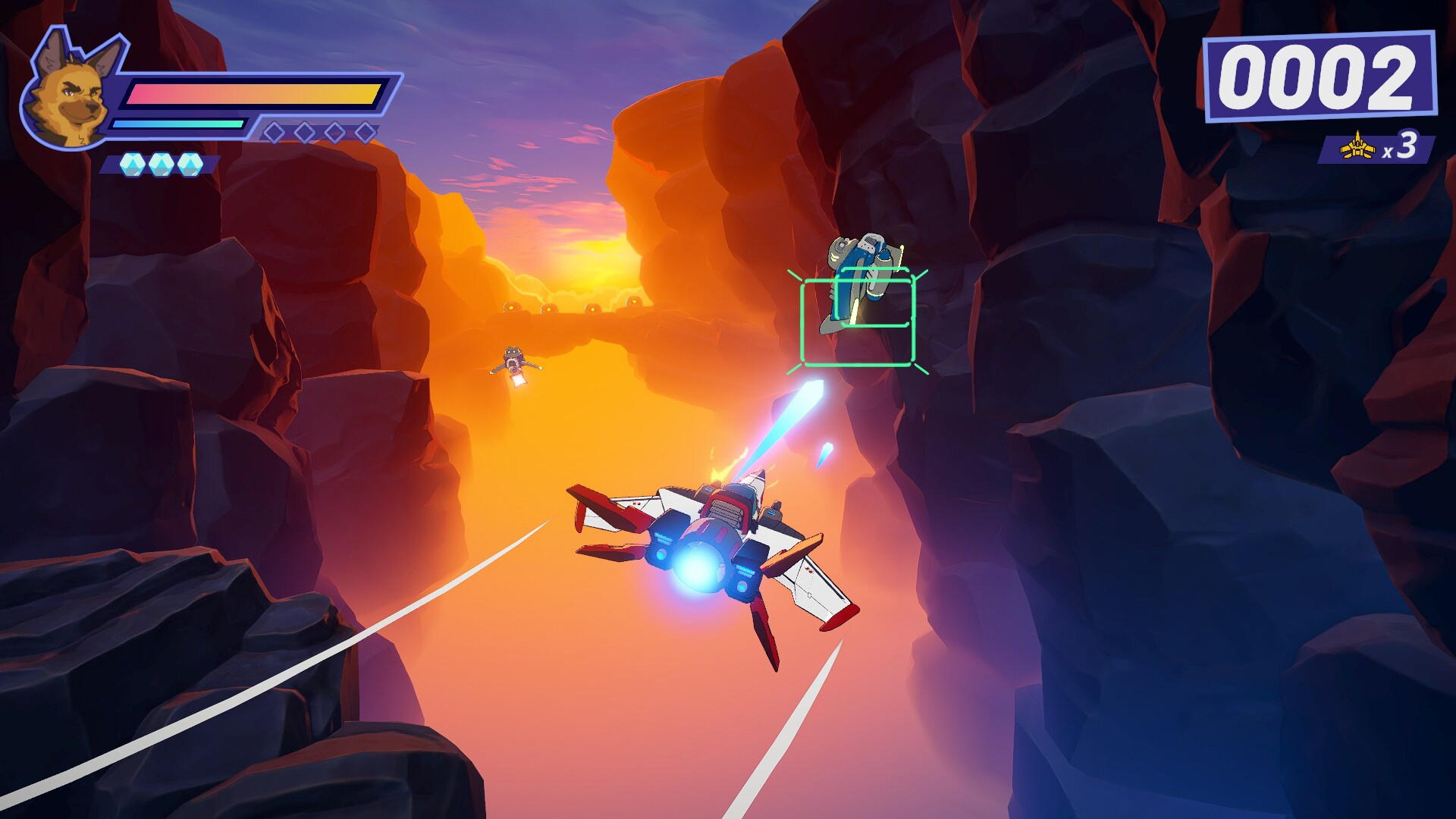
When you have Giles Goddard involved, a former Star Fox programmer, you can expect familiar formulas when taking down enemies. You’ll control your aircraft through various obstacles and avoid contact with landscapes and enemy projectiles. Players can adjust the Y-axis for controlling their plane, but those too familiar with Star Fox games will realize a difference in attacking enemies. When shooting, you can either tap the controller’s button to shoot lasers or hold down the button to shoot automatic lasers, a setting you have to change to use this auto feature. Charging shots requires a different button command and setup compared to Star Fox, which uses a single button for both shooting and charging.
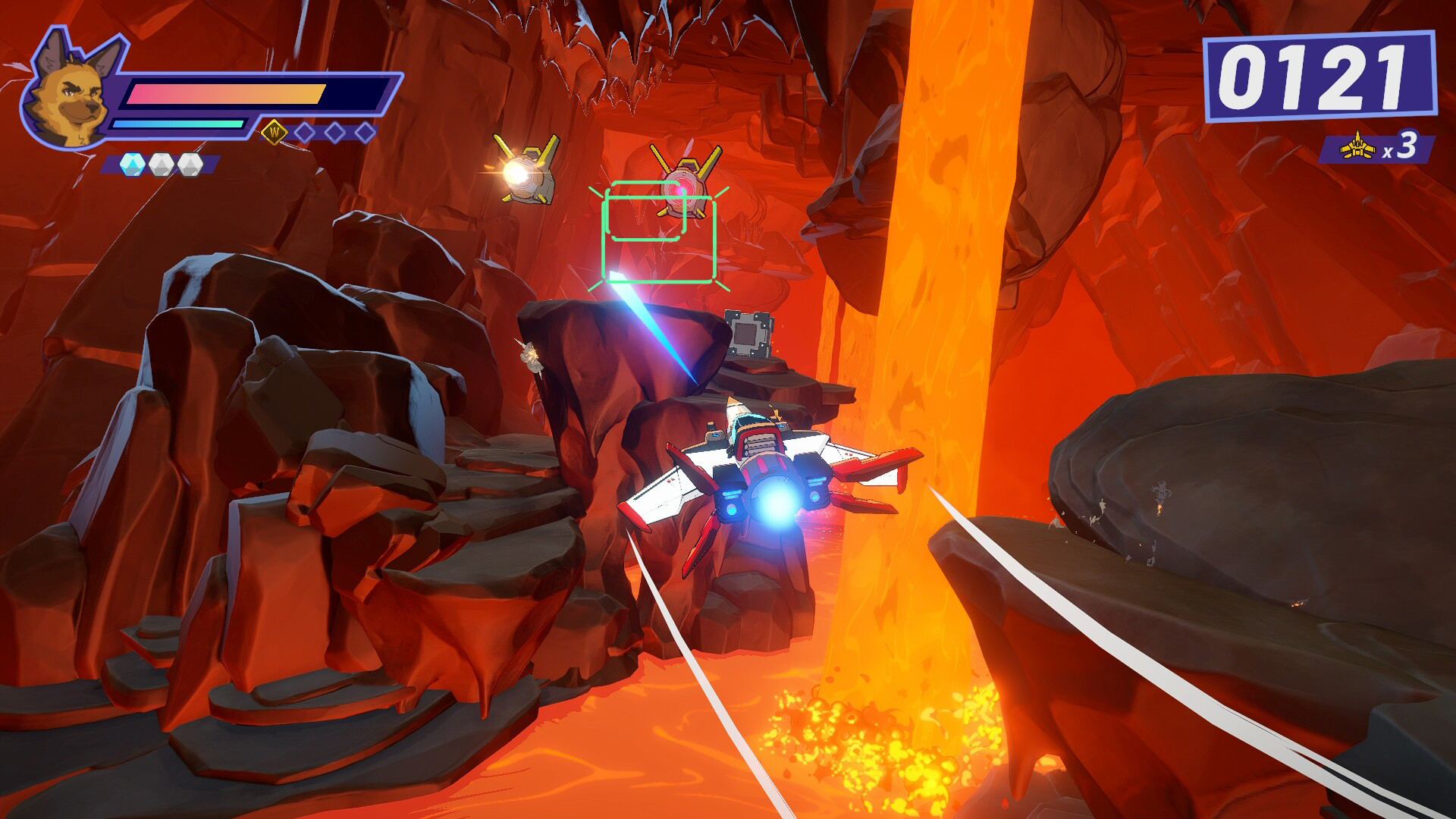
Players can shoot bombs for bigger impact and reload their supply from enemy drops. Deflecting attacks can be done by using the spin move that’ll spin your airship left or right, depending on which side of the controller’s trigger button you use by double tapping. There are additional pieces players can pick up to regenerate health, weapon upgrades, checkpoints, and letter emblems to spell out “WILD” before the stage’s end. These items help you travel or show off your score, but you don’t need them to finish the stage.
I find spinning the ship pushes further than anticipated, and flying through tight areas makes it challenging to not collide against walls. Normal enemies do feel like they take more shots than usual to take down. For example, Star Fox can go from 1 to 3 shots to take down an enemy, and it feels double that in Wild Blue Skies. Weapon upgrades don’t feel much different when obtained, and you lose these power-ups if you crash.
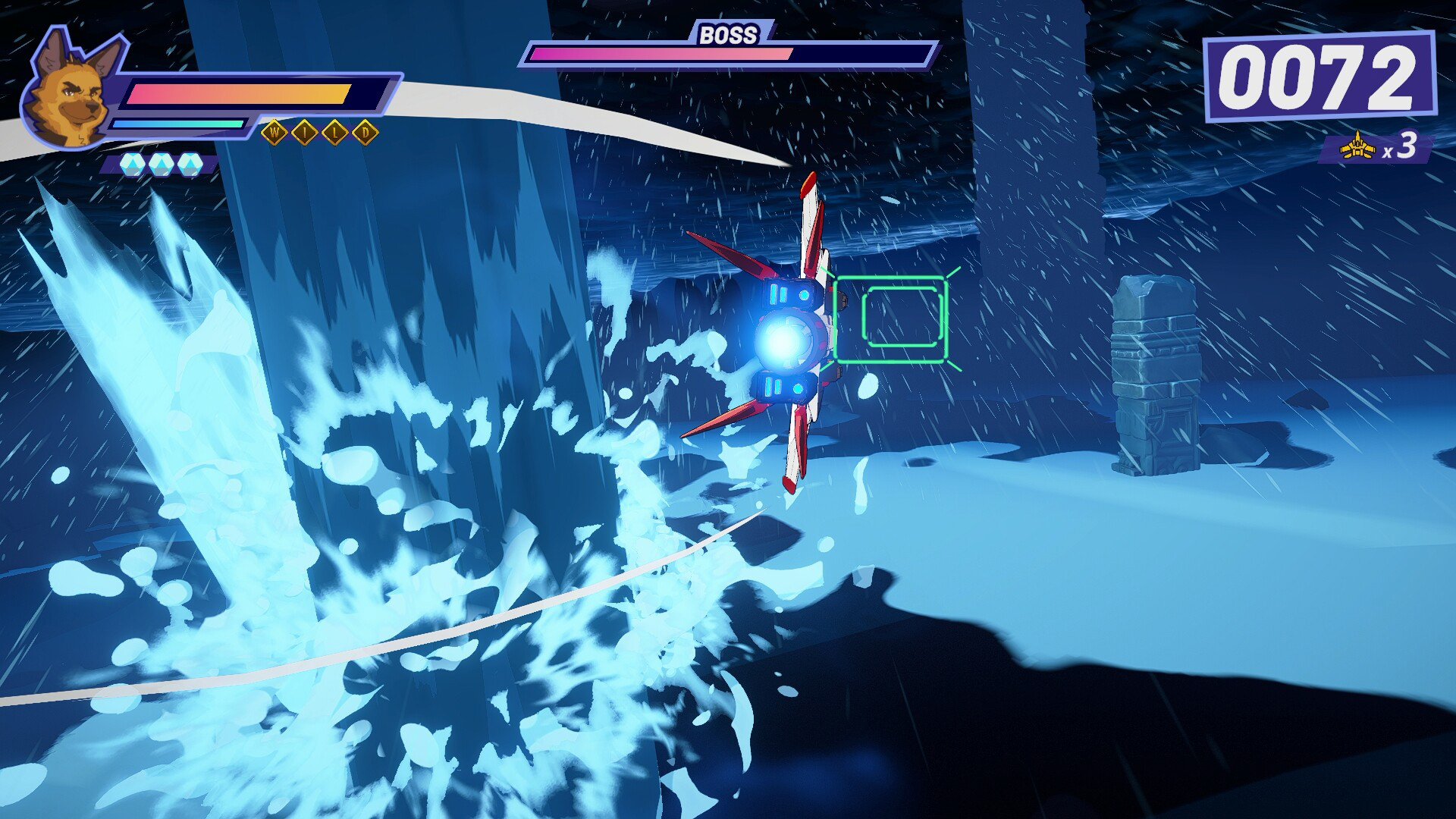
Many of the stages place players in a rail-collider-style movement with some boss battles in a free-range mode where players can maneuver in any direction. One feature that isn’t in Wild Blue Skies that I do wish was brought in from Star Fox is the somersault to help get away from enemy projectiles from behind.
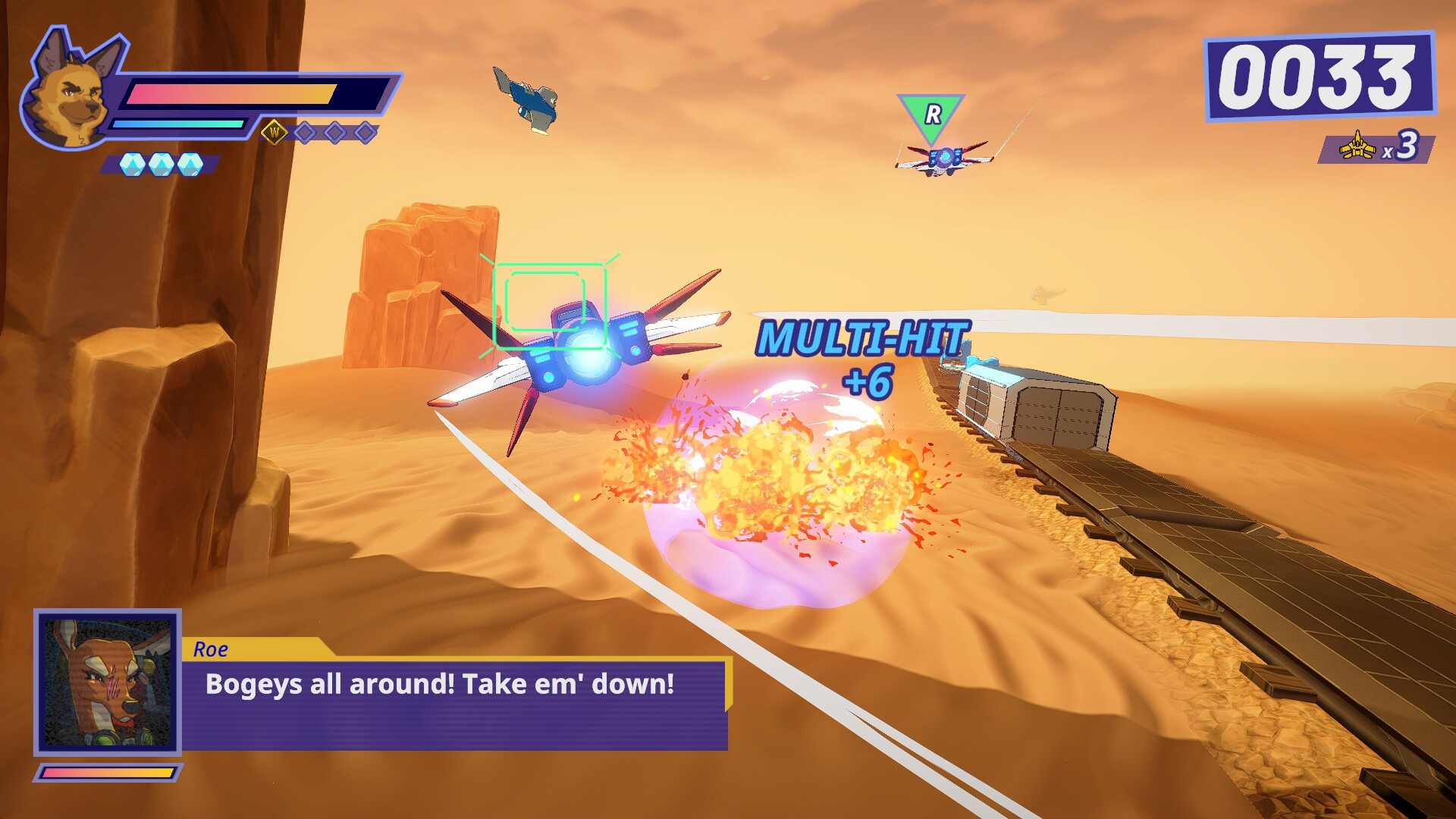
Maneuvering around the stage does feel quite smooth, and executing moves feels second nature if you are familiar with rail shooters. You’ll focus on your aircraft to avoid going down at times, but you can also help comrades by shooting down enemies they are confronted with. You can avoid this issue, but players may miss opportunities to take different paths when selecting the next stage, or their comrades may leave the current stage and become unavailable in the next stage if their health is depleted. Your comrades primarily serve to create dialogues as distractions and attract enemies instead of you. A feature that could set the game apart from others is switching to different comrades before starting a new stage. As long as they are not out of commission for repairs.
If and when you fail, you’ll lose a life and can try again from either the start of the mission or at the checkpoint. I found that if you pause the game and return to the main title screen, then go back to replay your saved file, you are back at the last save point with the same health gauge. This is an additional step that players can take, which avoids the option of restarting the stage and losing a life.
Completing stages follows the same formula: either defeat the boss or eliminate specific elements. Stages feel more challenging than boss battles but are still fun to take down. I would have liked to see more goal variations to make the game feel more unique, such as collecting a set of specific items that will need to be used to clear the stage. Additional modes such as time attacks or goals can add more replay for players.
Players can expect to run through the campaign within two hours of recorded gameplay but not 100%. Wild Blue Skies offers various paths based on your performance in specific stages, giving you more reasons to return to the sky and discover these new stages, collect all items, and more. It adds more replay value, and fans of rail shooters won’t complain about these secrets. For a price tag at retail price of $14.99 USD, it’s a good price tag for what the game delivers and for those who don’t own a Nintendo console, it’s another way to play a game similar to Star Fox.
What Lies Beyond
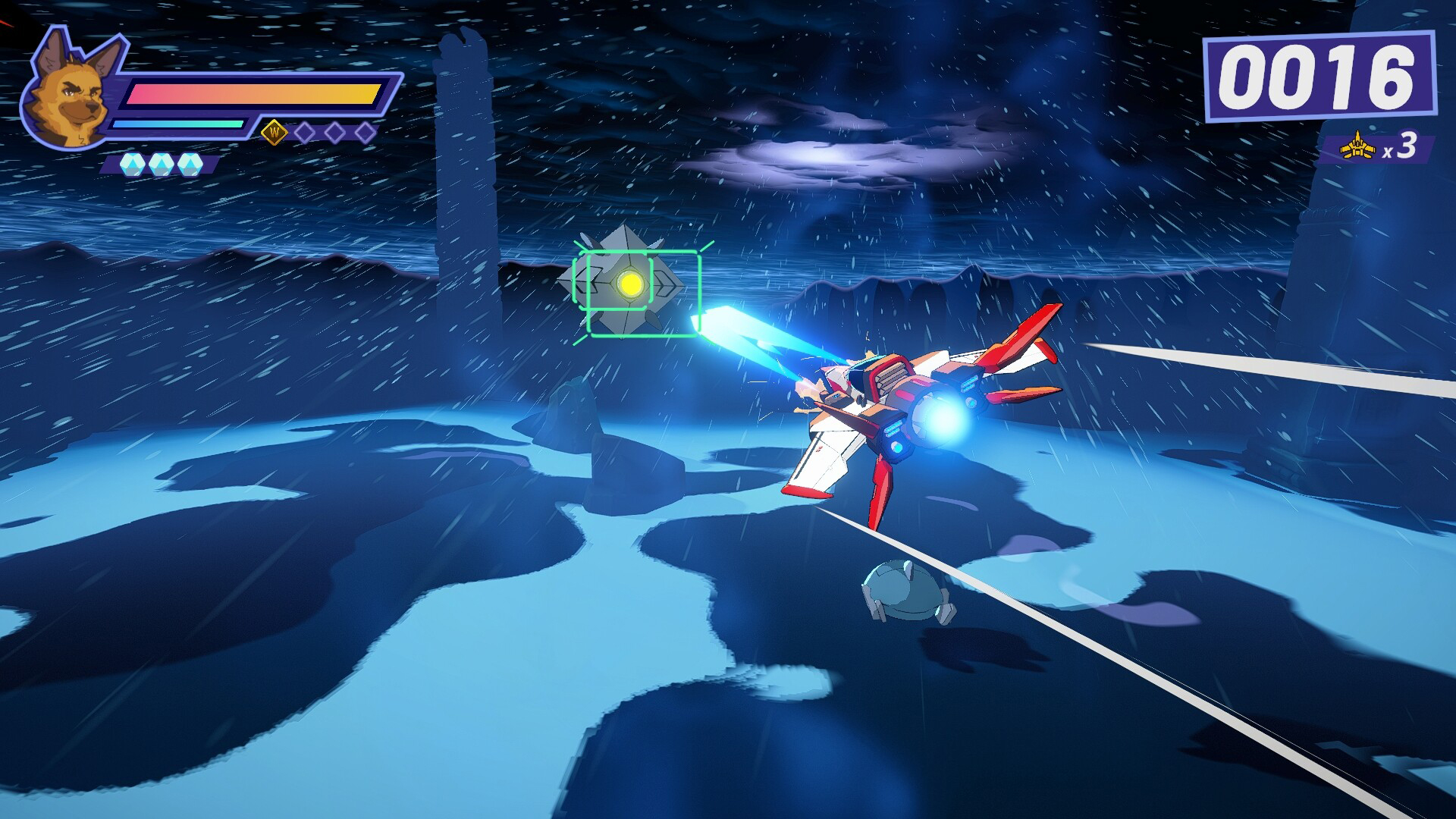
The colorful, cel-shaded visuals are one of the best features in the game, but the environments you’ll travel across feel lackluster. Details feel sparse and more like silhouette objects, and the backdrops are colored in with gradient colors to match the environment with little texture. Adding more visual details would make the environments feel more expansive. , the environments would feel more vast.
The game’s soundtrack, composed by Marc Junker, fits the fast-paced aerial combat with energetic compositions. Victory themes feel like an accomplishment when that sound clip comes up and boss levels carry some of that deep intensity. Overall, the soundtrack brings the retro arcade feeling that aerial battles demand. in aerial battles.
The Final Flight
Wild Blue Skies delivers fast-paced aerial action, colorful cel-shaded visuals, and an energetic retro soundtrack. However, it carries sparse environments, bullet-spongey enemies, and strong resemblance to Star Fox keep this flight from reaching greater heights. Still, if you don’t mind its familiar formula, there’s plenty of fun to be found in the skies.
A PlayStation 5 review code provided by the publisher. Wild Blue Skies is available on August 13, 2026 for the PlayStation 5, Xbox Series X/S, and PC. The Nintendo Switch version is set to release this fall. Fans can visit the game’s official website for more information and purchasing options.
Related Stories
Related Posts


Leave a Reply
Subscribe
Login
0 Comments
Oldest