5.0 out of 5
Meow!
Purrr....
- Beautiful visuals
- More content to explore
- Strong continuation of the 1st Chapter
- Fun mini games
- Flexible combat system
- Improved Quartz system
Hisss!
- Some voice overs note fully used
Platform
Switch 2, Switch, PlayStation 5, PCPublisher
GungHo AmericaDeveloper
Nihon FalcomSeries
TrailsGenre
Action, RPGPlayers
1File Size (Minimum)
19.5 GBRelease Date (NA)
Sep 17, 2026Filed Under
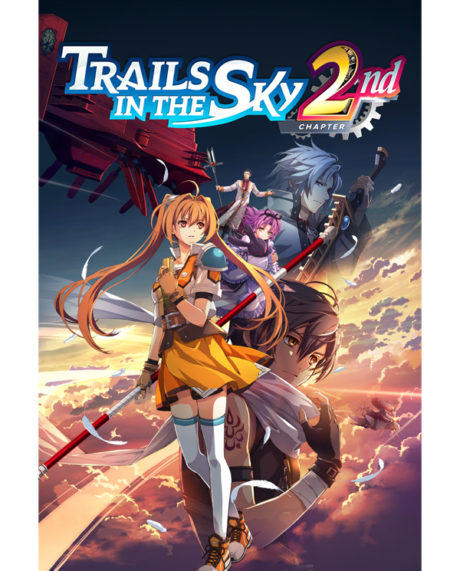
Trails in the Sky 2nd Chapter is the sequel to the 1st Chapter, and like the prequel, it’s a remake of the original. It’s a stellar remake for role-playing game (RPG) fans and for those who’ve played the 1st Chapter or have waited, the 2nd Chapter is worth it.
A Journey Worth Continuing
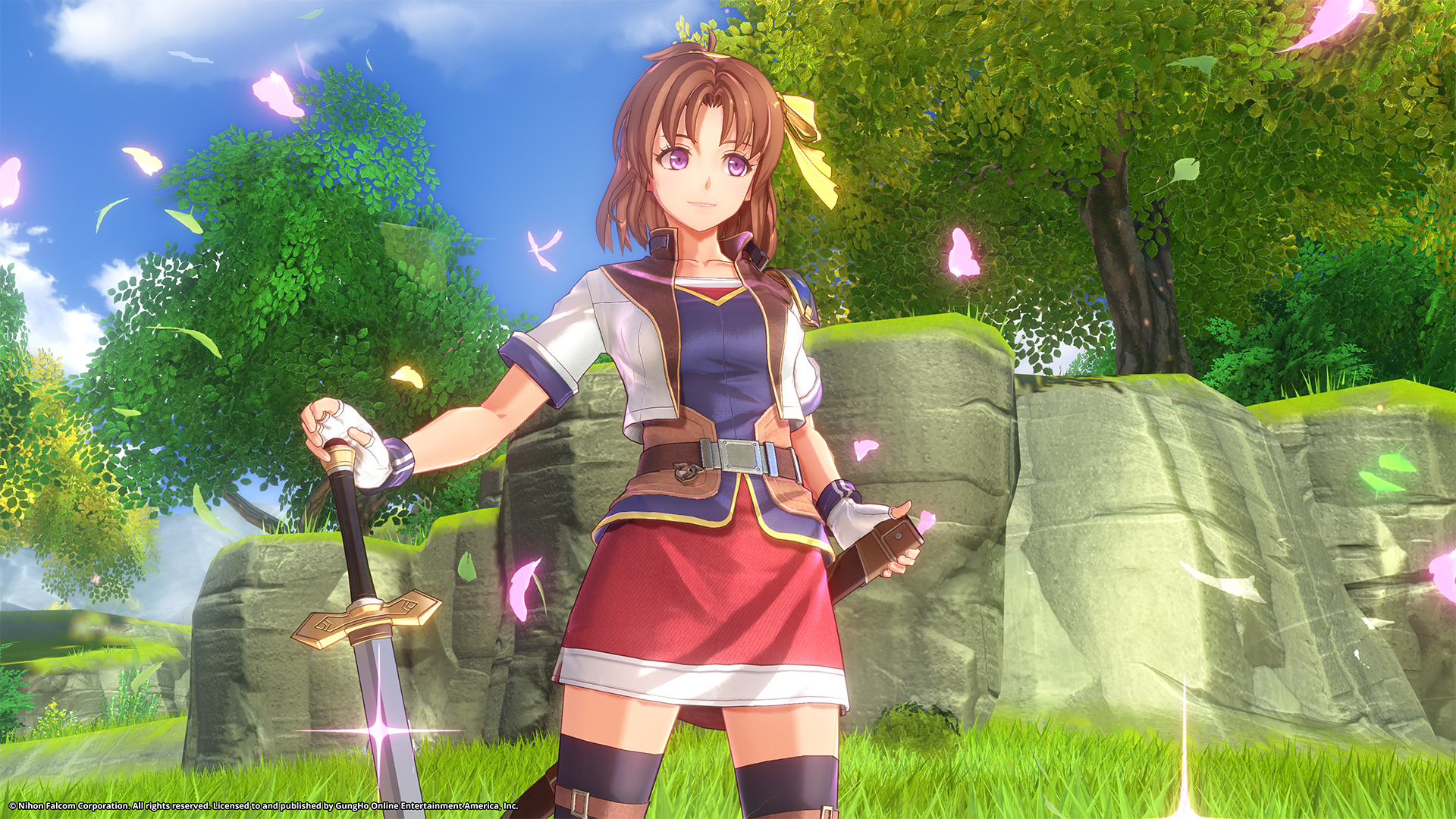
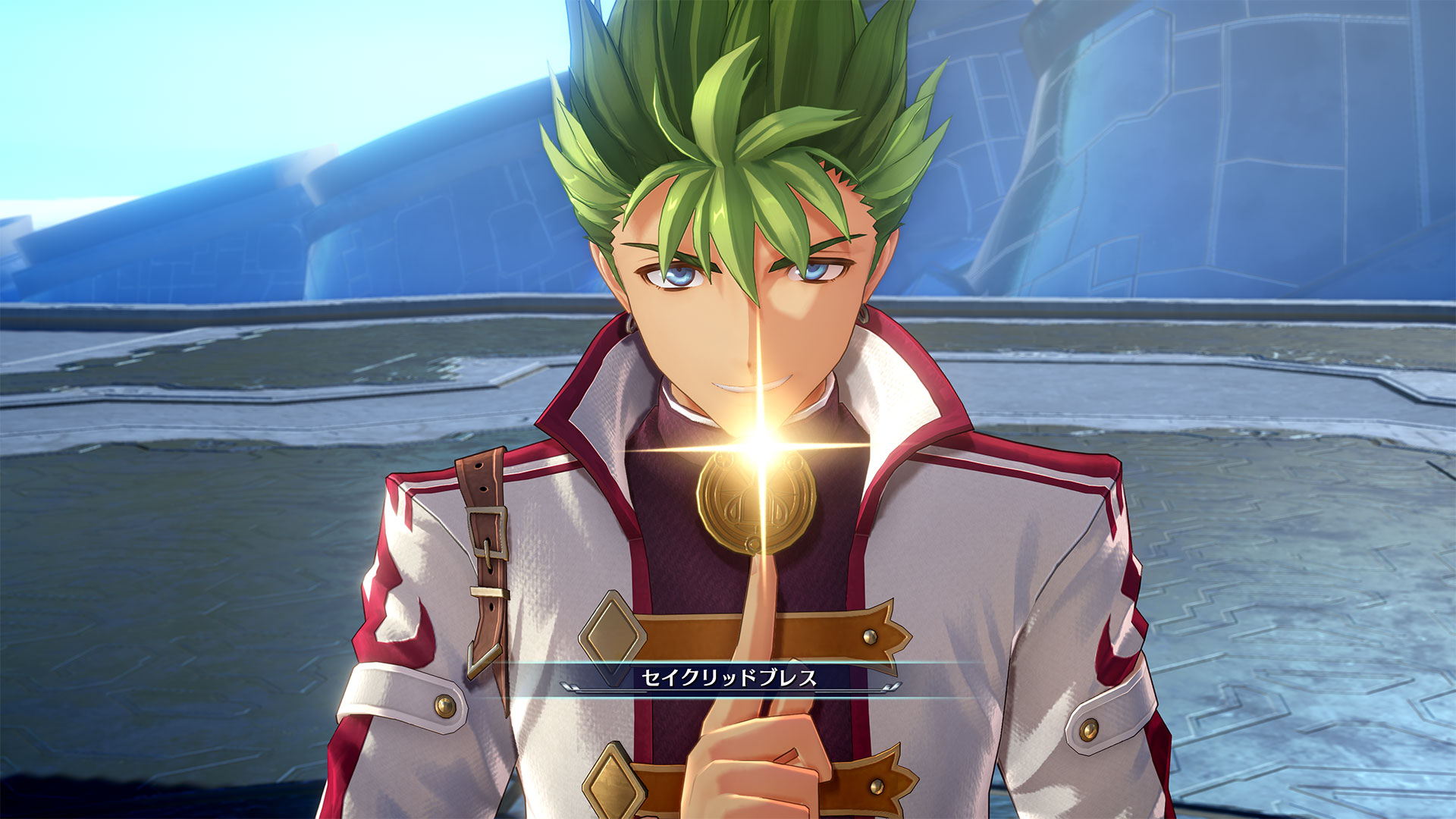
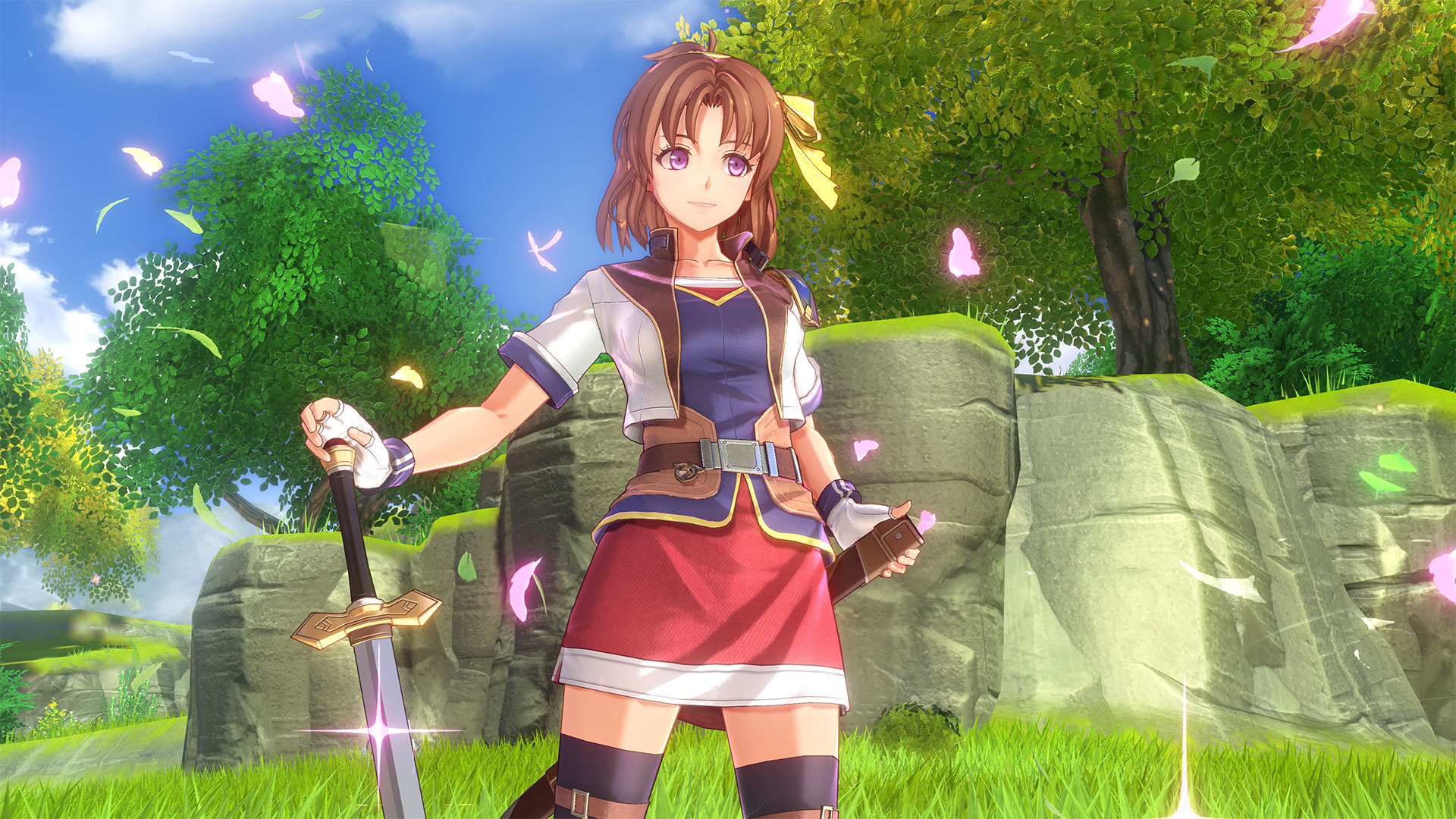
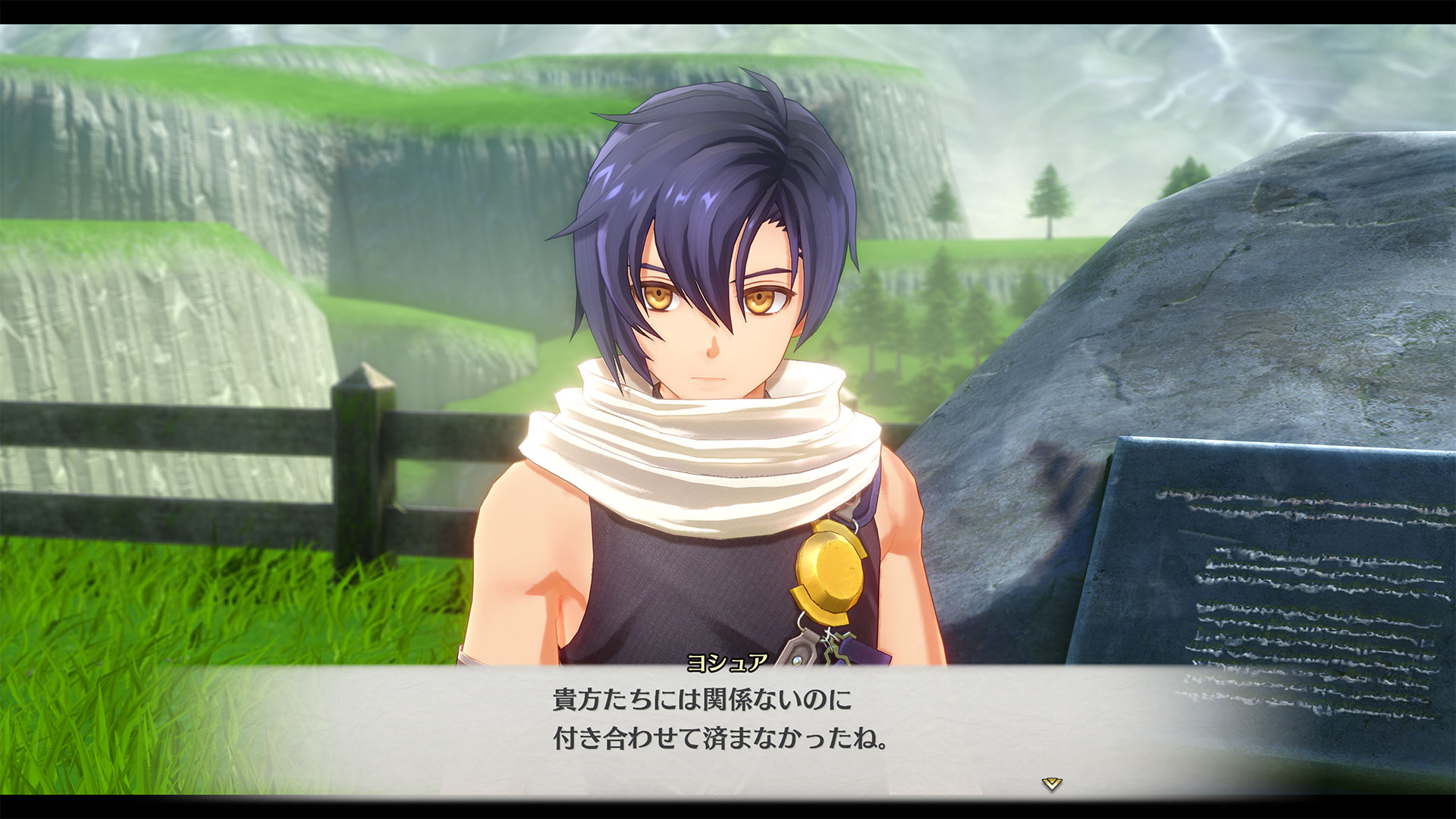
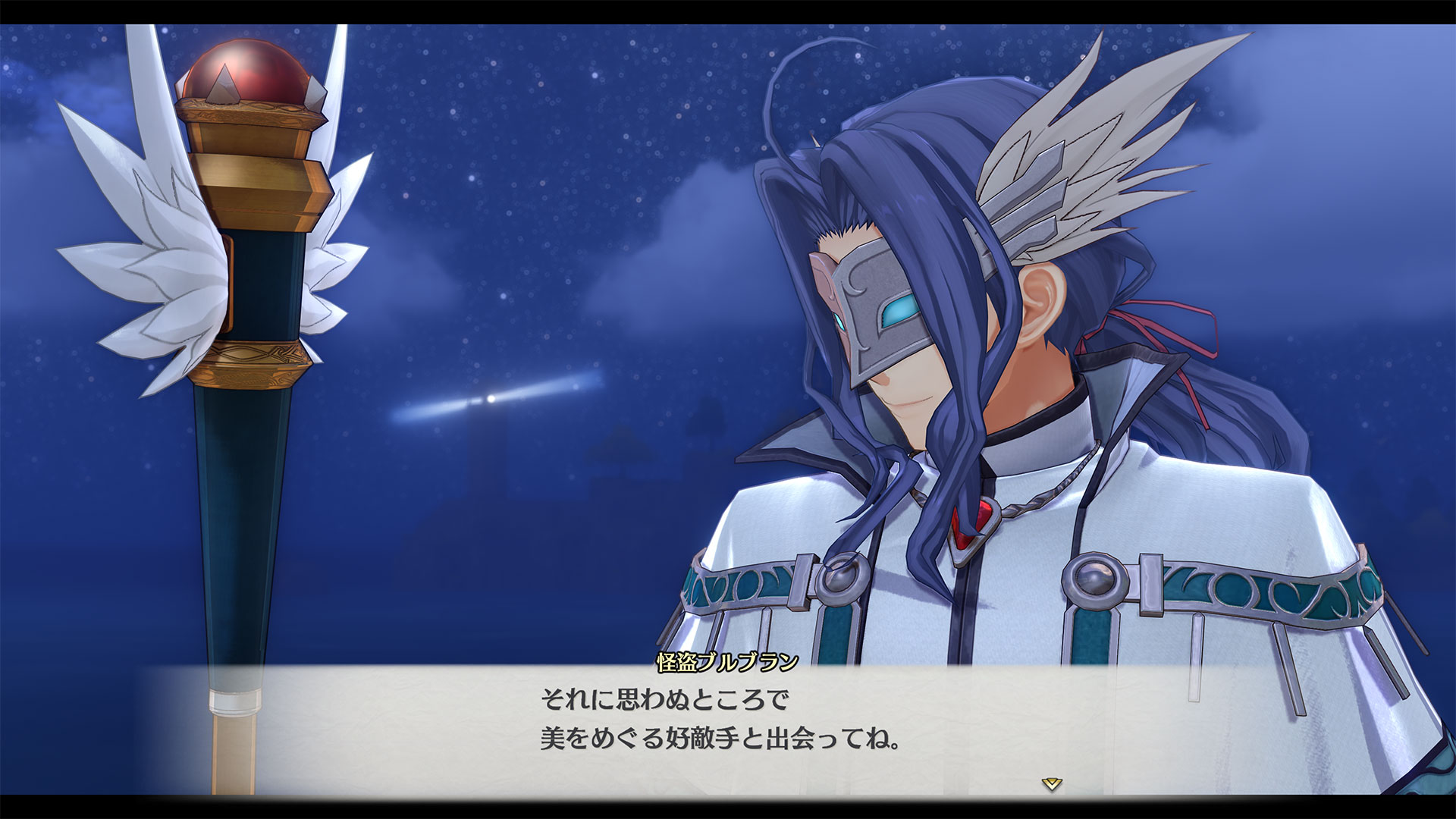
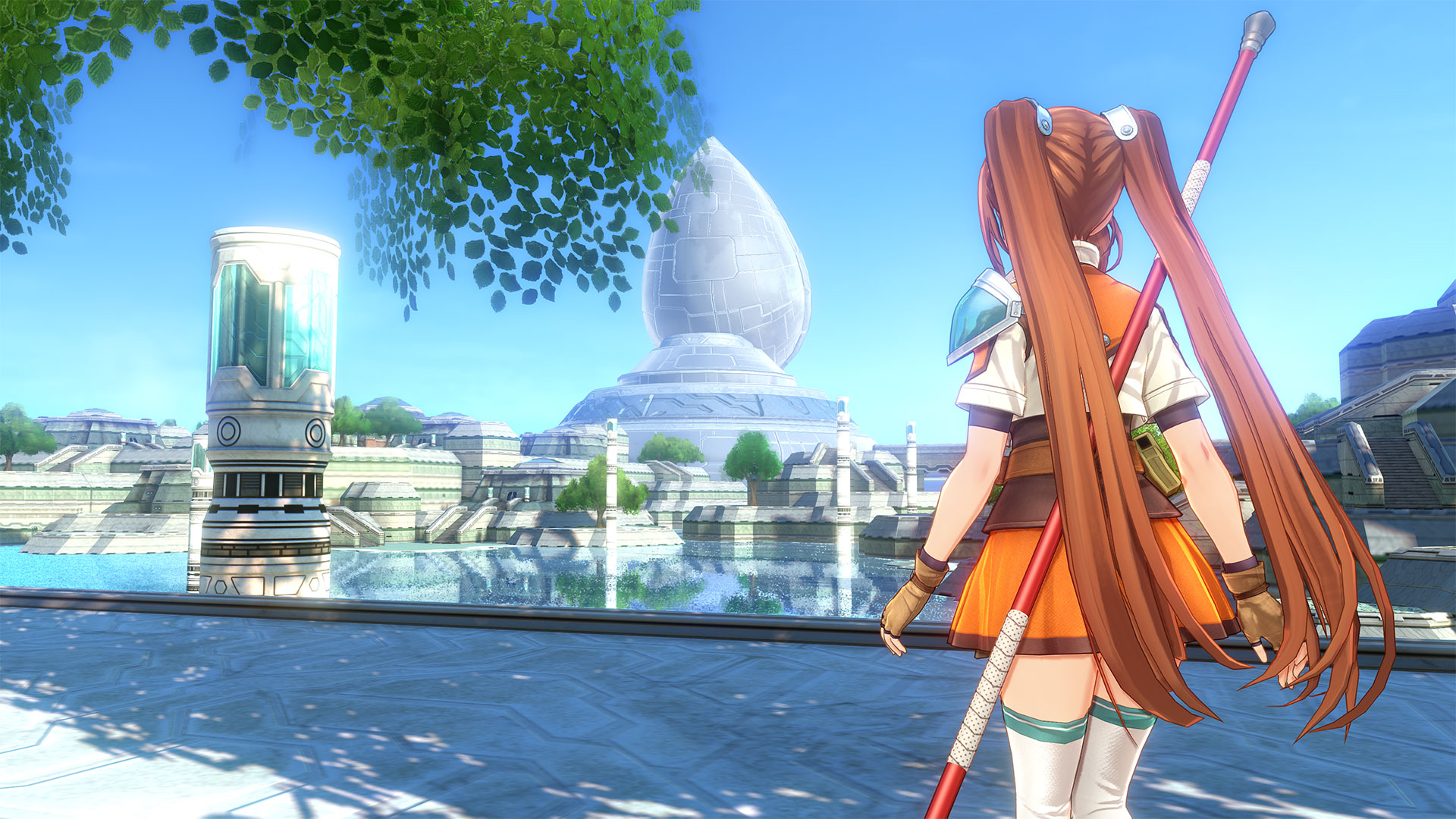
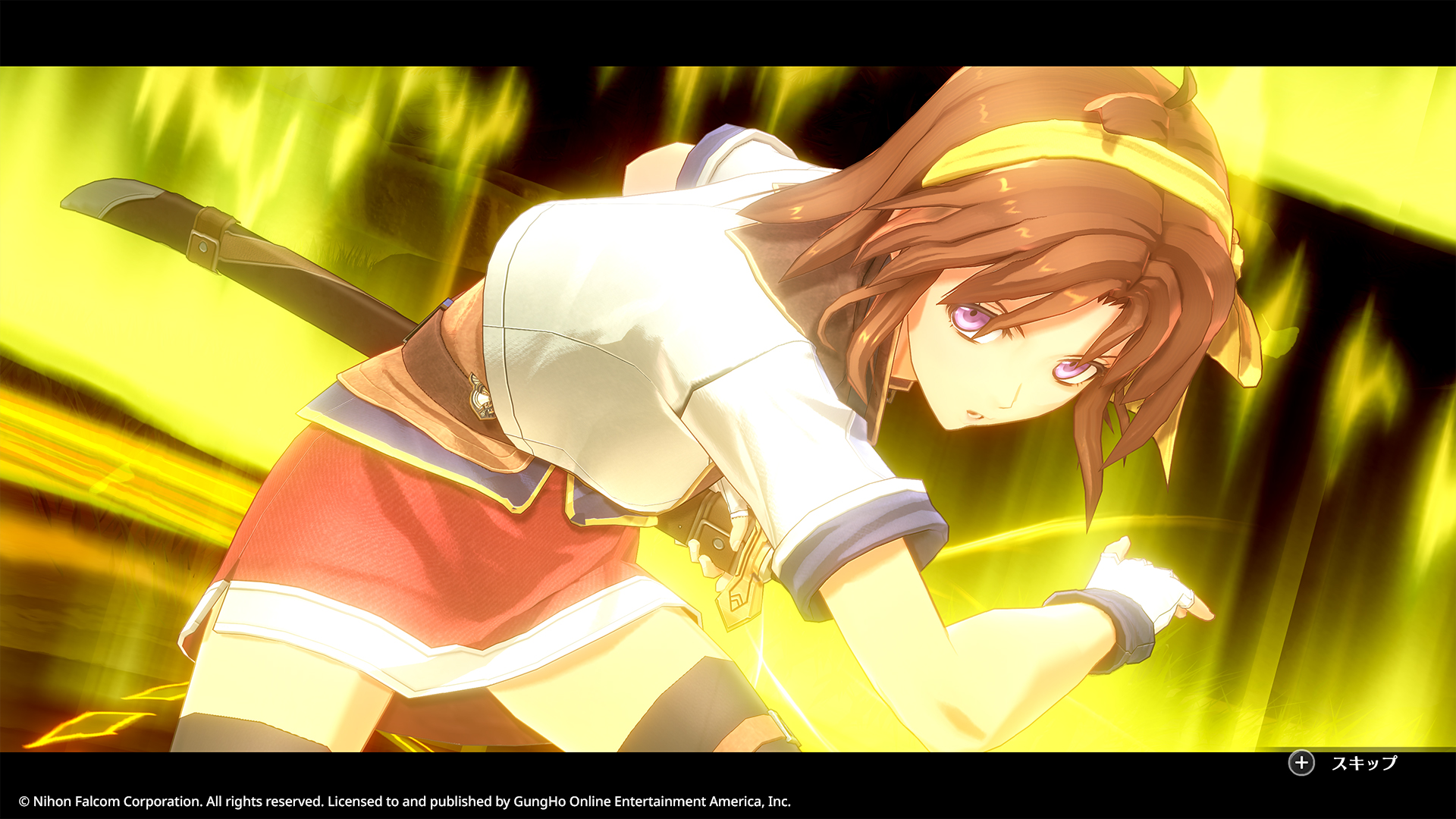
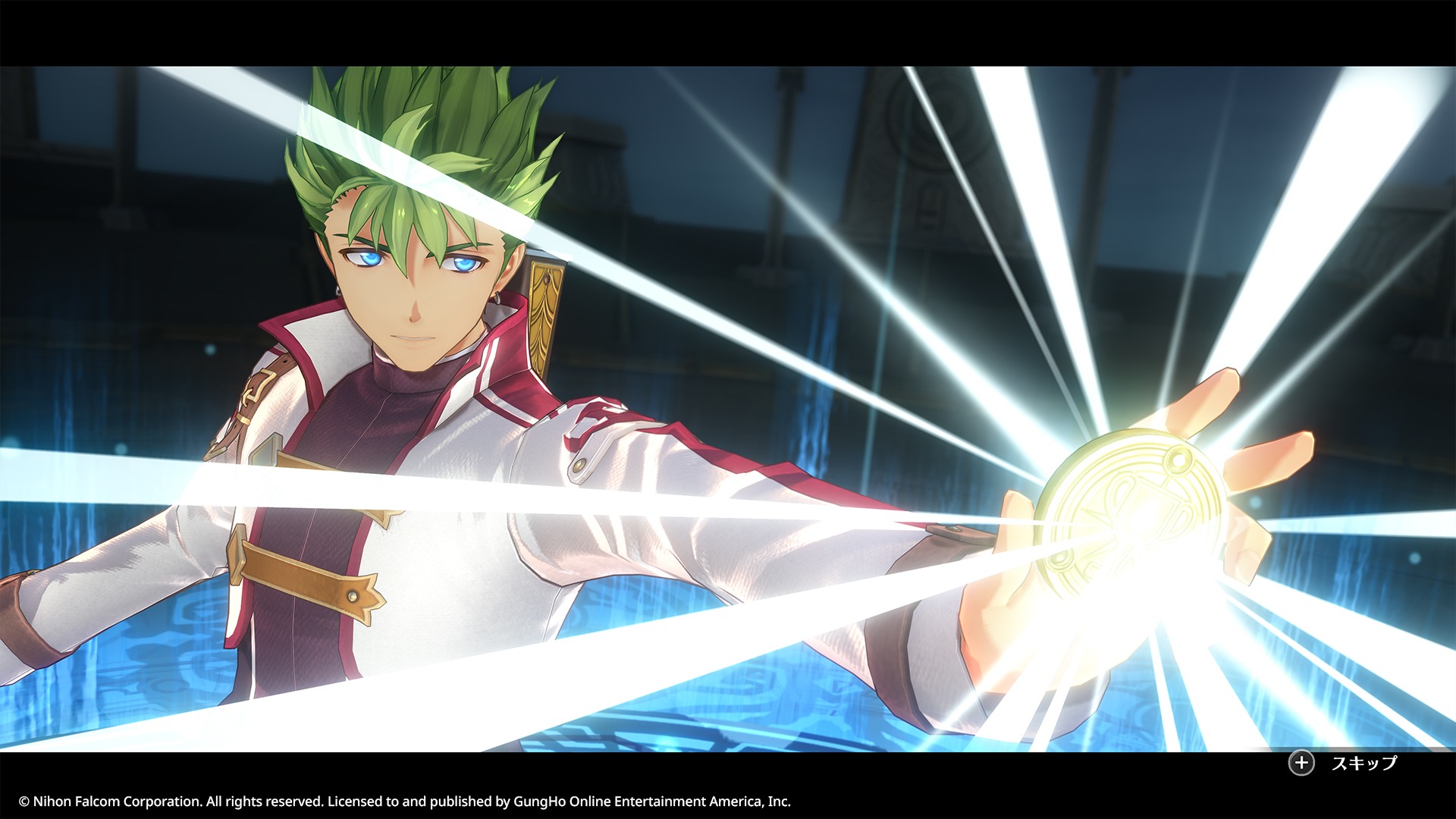
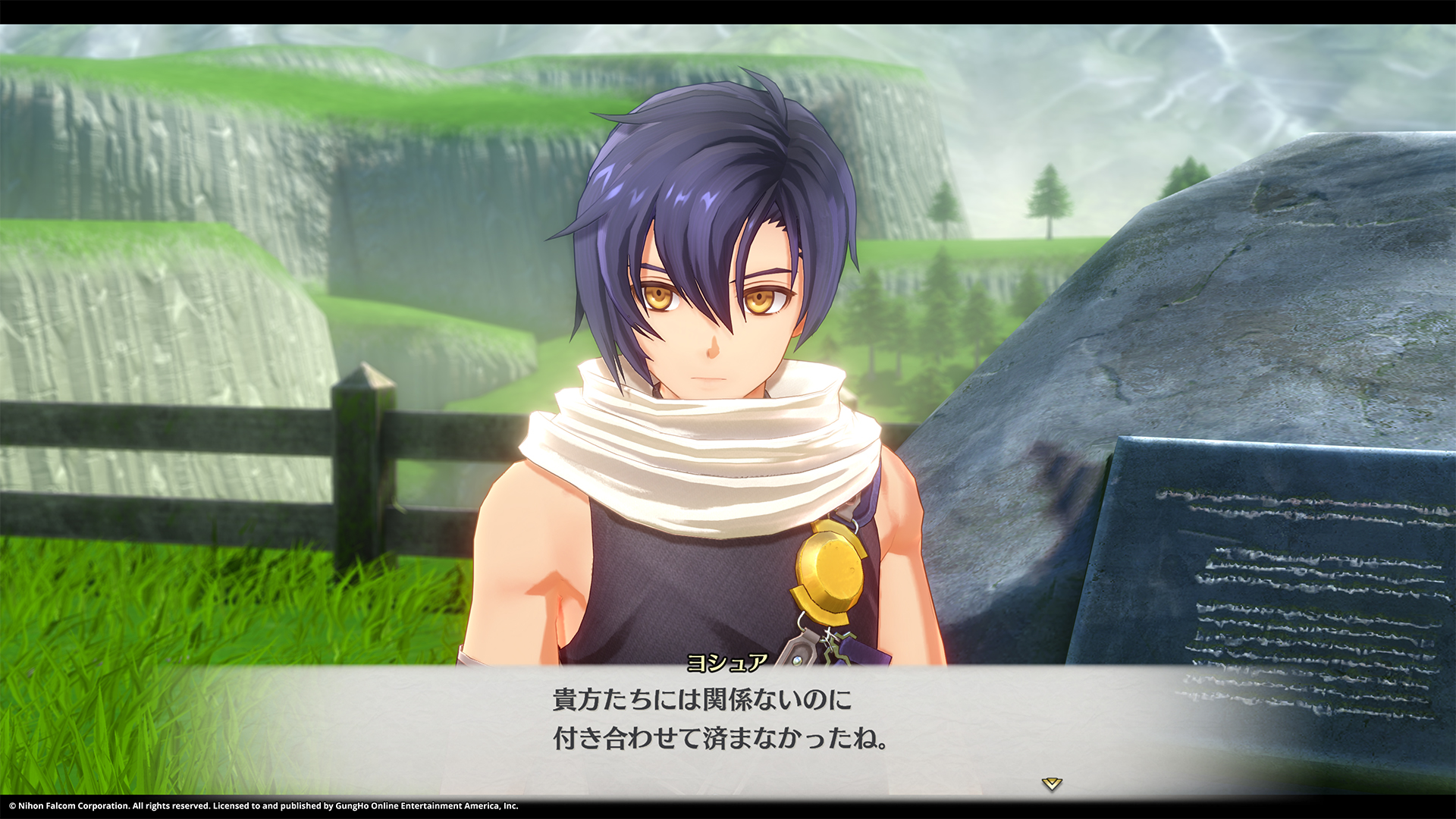
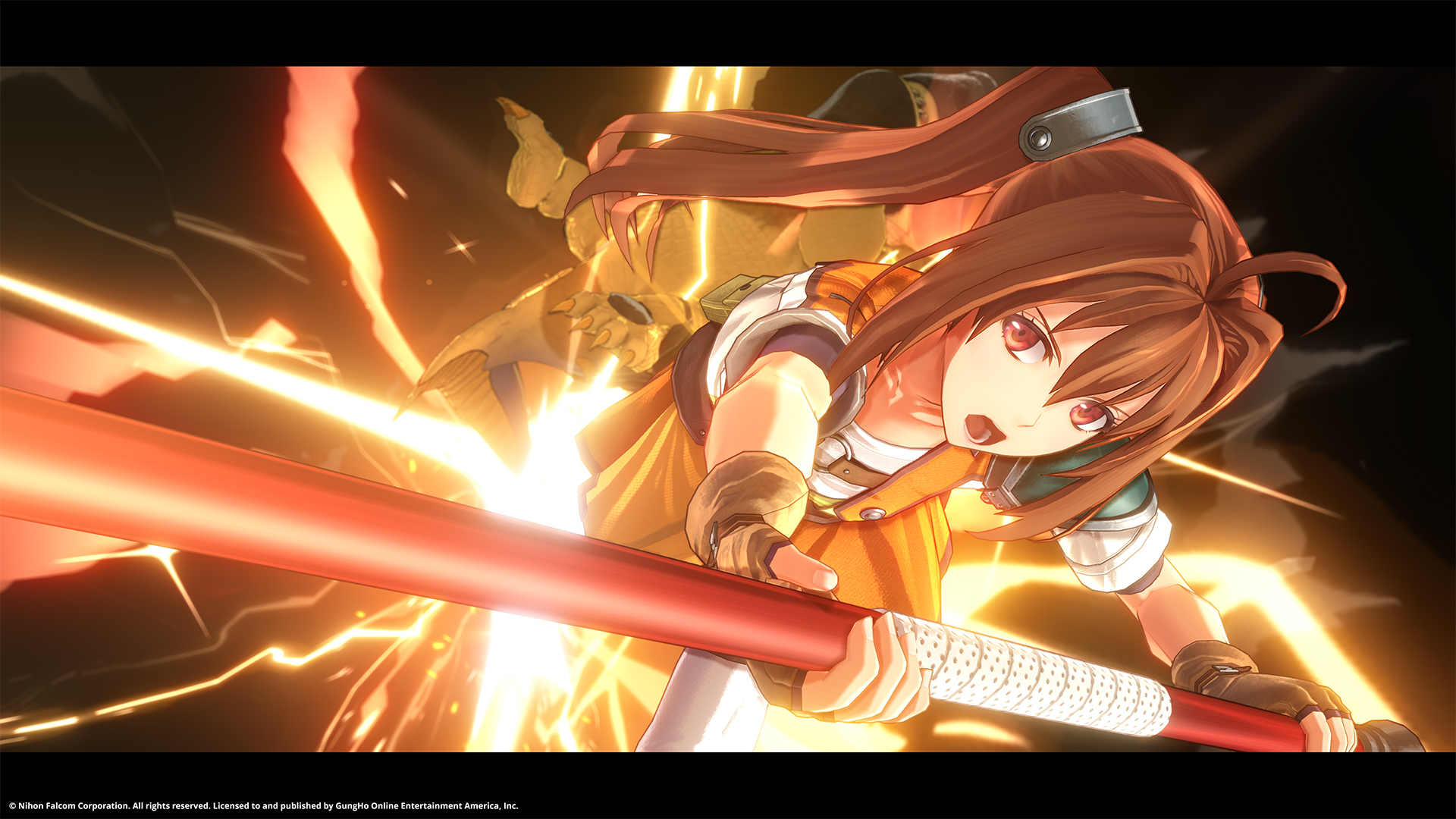
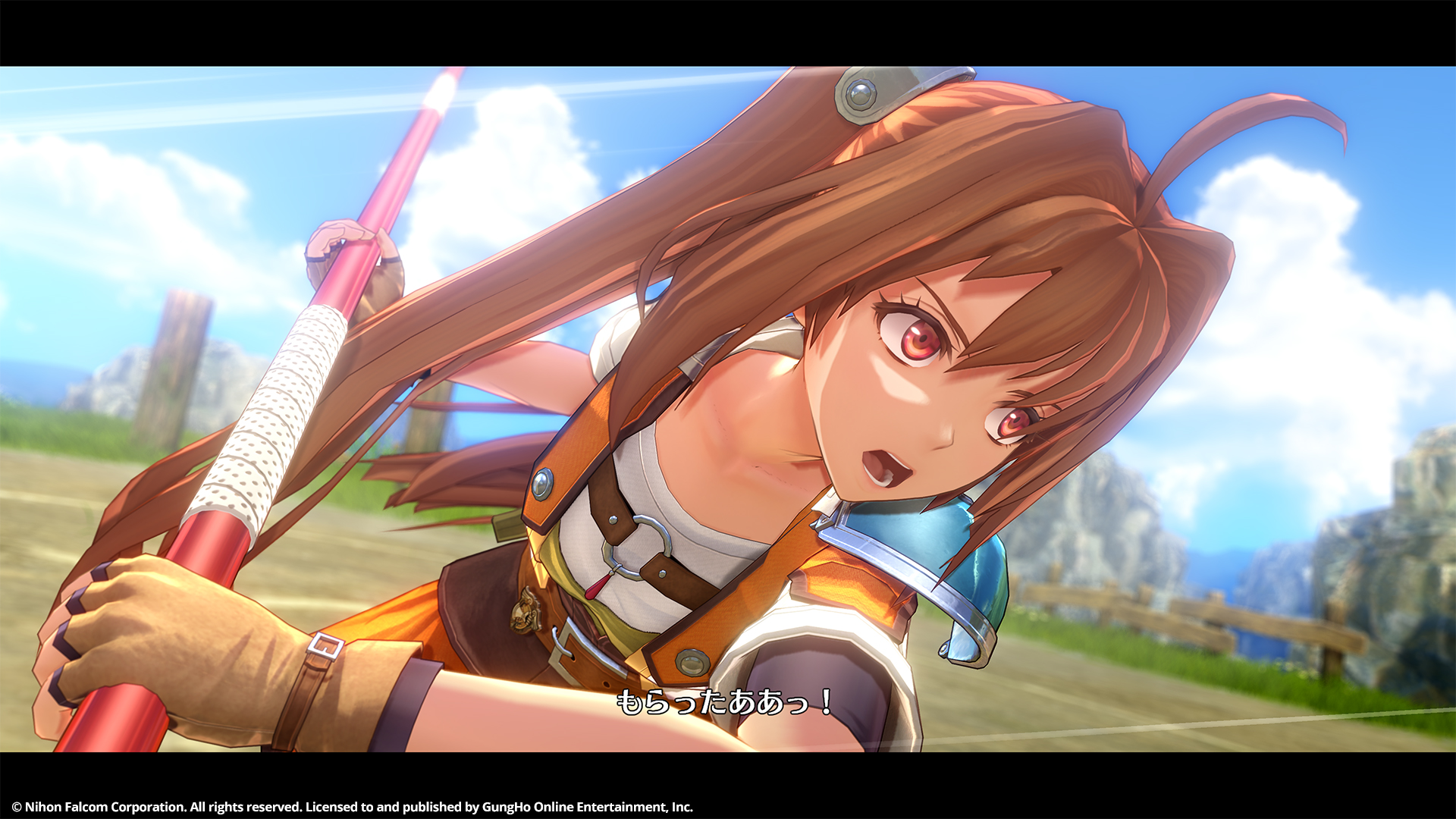
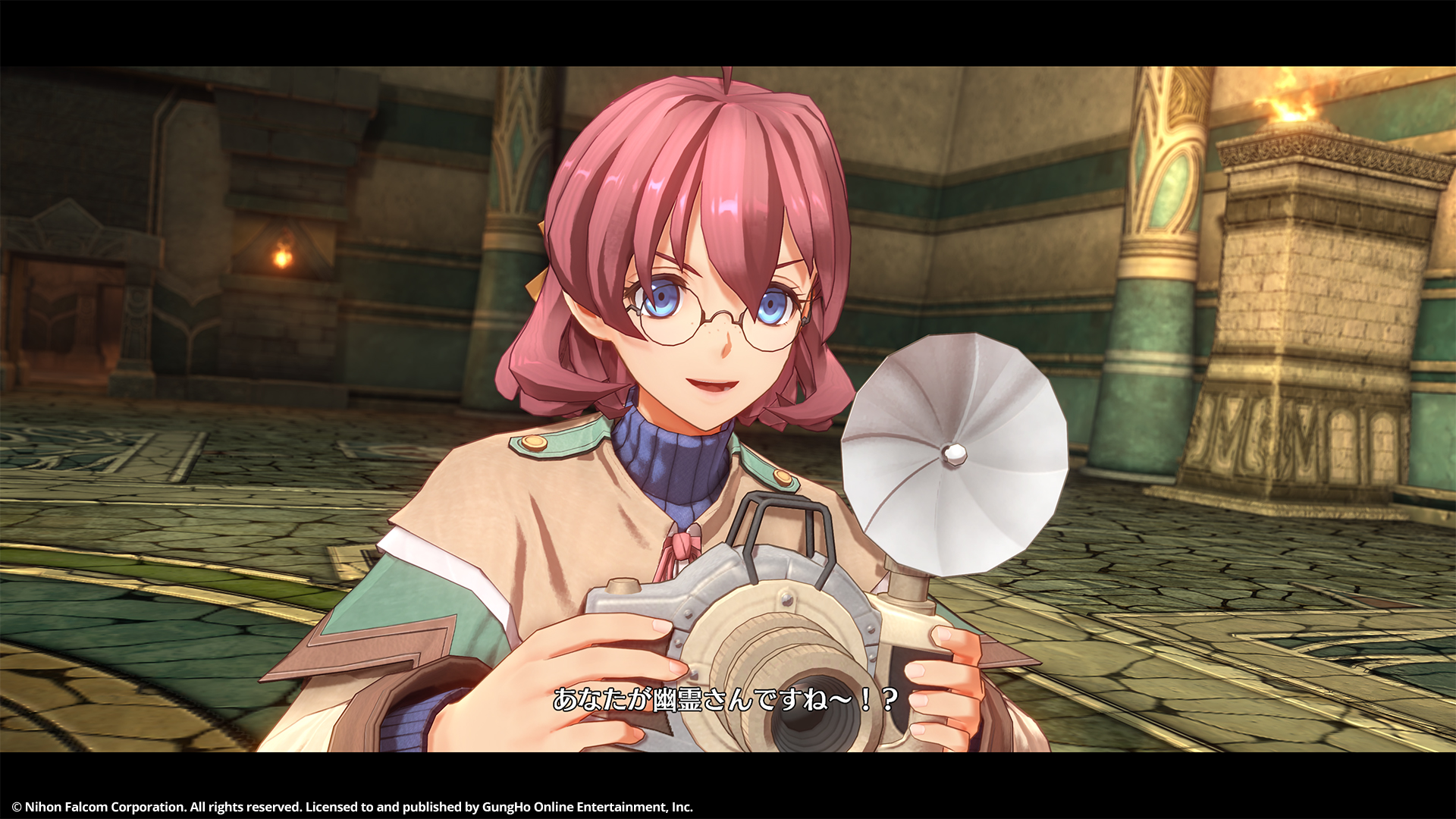
If you’ve played the latest remake of the 1st Chapter then you are fully aware of what to expect. A glorious face lift with stunning visuals, a rearranged soundtrack, and improved mechanics that make the original 2006 game feel obsolete, if you had to compare the two versions. The 2nd Chapter doesn’t skip a beat and hits the ground running after the events of the 1st Chapter. Estelle Bright’s childhood friend Joshua has left, leaving her heartbroken and in an emotional mess.
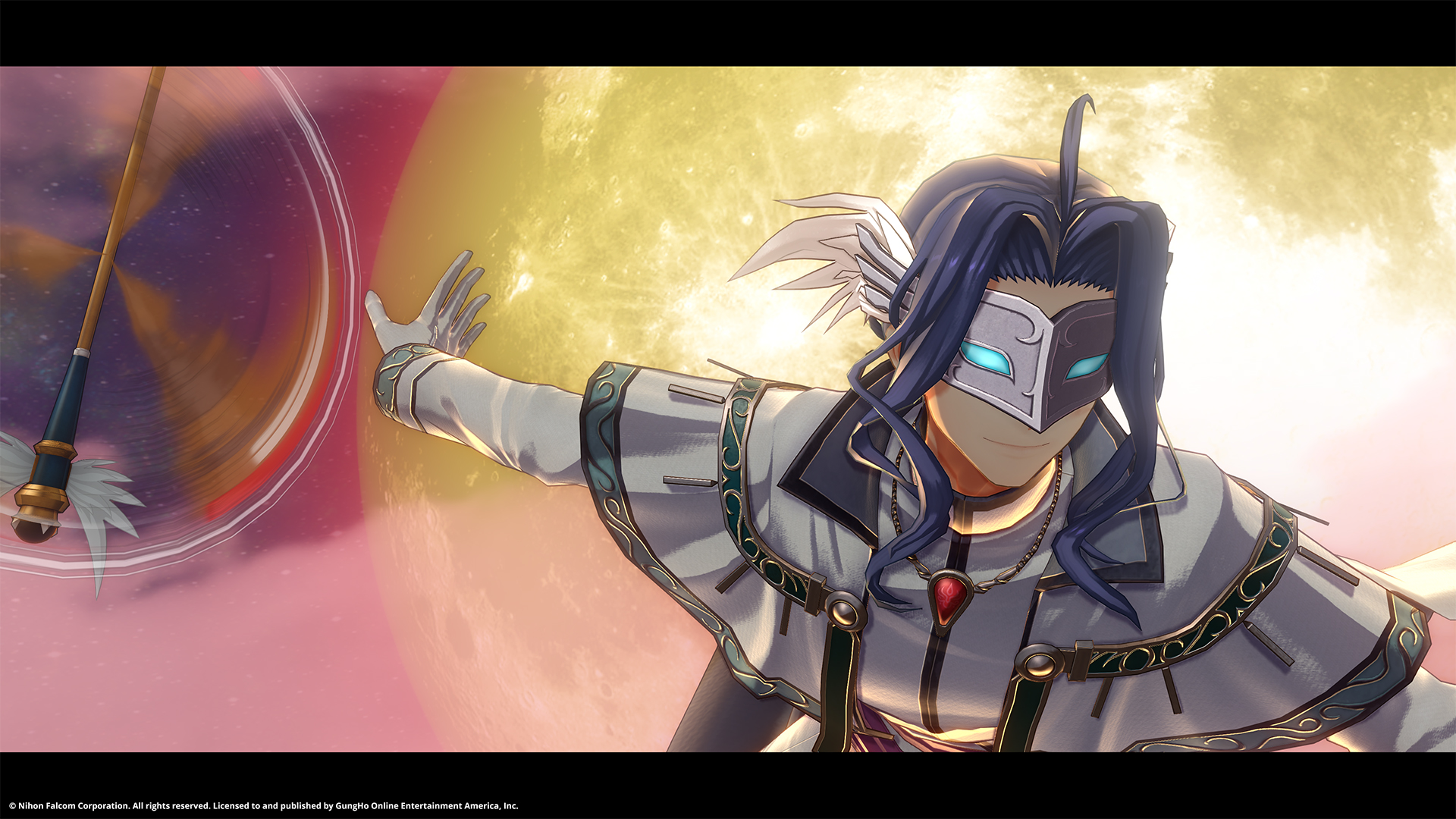
You’ll spend some time in the beginning going through lengthy dialogue to start the game’s story before you actually start a battle. You do have the option to skip scenes and adjust the cutscene speed a little. You’ll control Estelle and watch her grow as a senior Bracer with a mission to find Joshua while confronting the mysterious Ouroboros, a group of highly organized, secretive global syndicate with far broader motives. The story of Joshua, the Ouroboros, and everything in-between are told through this lengthy RPG.
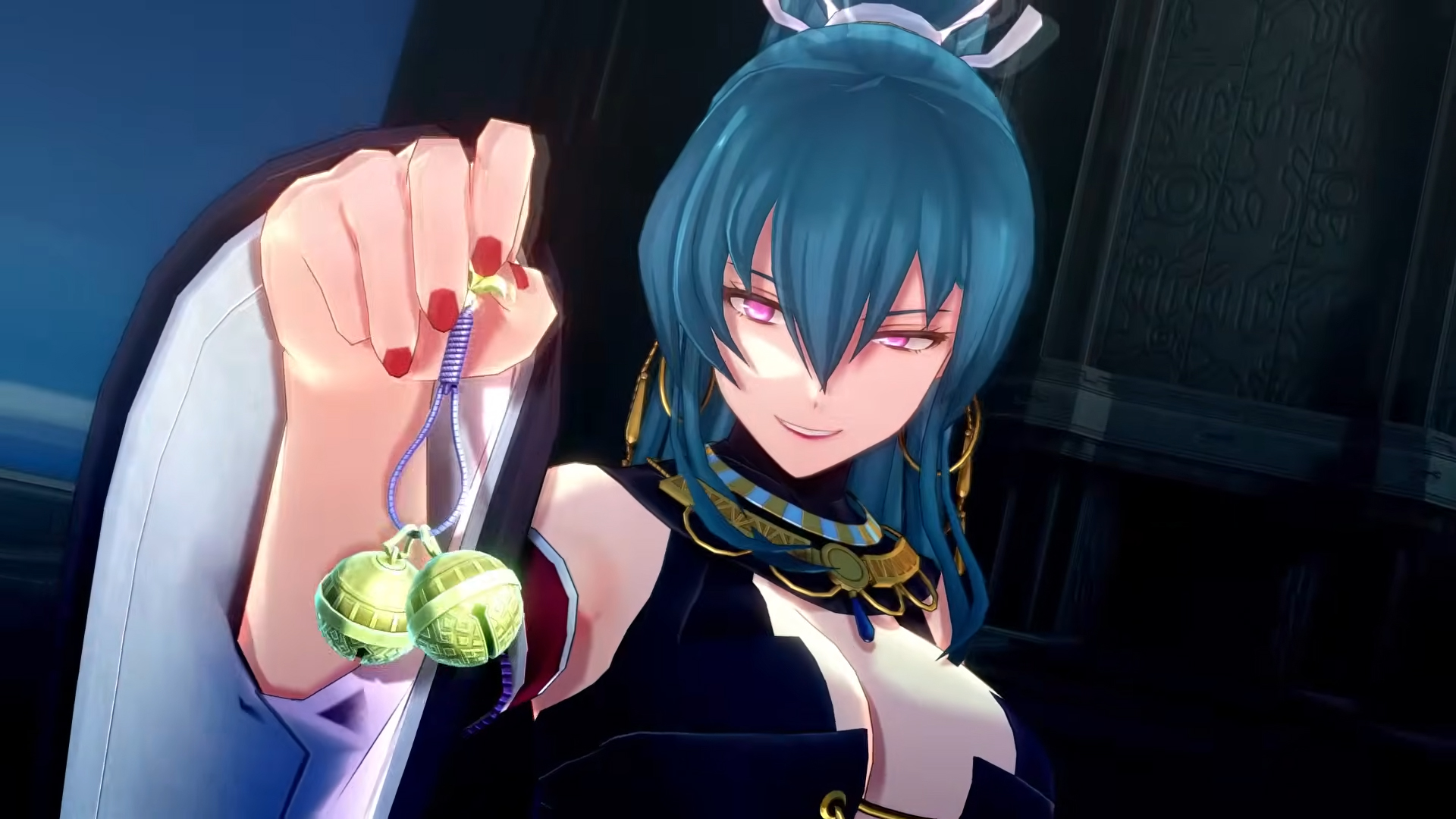
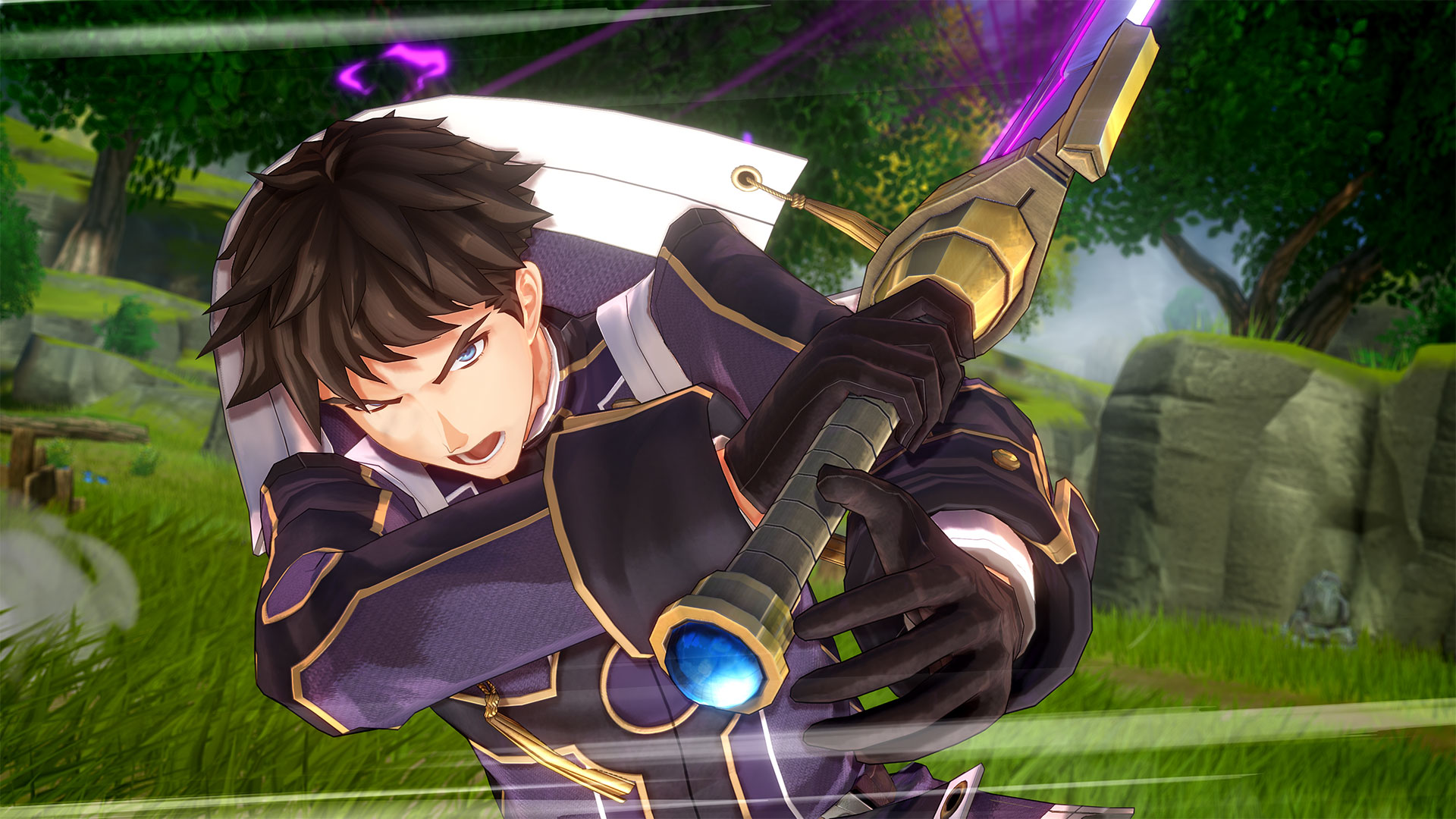
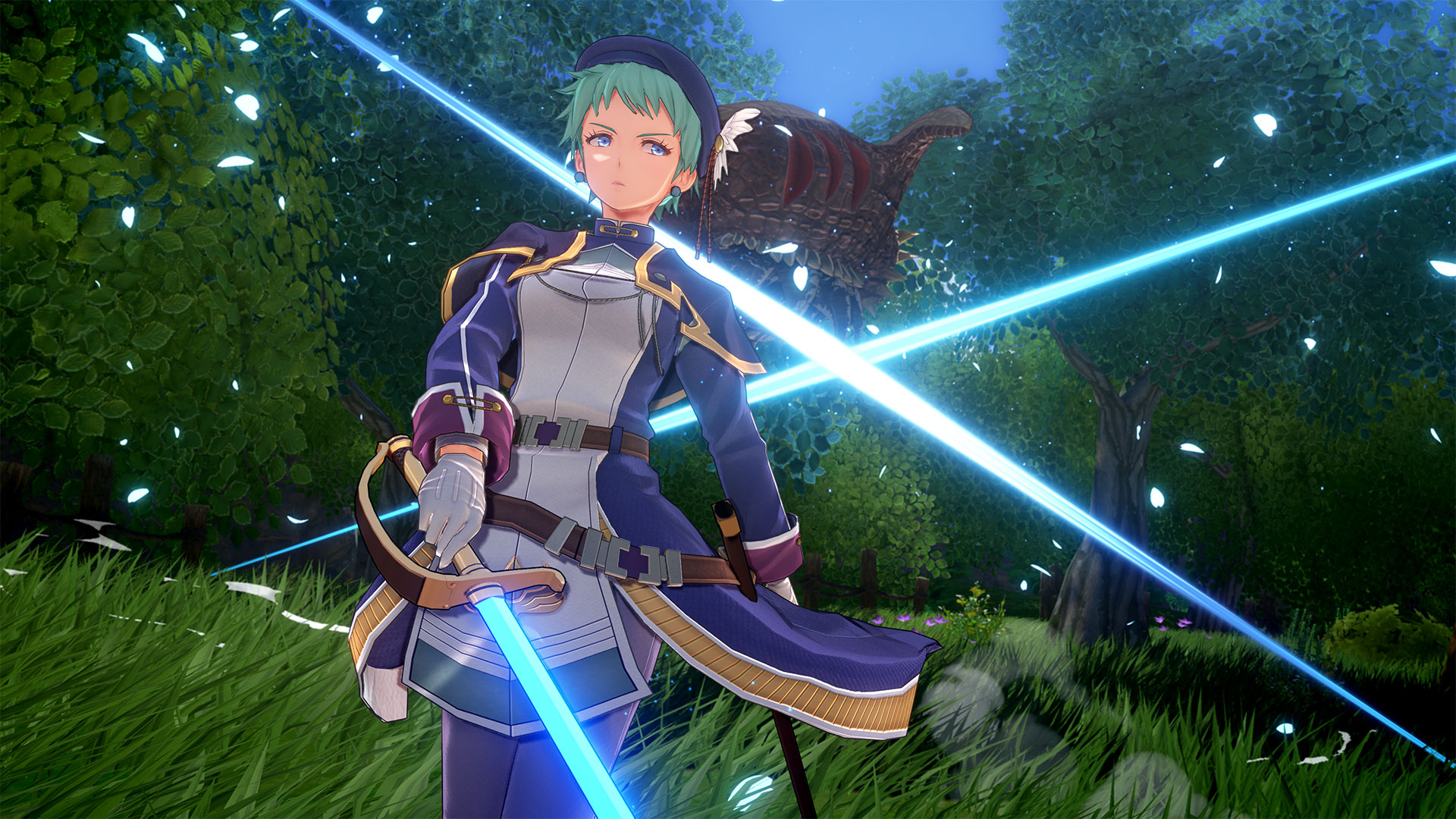
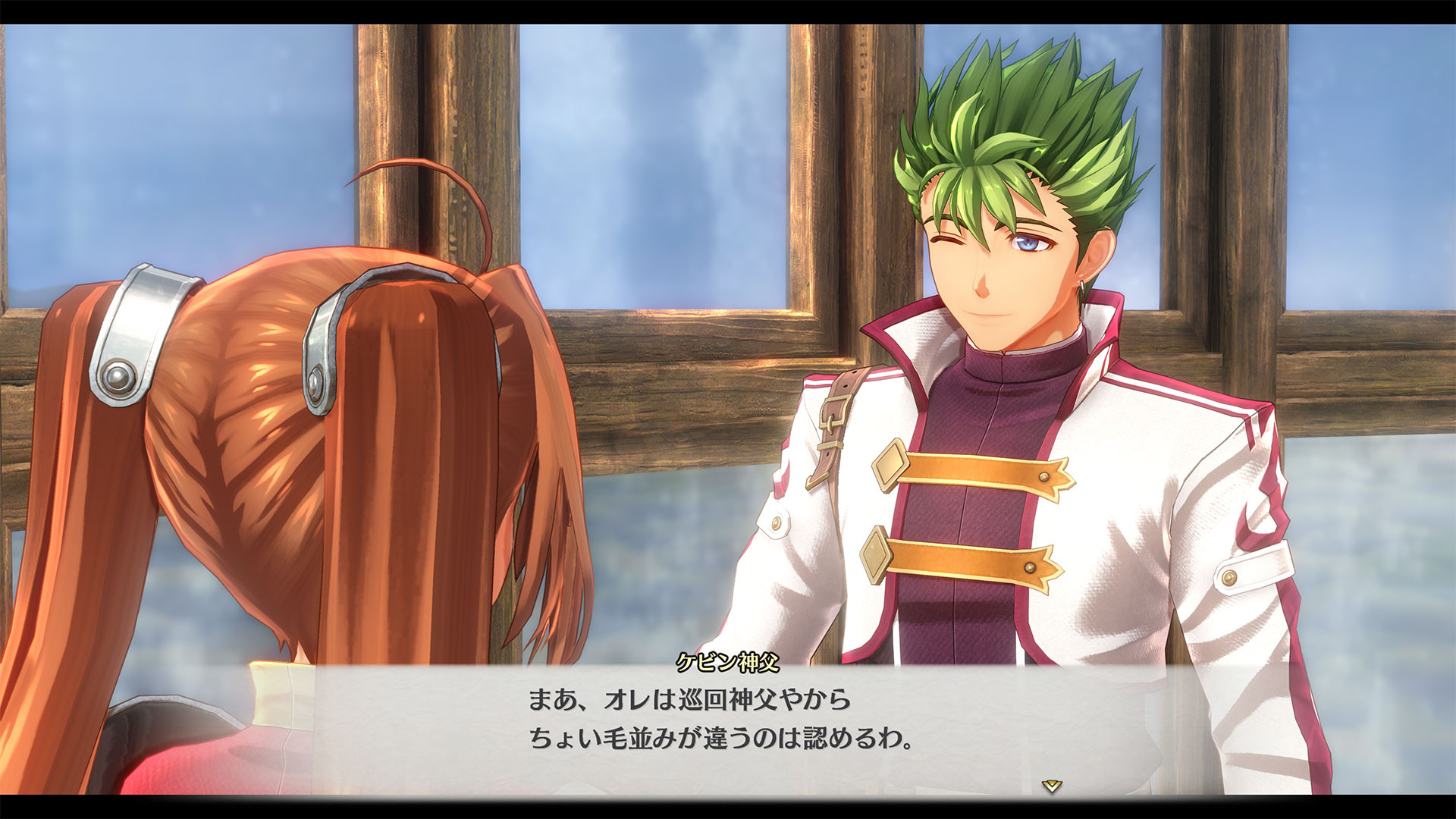
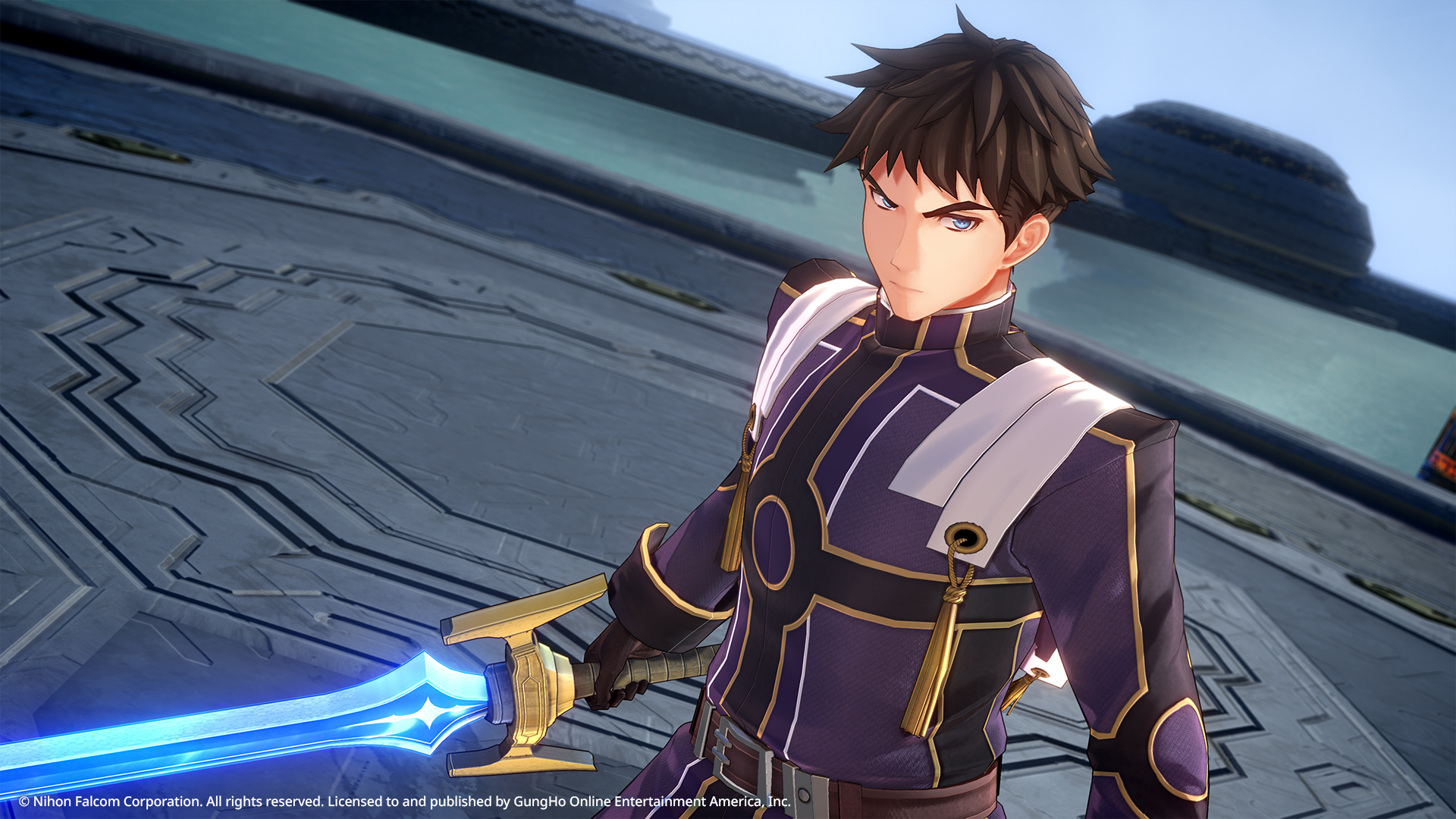
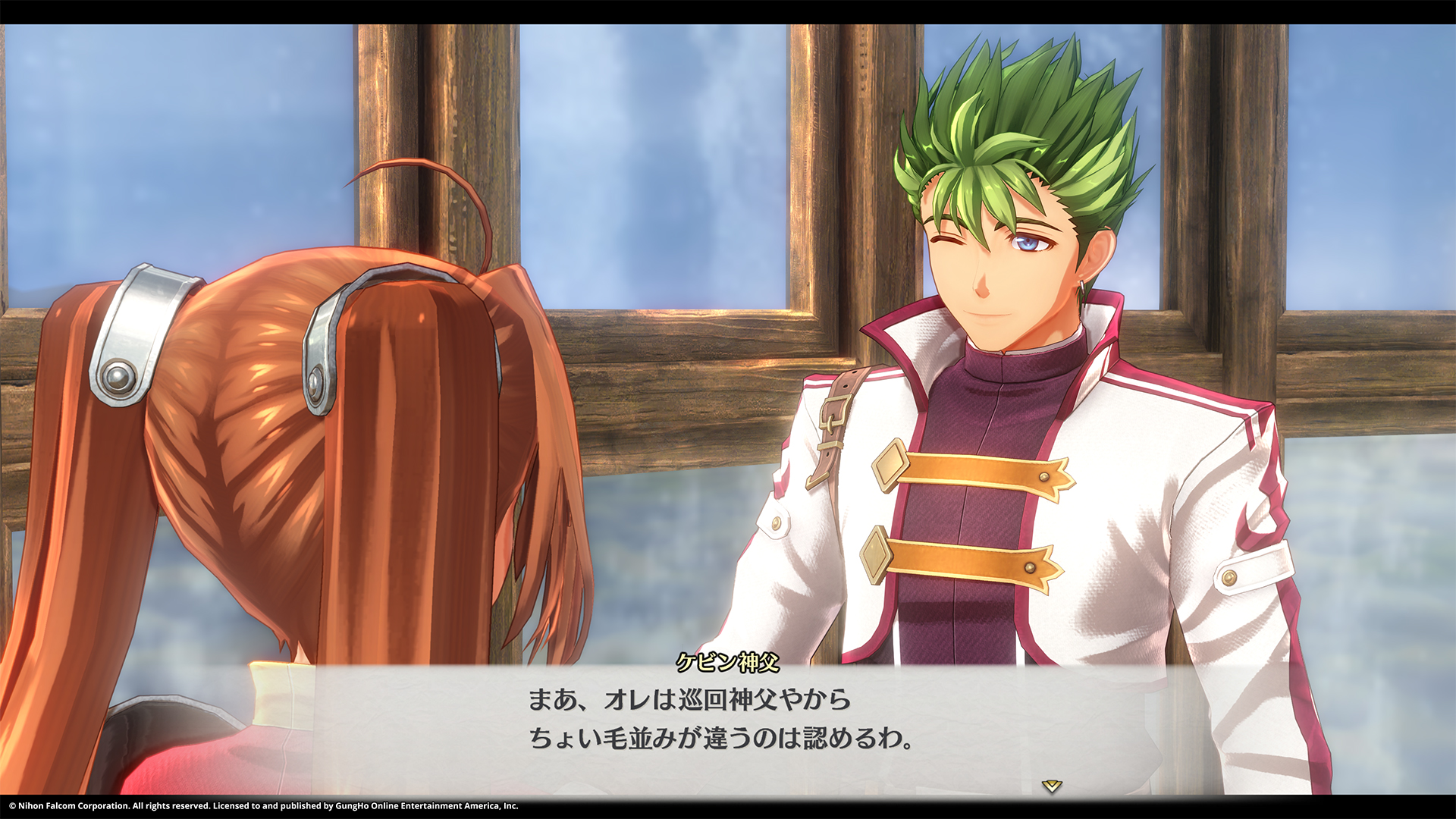
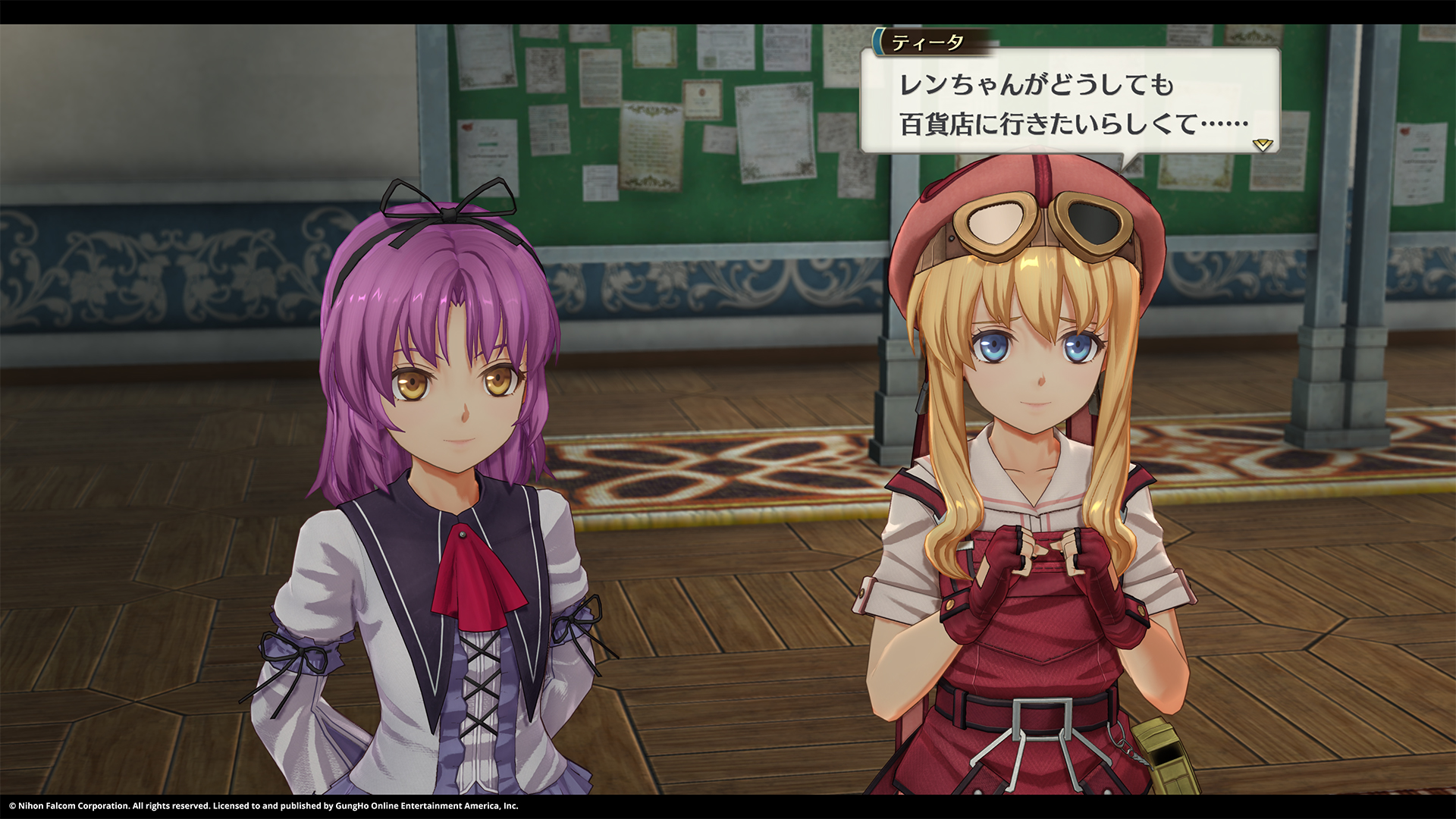
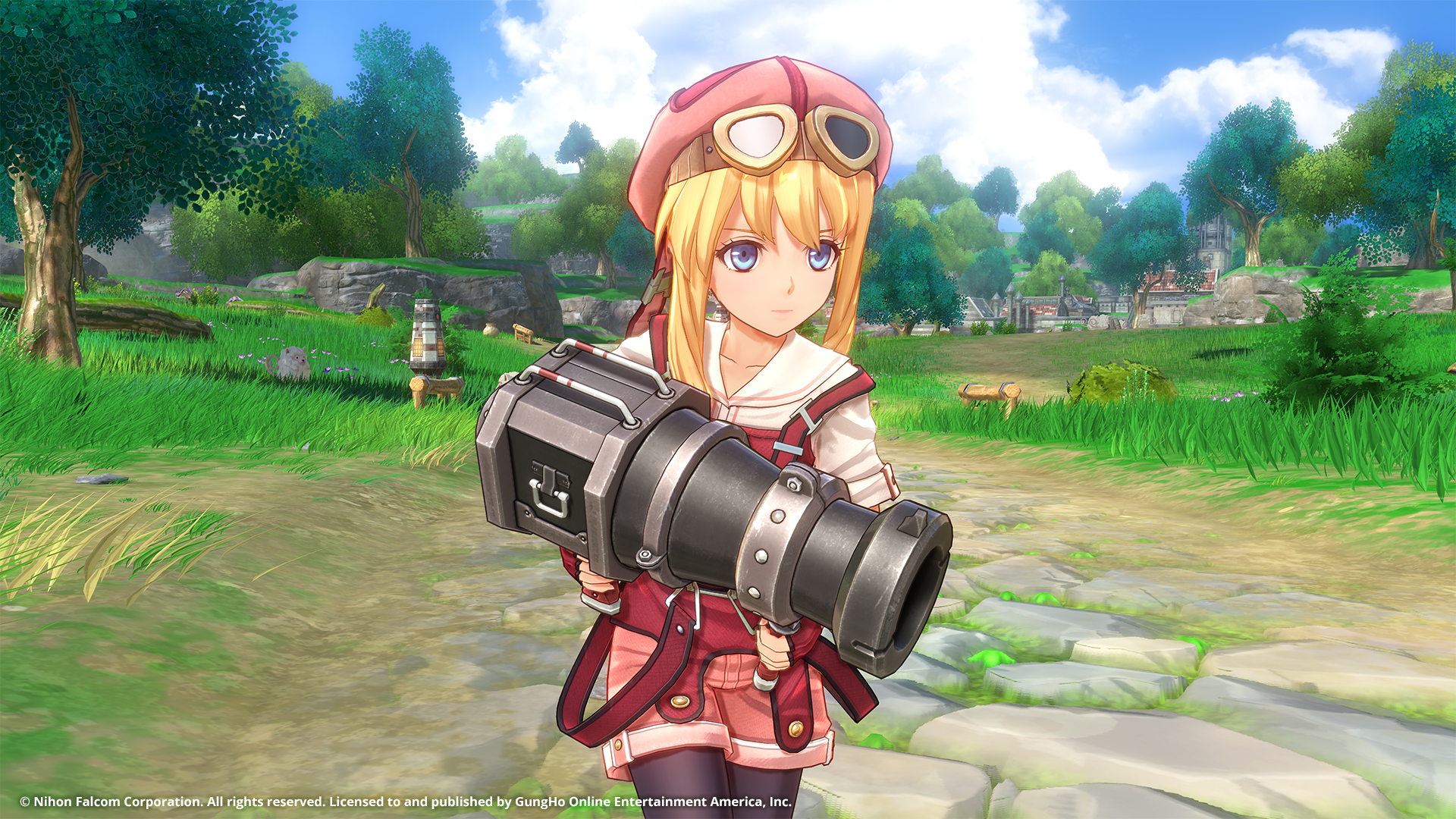
You’ll reunite with many familiar faces and meet new ones on your journey, such as Kevin Graham, a traveling priest who puts an interest towards Estelle that delivers some comical relief. The amount of content you’ll adventure in the 2nd Chapter is much more than the 1st Chapter. Including the prologue and final chapter, the 1st Chapter has five designated parts. The 2nd Chapter carries ten parts, and that’s not including the number of side quests and mini-games involved. Players can expect a much heftier amount of content to play in the latest chapter and one that feels more of a conclusion than the cliffhanger the 1st Chapter left. Players can easily sink in hours of gameplay per chapter if you try to complete every mission along the way.
More Ways to Explore
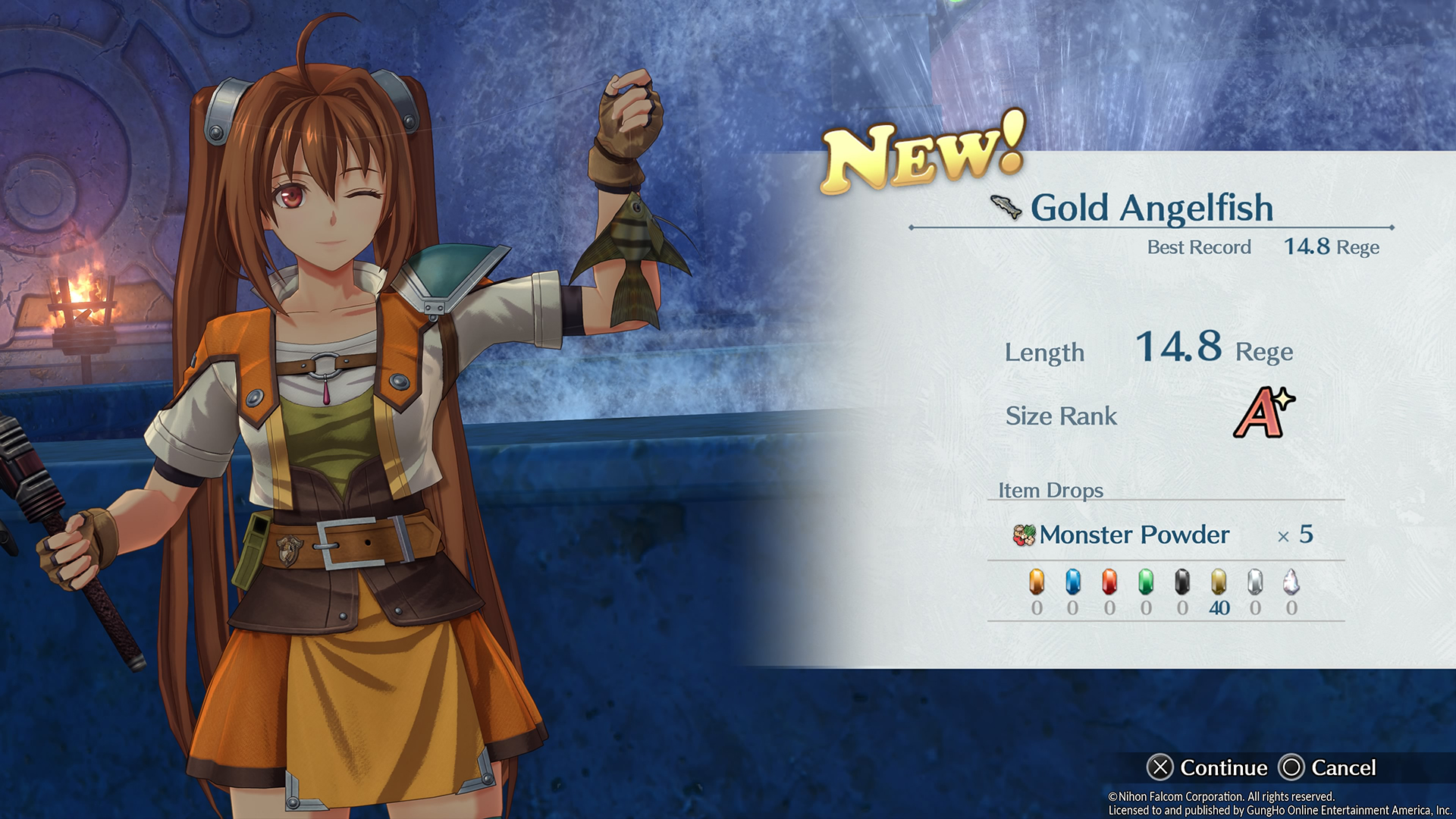
With the mini games, players can now travel to designated fishing spots to catch fish. Fill up the fishing notebook and earn rewards, such as rare accessories, Sepith (elemental gems), or use the fish caught as bait for catching larger fish. Catching them is basic and simple: you cast your line out with bait and when a fish bites, you hit the command button on your controller to start reeling in. Follow the on-screen prompts to move your line in the correct direction or you’ll lose your catch. Keep reeling until you can no longer continue.
Enjoy a card game? Players can now play cards in the game’s designated casino building. Play different card games like poker and blackjack to win rewards such as weapons, accessories, and more. Occasionally you’ll receive missions from the Bracer Guild to do these mini games.
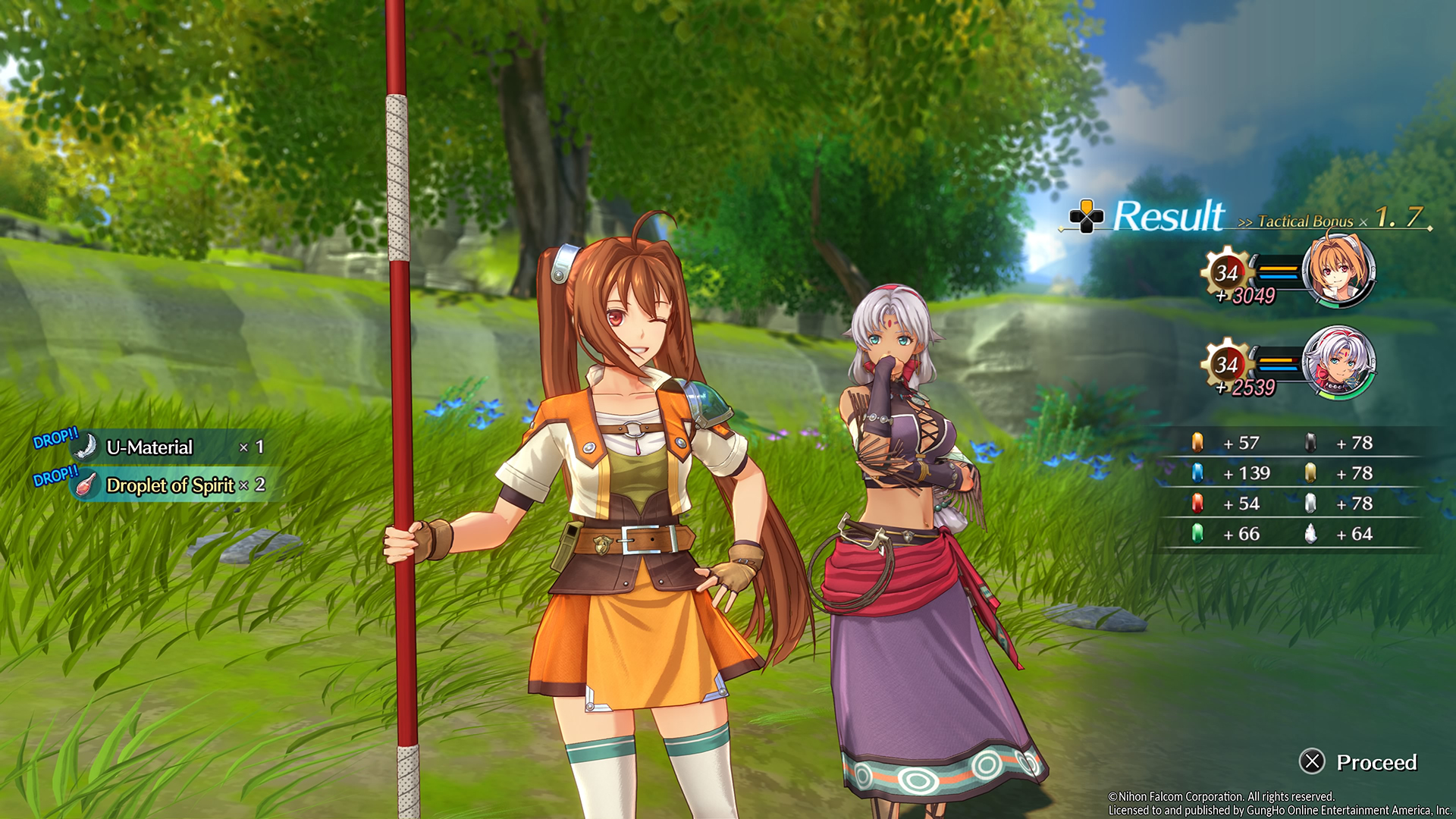
Speaking of missions at the Bracer Guild, they work the same way as the 1st Chapter. These missions can carry time limits and hidden quests that require you to search on your own. Thankfully, the game’s map helps pinpoint these spots, making it easier to find them. Rewards are given on successful missions and when you rank up at your Bracer Guild.
It Takes Two to Tangle
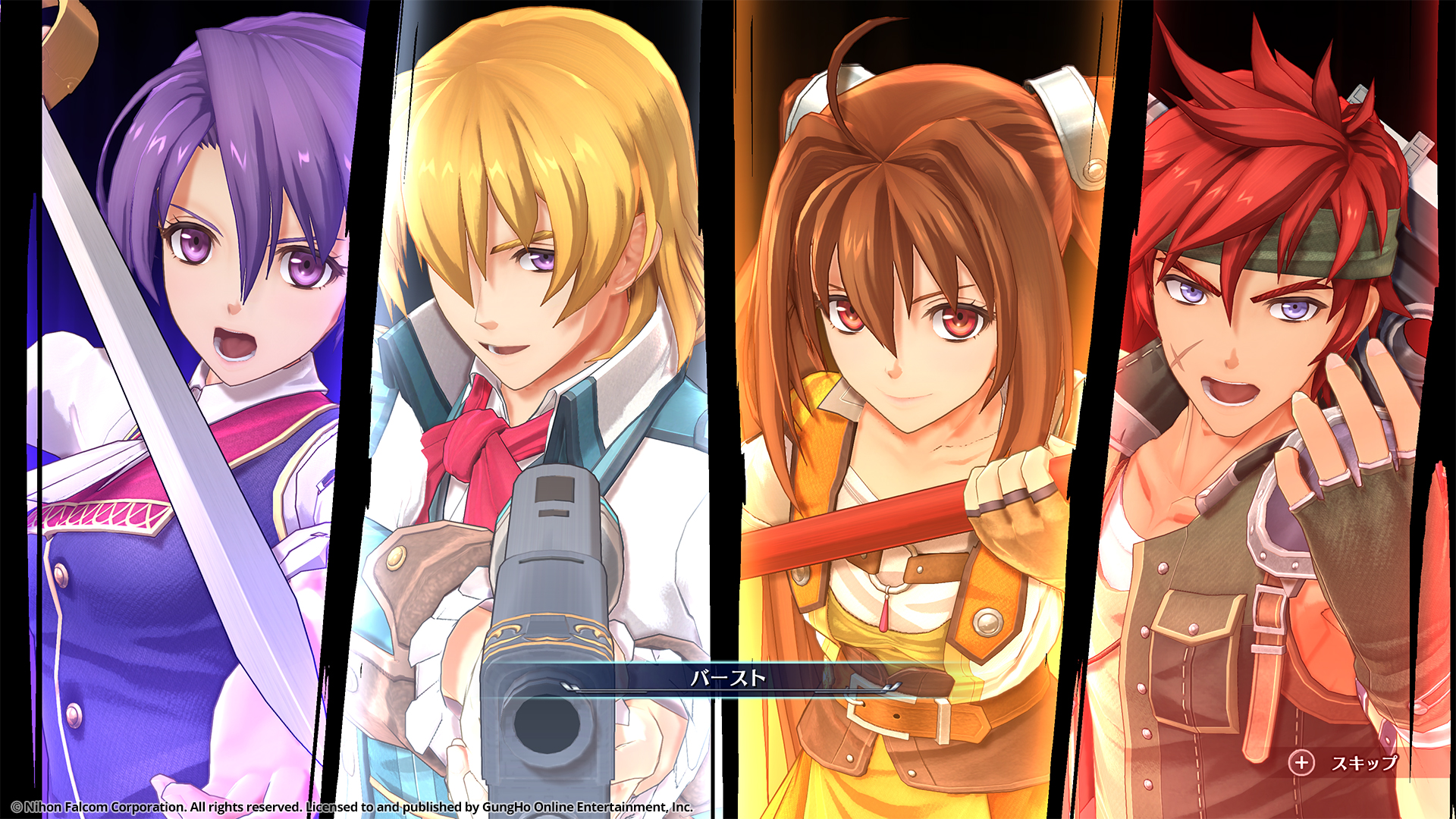
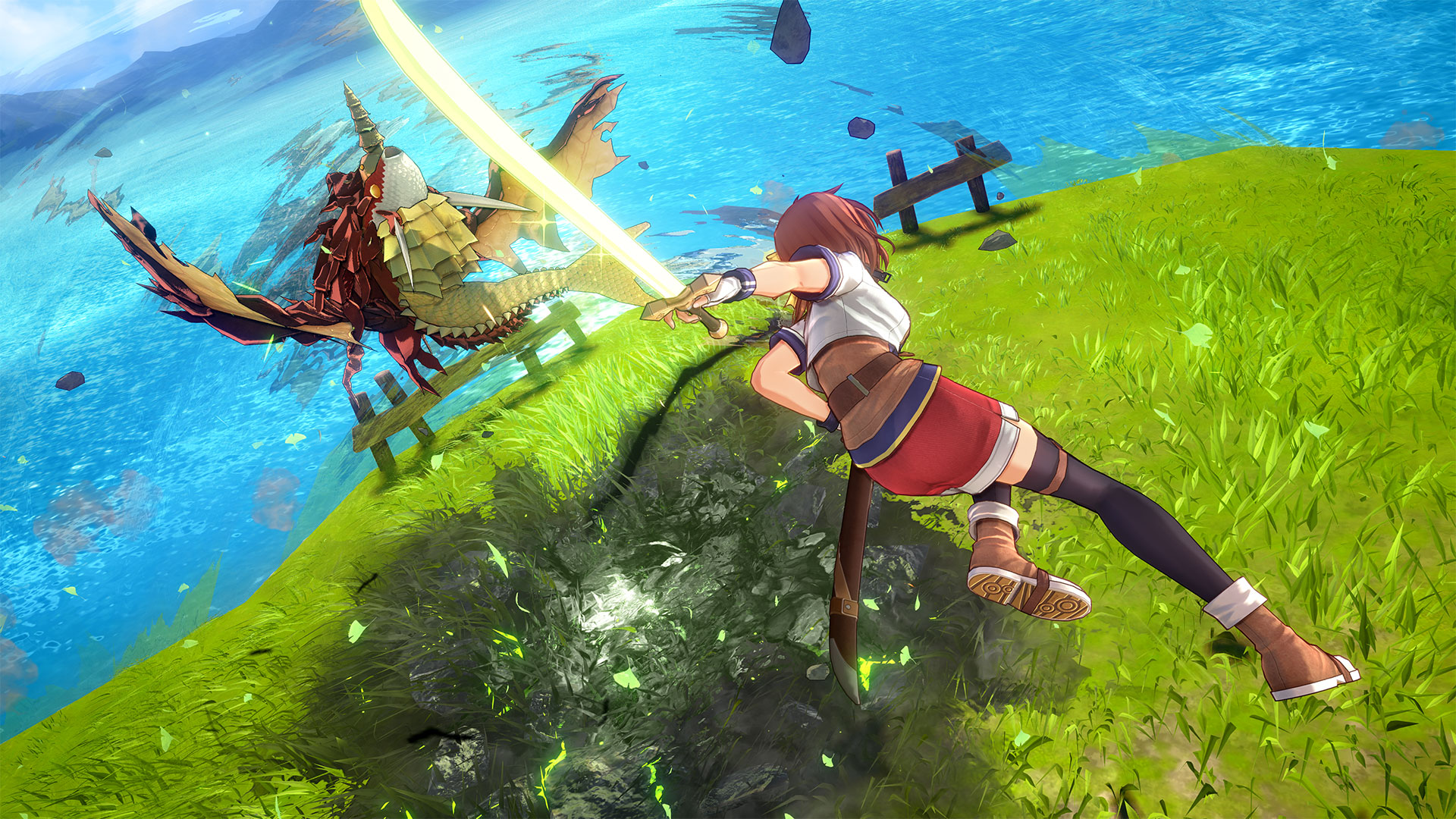
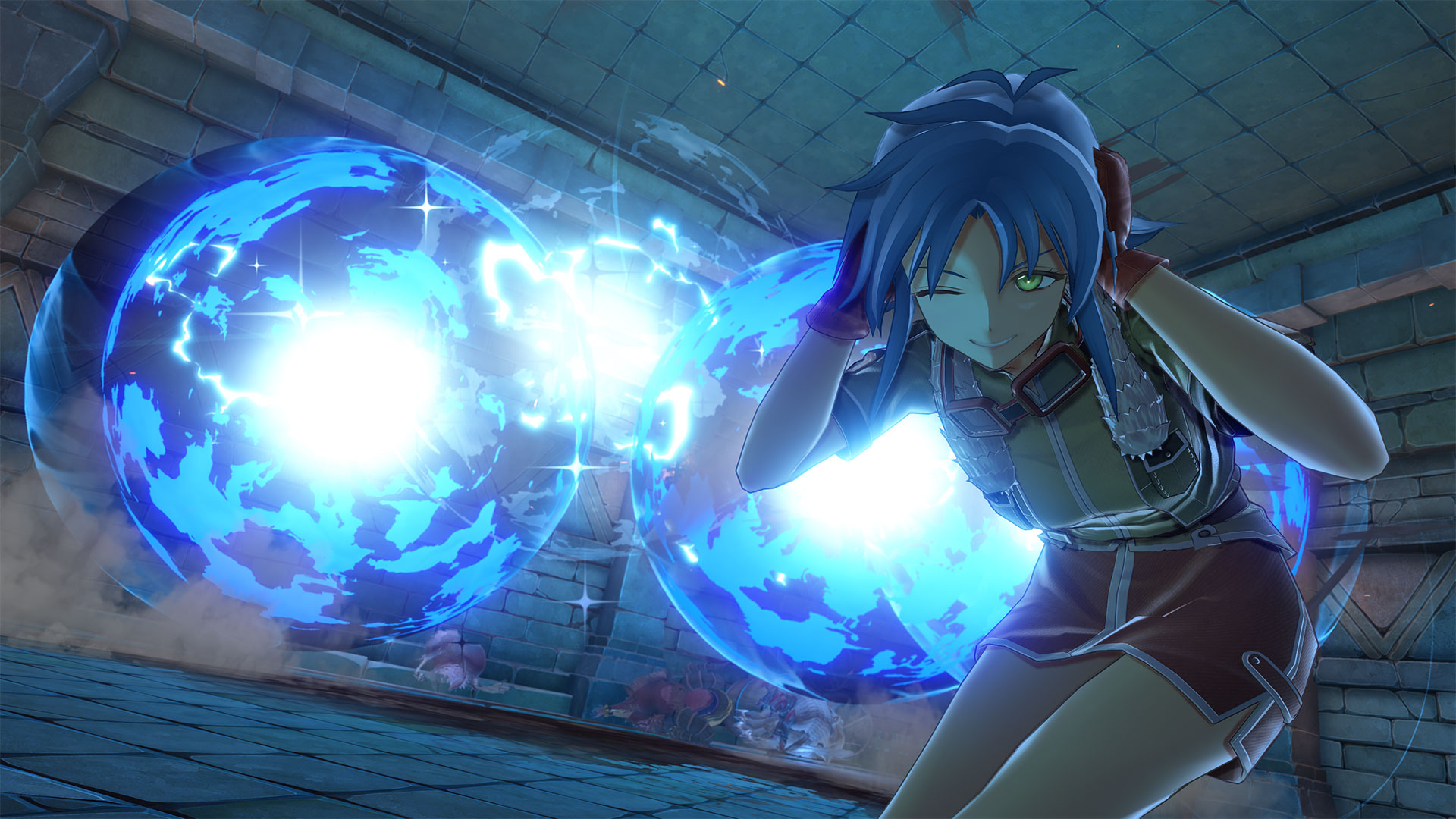
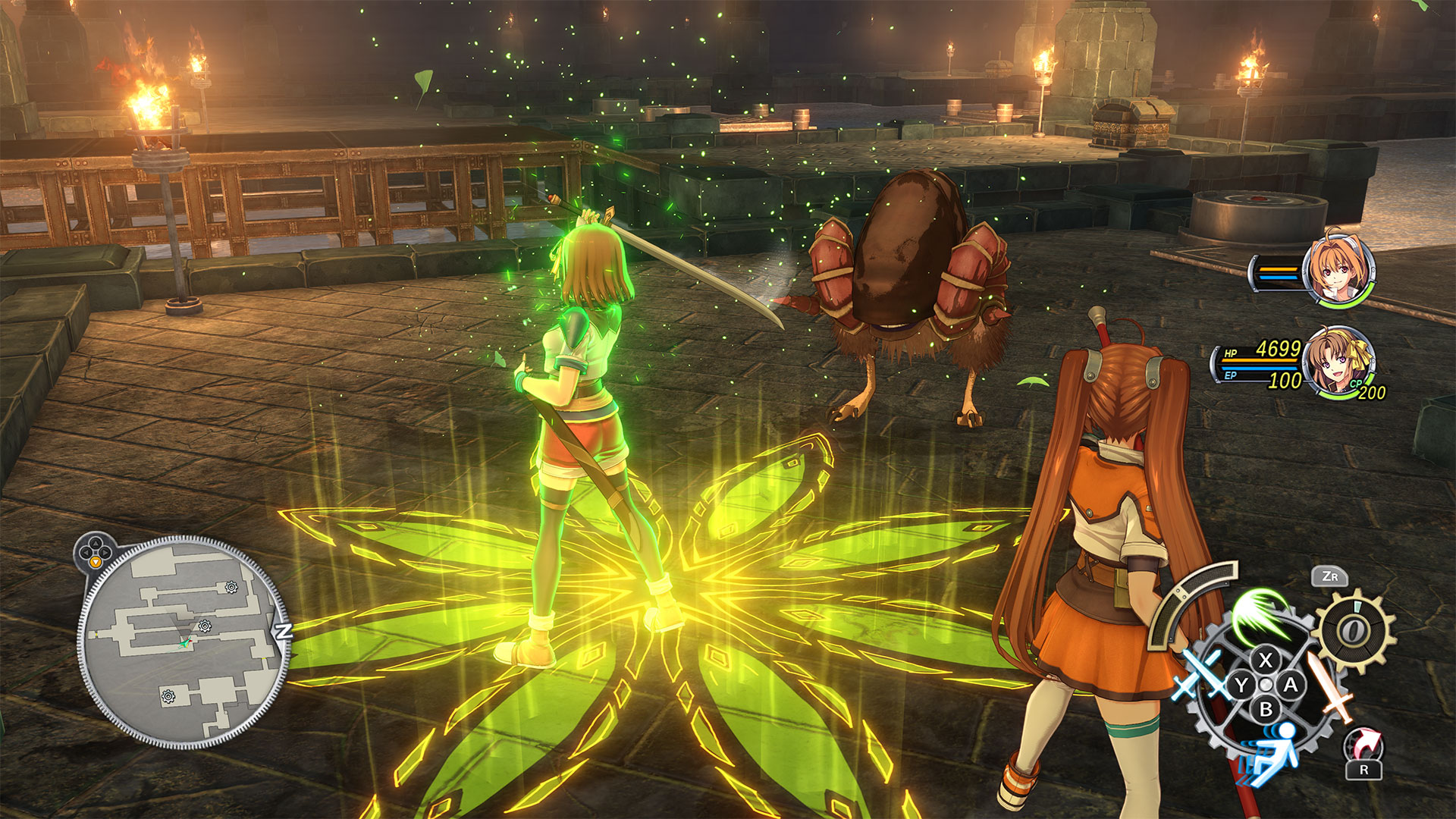
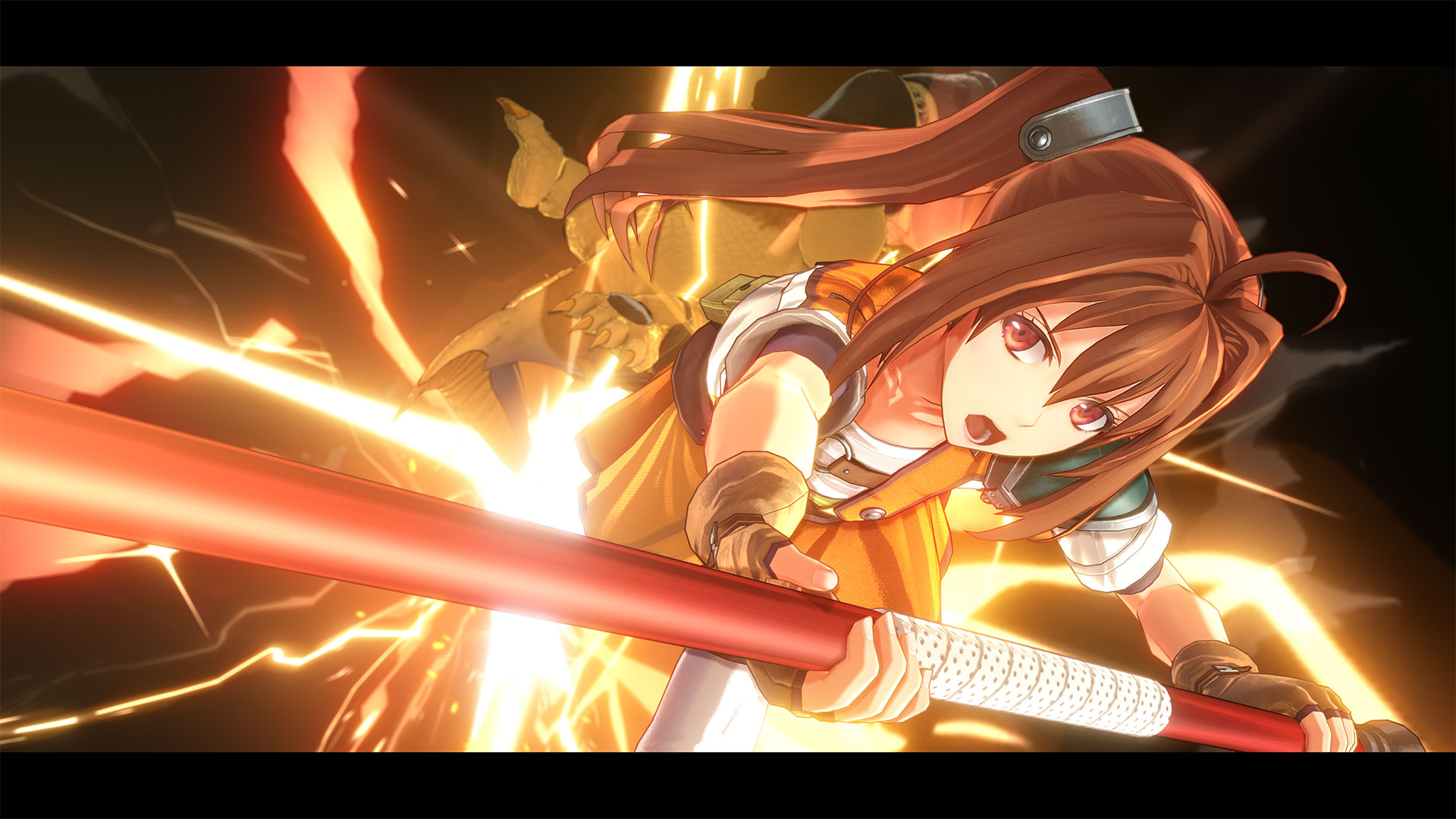
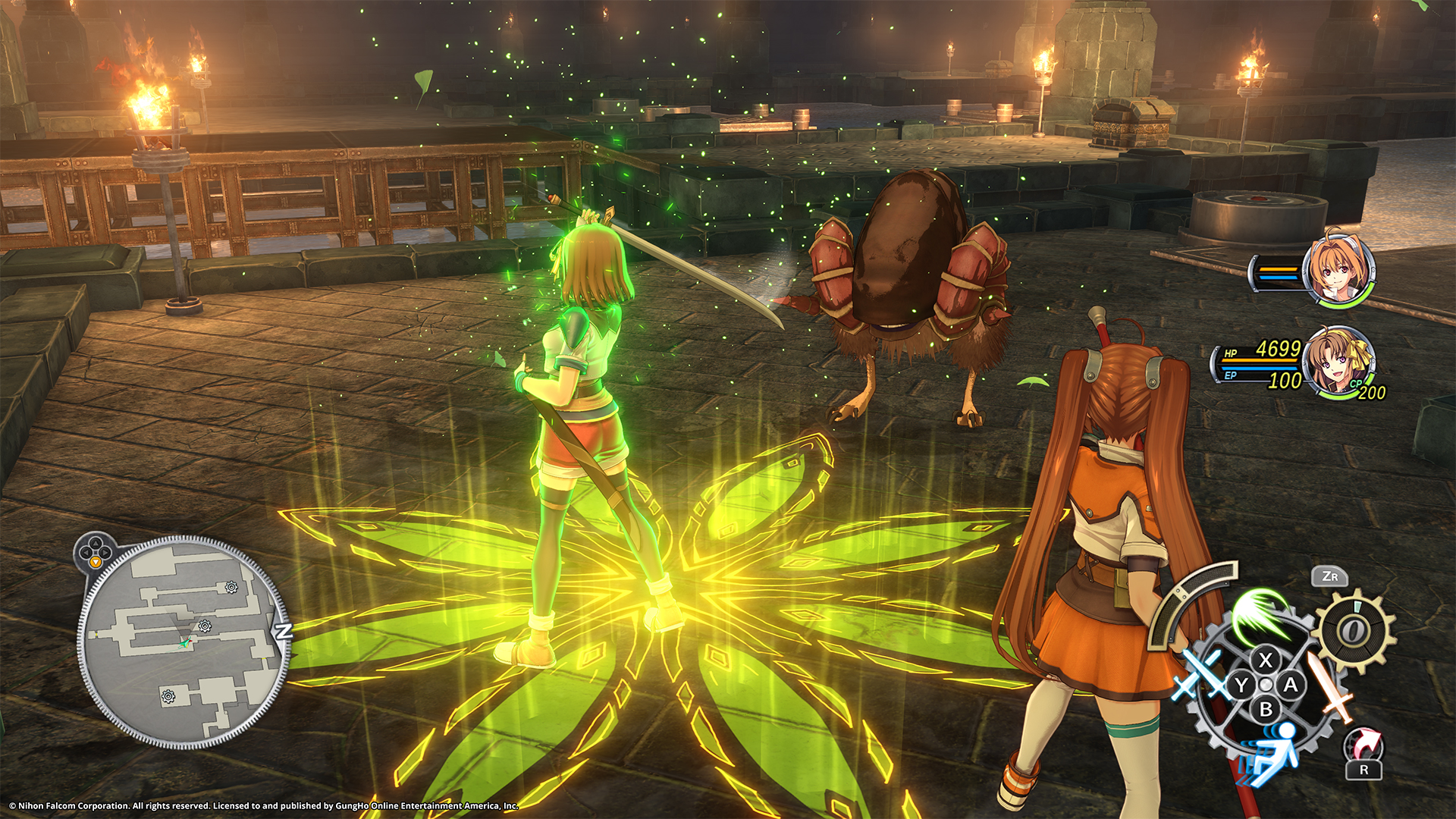
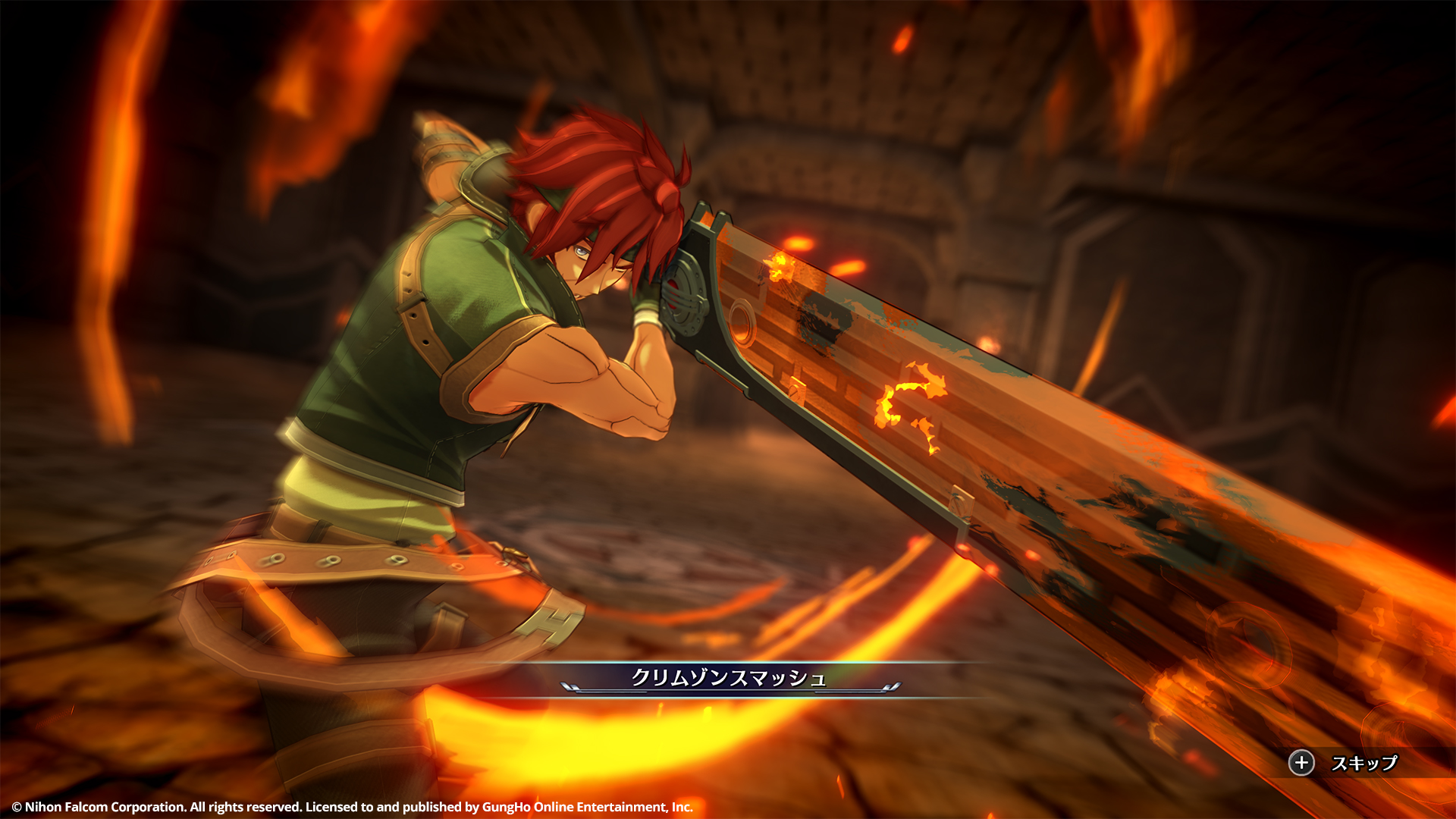
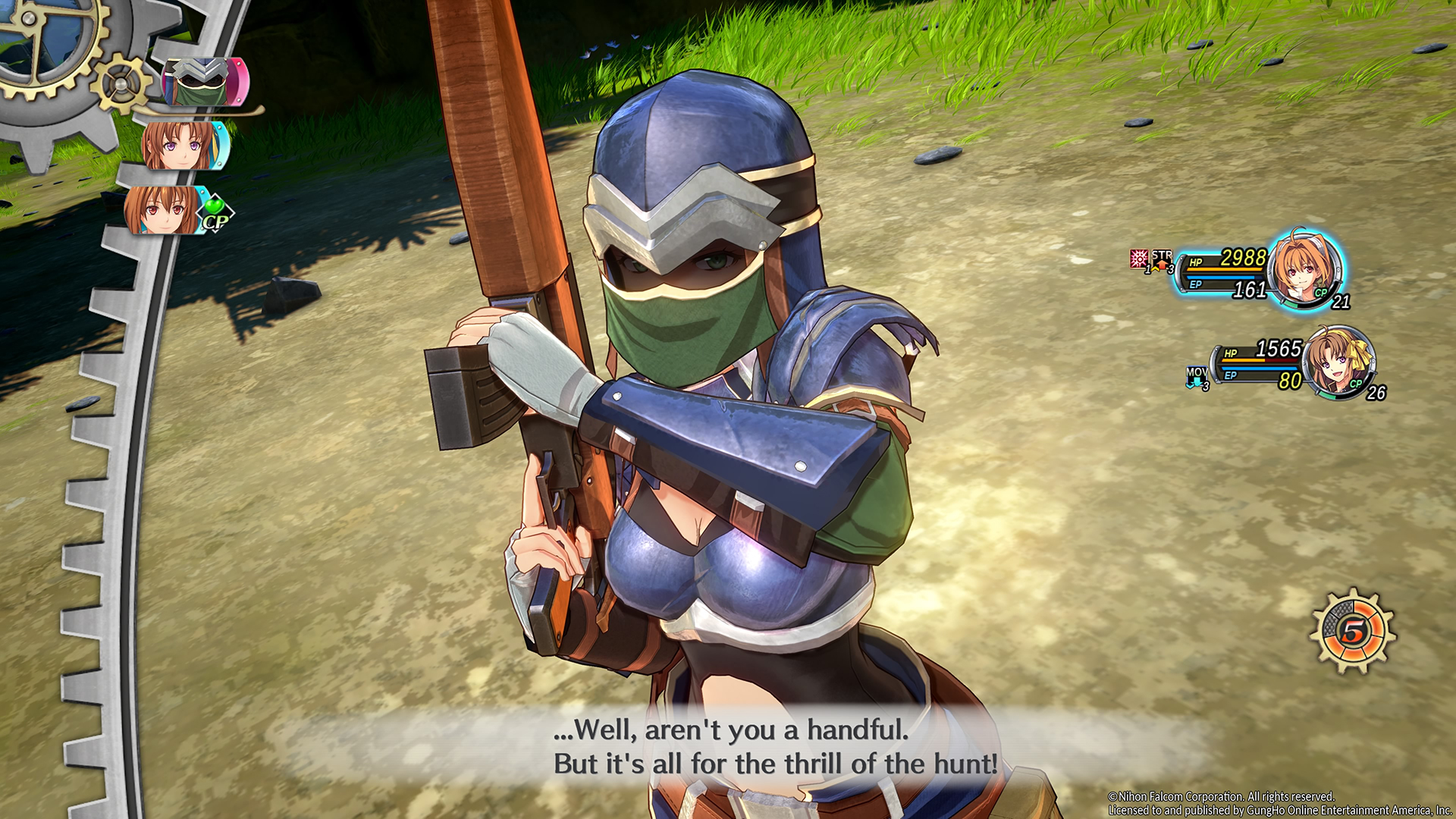
Combat works similarly to the 1st Chapter. Players can attack freely at enemies in real-time action. You can also avoid battles if you choose not to engage, which is a relief given the many roaming monsters you will encounter during your travels. Some missions or story events do not allow you to bypass the battle. If real time isn’t your thing, you can immediately switch over to command (turn-based) battles by hitting a button on the controller. In this mode you have more time to act, position your characters, and launch special attacks. You can also take advantage of the ability to choose between the two combat styles. Using real-time to put enemies in a confused state and then initiating the command battle puts you and your team at an advantage, giving the enemy a loss in a turn, like a preemptive attack. The ability to choose and leverage it to my advantage enhances the enjoyment of battling, surpassing what many RPGs provide.
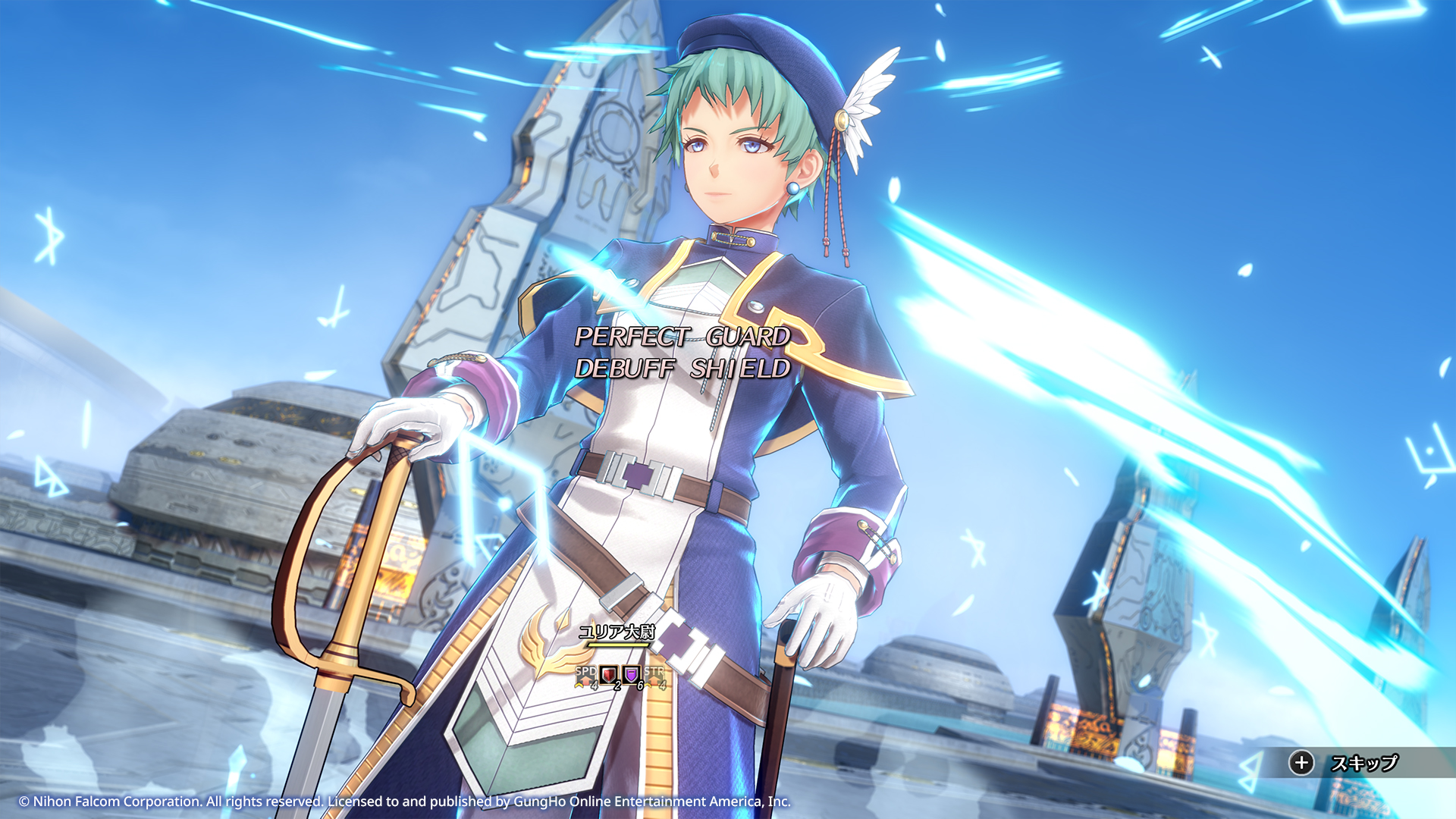
Players can also activate multi-character combo attacks that create additional damage immediately after a player makes their initiate attack. Teammates can also cast additional buffs that can increase your attack power, boost stats, and more. In some battles, especially in larger-scaled boss fights, this is helpful.
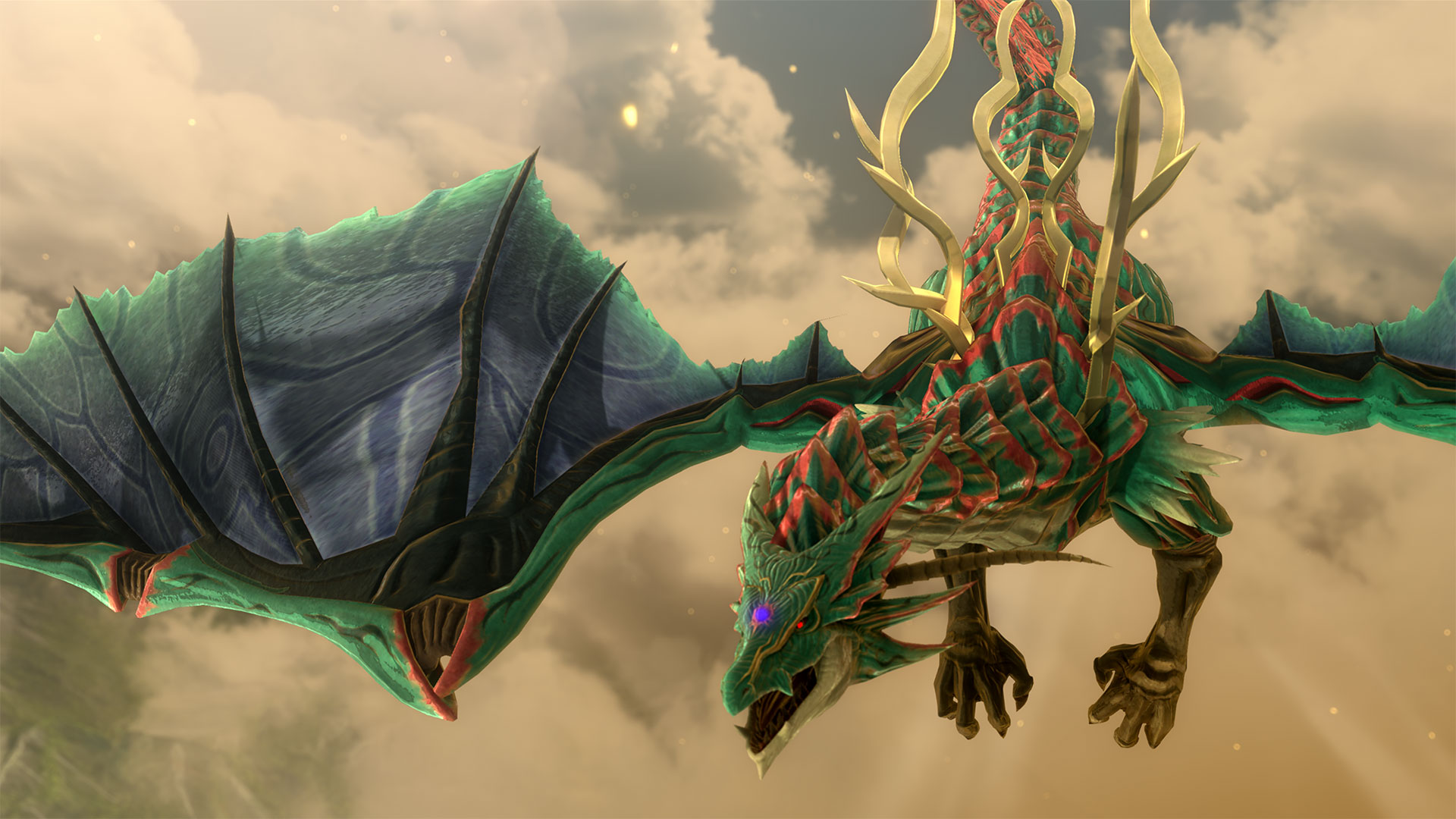
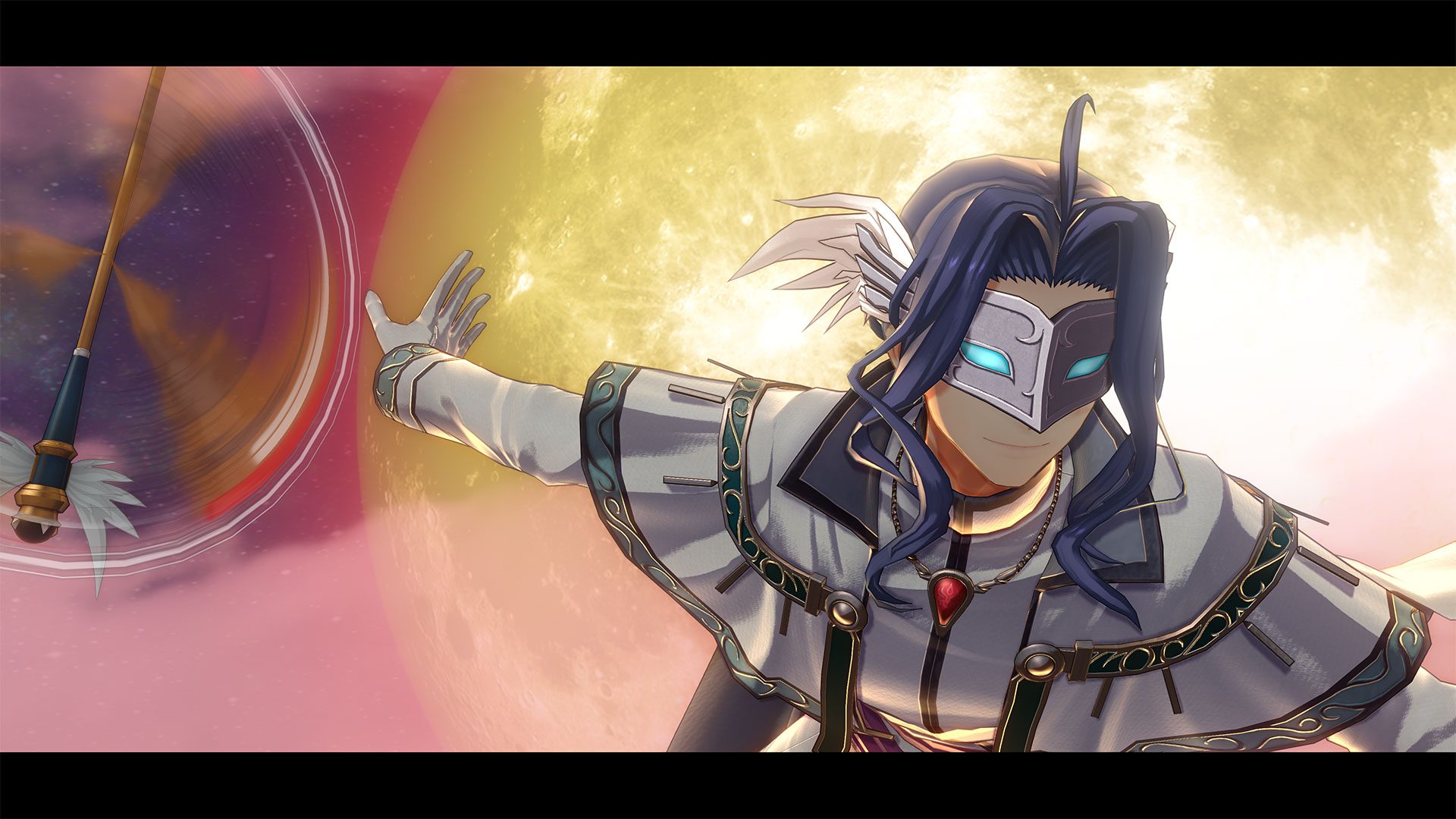
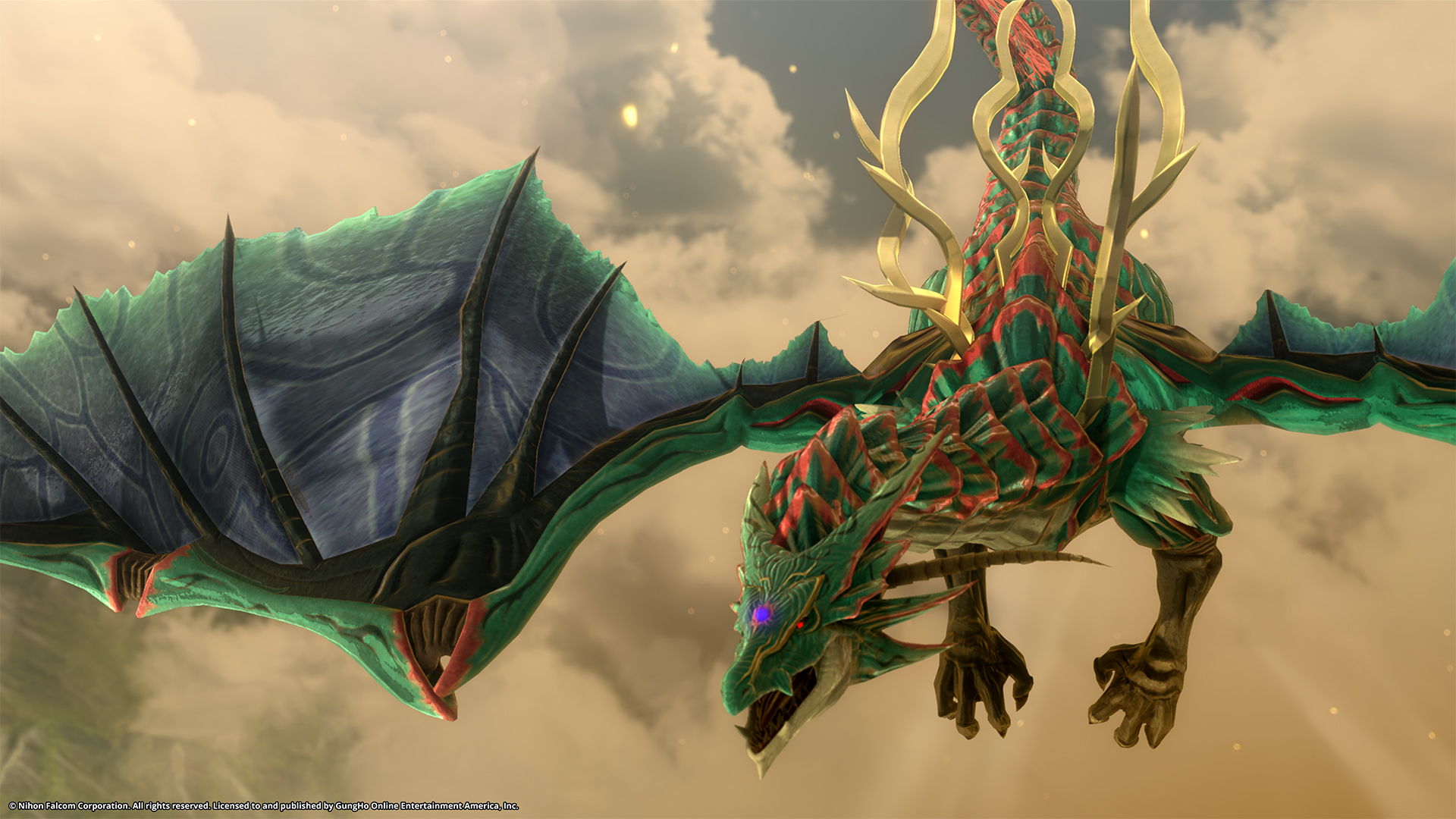
Boss battles will test your strategy. While understanding enemy weaknesses is important and a basic understanding in RPGs, knowing how minions play on the battlefield is just as crucial, as these little buggers can turn the tide if you aren’t careful. For example, fighting the first guardian’s trojan horse minions can give health and stat boosts to fellow comrades if taken out. If you remove all the minions, they will eventually return to battle shortly thereafter. Removing all but one was the key to end the battle without a game over as these enemies enjoy ganging up on a specific character. Additionally, cancelling the big boss’s charged attack is crucial, and players should stay aware of the battlefield situation to avoid a short-lived experience. Focus your attacks to initiate combo attacks with teammates to help remove the enemy’s charged attack. The same scenario can happen to your team if you aren’t careful.
If battling proves too difficult or too simple, players can adjust the game’s difficulty setting at any time, which will adjust the enemy’s difficulty level. Players can also save at any time and anywhere, except during a battle or cutscenes. The quality of life offered in the game is quite solid with these features and the ability to fast travel to areas you’ve visited before.
Improving Your Style
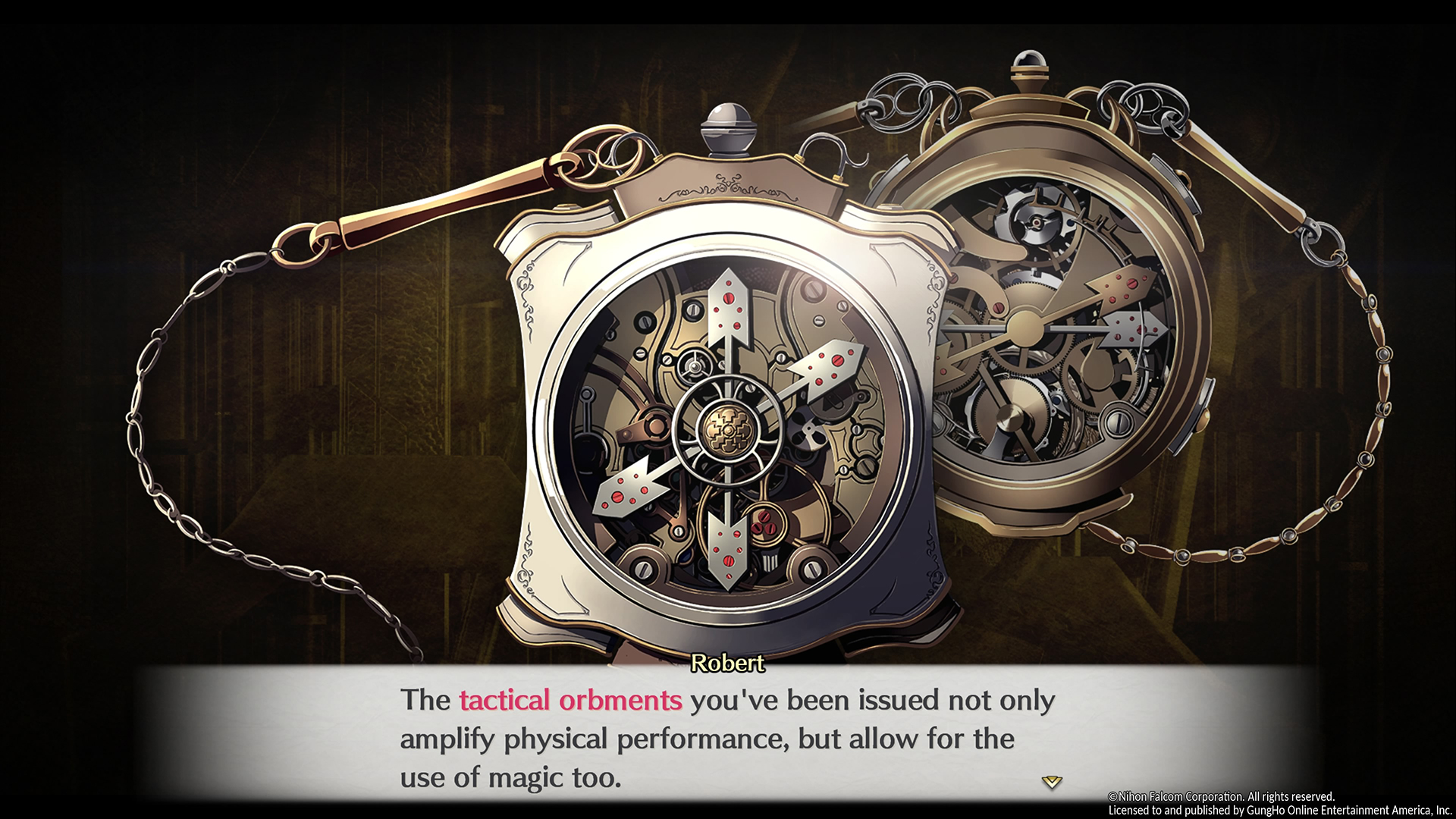
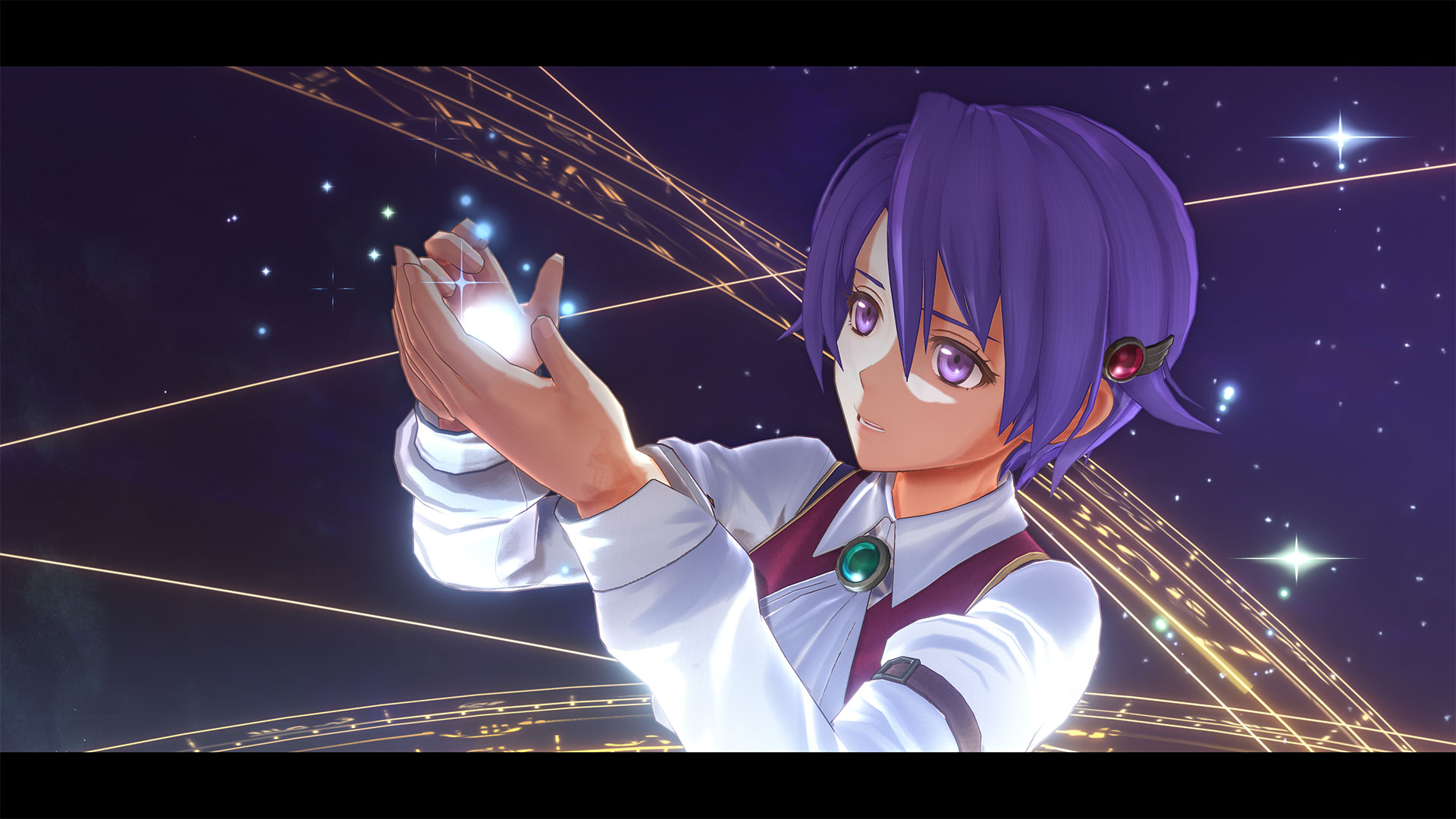
The Quartz System is restarted at the beginning of the 2nd Chapter. There’s a short dialogue on why you cannot use the system in the 1st Chapter so don’t expect any data transfers. The new system offers the ability to upgrade your orbment slots by spending on Septith, the elemental gems you can pick up by fishing, defeating enemies, and more. Upgrading a slot will increase the character’s max energy points (EP) and allow them to equip higher-tier Quartz and crystalize objects that unlock elemental magic and increase character stats. While Chapter 1 caps at a tier 3, Chapter 2 goes further to a tier 5 to give higher spells and stats. Additionally, there’s new Quartz that can grant special abilities during battle, for example, regenerate EP, increase healing efficiency, and more. These new additions will be useful in the upcoming challenging battles.
While it’s comical how the game explains you have to start over with your Quartz System, the setup does feel better in terms of understanding how to use it properly and more useful. It’s a little more complex but easy enough to understand, but if you’ve played the 1st Chapter, you shouldn’t have trouble using the new system. Also giving extra boosts is a big plus that I thought I never needed until now.
A Soundtrack Worth Looping
Players can also adjust the game’s soundtrack to standard (remake), arranged, or original. The original uses the PC/PSP release of its classic MIDI style. The arranged option features the acoustic arrangement from the PlayStation Vita version, while the standard (remake) is a re-recording of the original that includes improved sound quality. It’s a lovely extra option for players who prefer a certain sound quality. There are not many games that offer this level of options.
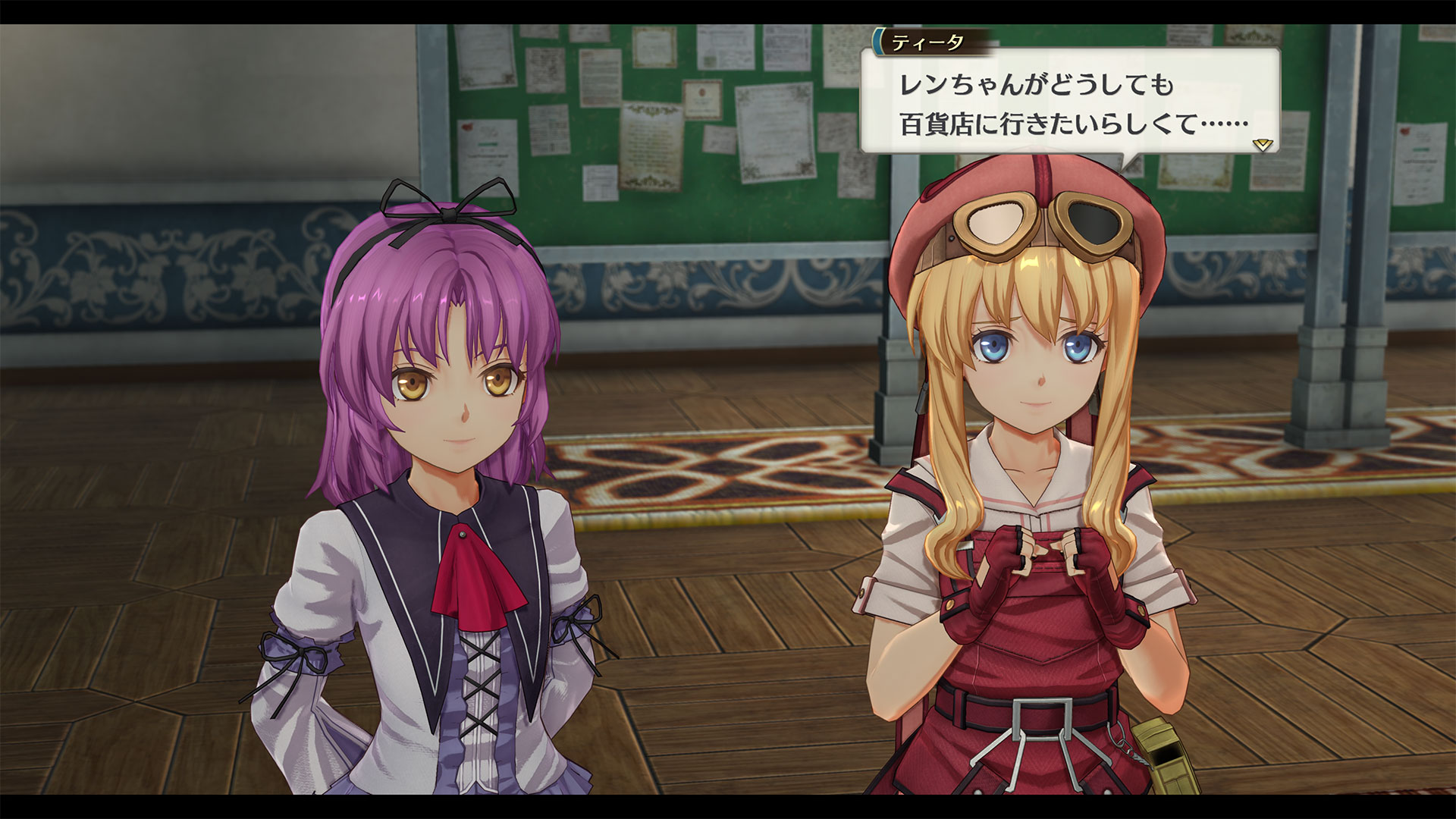
Voice dubbing looks and sounds excellent. In some areas where NPCs are talking, the other characters do not speak, which looks a little odd. Why is the entire cast in the scenario being voiced? It seems like it should be either fully voiced or not in these short dialogue scenes.
The Final Mission
With a meatier amount of content and the impressive visuals that made the 1st Chapter stand out, Trails in the Sky 2nd Chapter delivers a more solidified RPG experience that’s worth picking up. Exploration is fun, and I keep coming back for more. It’s a great sequel to a great prequel.
A PlayStation 5 code was provided by the publisher for this review. Trails In The Sky 2nd Chapter launches on September 17, 2026 for the Nintendo Switch, Nintendo Switch 2, PlayStation5, and PC. Fans can visit the game’s official website for more information.
Related Stories
Related Posts



Leave a Reply
Subscribe
Login
0 Comments
Oldest